
Ethics in Islam seeks the realization of inherent potentials.
Behrouz Rafiei
Behrouz Rafiei was born in 1957 in Fereydan, Isfahan. His resume is highlighted by his roles as a translator, a faculty member of the Department of Educational Sciences at the Research Institute of Hawzah and University, and an instructor for Master’s and Doctoral programs at various academic centers, including Al-Mustafa International University, the Specialized Center for Ethics and Education at the Qom Seminary, and the Imam Khomeini Education and Research Institute. With 19 book titles and over 40 scientific articles to his credit, he published his first work in 1999, titled Descriptive and Subject Bibliography of Islamic Ethics, Mysticism, and Sufism. This publication followed his decision to abandon his law studies at the University of Tehran for undisclosed reasons in favor of a career dedicated to research, authorship, and translation.
The Works of Rafiei
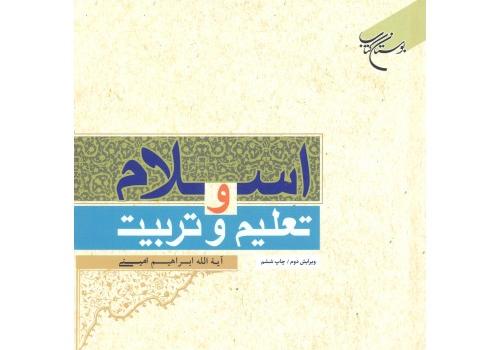
Driven by a passion for religious studies, Behrouz Rafiei entered the Tehran Seminary prior to the Islamic Revolution. After the Revolution, he spent some time in executive roles before migrating to Qom with his family in 1984 to pursue advanced religious studies. In 1993, he was admitted to the law program at the University of Tehran through the national entrance exam; however, he withdrew from the university after completing 100 credits. His second major book, The Views of Muslim Scientists on Education and Its Foundations (Volume 3: Imam Mohammad Ghazali), was selected as the Book of the Year of the Islamic Republic of Iran in 2003. This five-volume series explores the perspectives of Muslim thinkers on education, with Rafiei authoring the third volume. Additionally, his Descriptive-Analytical Bibliography of Education in Islam: Selected Arabic Sources was published in 2002 and earned third place for the Seminary Book of the Year in 2003. Rafiei holds a Master’s degree in the History and Philosophy of Educational Sciences from the Research Institute of Hawzah and University. His research and writing primarily focus on Islamic education, Islamic ethics, bibliography, and Arabic-to-Persian translation.
Ethics in Islam
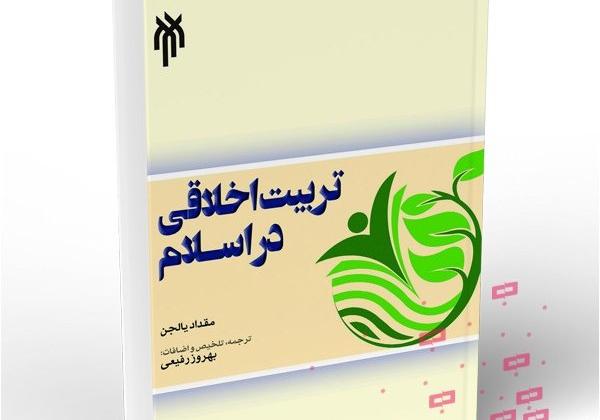
Another notable work by Behrouz Rafiei is the book Ethics in Islam, published in English. This volume is a collection of articles by prominent Iranian thinkers and professors in the field of ethics, featuring nine articles on the background and nature of Islamic ethics. The first article, by Dr. Seyyed Jalaluddin Mojtahedi, examines the foundations of ethics in Islamic culture, while the second, by Dr. Gholamreza A’avani, traces the transmission of ethical texts to the Islamic world. Other articles cover topics such as the emergence of ethical schools in Islam, the foundations of the philosophy of ethics, the relationship between practical and theoretical philosophy, the origins of moral commands, criteria for evaluating actions, ethics in the Quran, and starting points in practical ethics. Rafiei compiled these articles to analyze the vital status of ethics in Islam, emphasizing that human beings require moral education to realize their inherent potential.
Principles of Moral Education
In his article "Principles of Moral Education from an Islamic Perspective: A Comparative Approach," Behrouz Rafiei demonstrates that Islam focuses on four core principles in education: the compatibility of means with ends, complete commitment to moral behavior, consideration for individual differences, and the objective and subjective reflection of ethics. Rafiei argues that these principles are universal and aligned with human nature. He stresses the necessity of examining these principles to ensure that the methods chosen for moral education are inherently appropriate; many tools may appear educational but actually yield counterproductive results that disrupt the learning process. Rafiei asserts that to measure the merit of educational activities, one must establish principles that clarify the achievement of moral goals, the harmony between means and ends, and the morality of the students' behavior. Drawing from Islamic insight, Rafiei believes that "a good will is the essence of moral behavior; it is the good will that gives behavior its moral color, and the work of the heart and a good will can never be tainted by evil."
| Name | Ethics in Islam seeks the realization of inherent potentials. |
| Country | Iran |
| Author | Behrouz Rafiei |
_1_crop_1.jpg)



.jpg)

Choose blindless
Red blindless Green blindless Blue blindless Red hard to see Green hard to see Blue hard to see Monochrome Special MonochromeFont size change:
Change word spacing:
Change line height:
Change mouse type: