Iran: A History of Art by Habibollah Ayatollahi
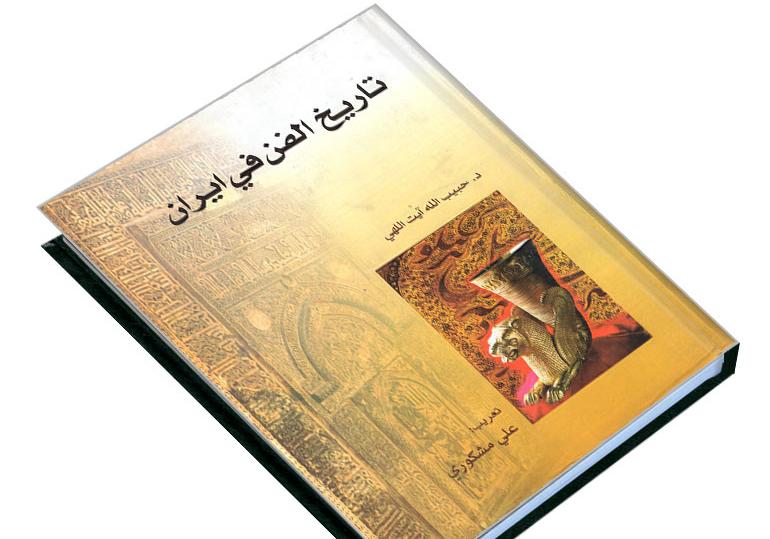
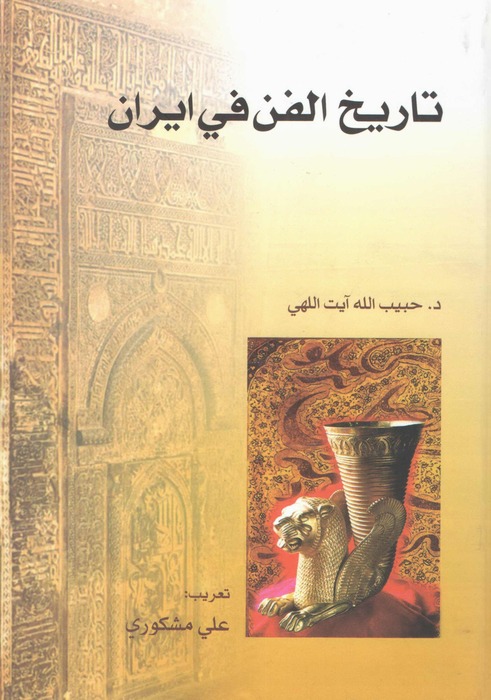
The book Tārīkh al-Fann fī Īrān (History of Art in Iran), written by Dr. Habibollah Ayatollahi and translated into Arabic by Ali Mashkouri, is a comprehensive study of Iranian art from the pre-Islamic period through the post-Islamic era up to the emergence of the Islamic Revolution of Iran. In Persian, the work is published under the title Iran: A History of Art. This volume provides an extensive examination of diverse artistic disciplines, including architecture, ceramics, wood carving, stone inscriptions, and other visual and material arts. Through a historical and analytical approach, the book traces the evolution of Iranian artistic expression across successive cultural and religious periods.
Education and Academic Formation of Ayatollahi
Habibollah Ayatollahi was born on 7 March 1935 (16 Esfand 1313) in Shiraz. Demonstrating an early interest in painting, he pursued higher education in fine arts at the Faculty of Fine Arts, University of Tehran, graduating in 1960 (1338). He ranked among the top students of his cohort, a distinction that qualified him for a government-sponsored scholarship to study abroad. Under the national program for outstanding graduates, Ayatollahi traveled to France, where he spent three years training in the studios of Legault and Aujame. He subsequently enrolled at the École des Beaux-Arts de Paris, where he studied modern painting techniques and mural painting. His education continued at the École Nationale Supérieure des Arts Décoratifs, specializing in ornamentation, interior architecture, contemporary mural painting, sculpture, and industrial design. Simultaneously, Ayatollahi pursued academic studies at the Sorbonne University, earning a PhD in Analytical and Comparative Art History in 1971 (1349). His doctoral dissertation, titled A Comparative Study of Pre-Islamic and Post-Islamic Iranian Art, was later published as the book Iran: A History of Art. Following the completion of his doctorate, Ayatollahi returned to Iran and joined the Faculty of Fine Arts at the University of Tehran as an assistant professor, teaching visual arts. In 1973 (1351), he founded the Department of Interior Architecture at the Higher School of Construction.
Academic and Institutional Roles After the Revolution
Ayatollahi was the founder of the Faculty of Art at Shahed University and played a key role in designing its academic curriculum. He was also among the founders of the Museum of Traditional Arts under the Handicrafts Organization and collaborated with the Tehran Museum of Contemporary Art in evaluating foreign artworks. In 1976 (1354), prior to establishing the faculty, he returned to France on a research sabbatical, completing a master’s degree in aesthetics and art knowledge, as well as a doctoral program in theoretical and practical visual arts. He later received additional training in urban planning, earning a qualification equivalent to a doctorate in that field. In 1978 (1356), during the months leading up to the Islamic Revolution, Ayatollahi taught Islamic art for six months at the Sorbonne. After the Revolution, he returned to Iran and assumed leadership roles in academic planning, translation and authorship of art textbooks, and served as Dean of the Faculty of Fine Arts at the University of Tehran. He also became a member of the Supreme Council for Humanities of the Cultural Revolution Headquarters. In 1988 (1366), Ayatollahi resigned from the deanship of the Faculty of Fine Arts. During his tenure, he established art programs at the Faculty of Architecture and Art in Yazd and the Faculty of Art in Zahedan.
Ayatollahi’s Perspective on Art
Habibollah Ayatollahi regarded all manifestations of Iranian art as a form of sacred art, deeply influenced by religious and spiritual principles. He argued that, unlike Western art—often dominated by a single aesthetic paradigm in each historical period—Iranian art has consistently embodied multiple coexisting aesthetic systems. Ayatollahi viewed the influence of modern Western movements, particularly Cubism, as artificial and inauthentic within the Iranian context. In contrast, he highly valued the works of realist masters such as Ali-Mohammad Heydarian. His intellectual project centered on identifying the essential core of Iranian art, especially its Islamic dimensions. He believed that achieving this goal required both rigorous theoretical education and effective cultural policy supported by governmental institutions. According to Ayatollahi, artistic creation is shaped by two primary factors: cultural heritage and social experience; the synthesis of these elements determines the future trajectory of art. He expressed regret over what he perceived as a tendency among Iranians to abandon indigenous traditions in favor of imported novelty. In his view, cultural authorities bear the responsibility of extracting the aesthetic principles of Iranian art and transmitting them to younger generations, while also demonstrating practical ways of applying these principles. Ayatollahi maintained that human nature is inherently oriented toward divine truth, asserting that art and religion share a common origin in the quest for transcendence. His published works—including Theoretical Foundations of Visual Arts, Color and Its Application in the Arts, The Verse of Light: Guardianship and Art, and The Sensory Dimensions of Art—reflect his firm conceptual distinction between Islamic art and other artistic traditions.