
Kenyan Activist Shakira Wafula Visits Iran and Shatters Western Stereotypes against Iran
After traveling to Iran and attending the funeral of the martyred leader of the revolution, Shakira Wafula shattered Western stereotypes against Iran by observing the status of women.
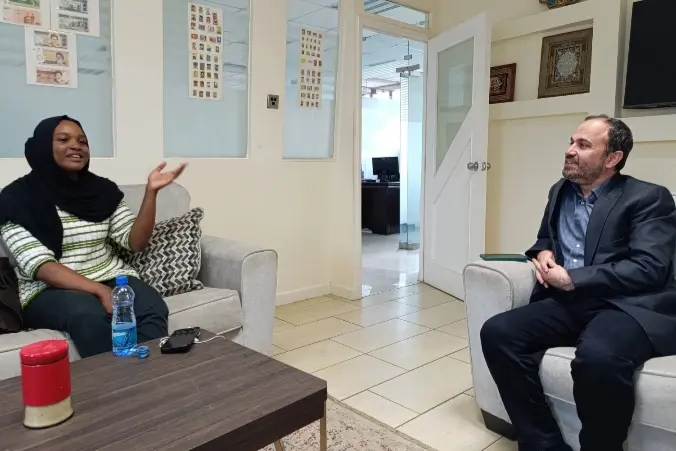
Following the visit of Shakira Wafula, a well-known Kenyan social activist and influencer, to the Islamic Republic of Iran for media coverage of the funeral, Mehdi Beiki, the Cultural Advisor of the Islamic Republic of Iran in Kenya, met and talked with her in Nairobi.
This trip, which was carried out with the aim of reflecting the realities of Iran to the Kenyan and African public, in addition to covering one of the largest Shiite ceremonies, provided a valuable opportunity for this media activist to become closely acquainted with the scientific, cultural, social and tourism capacities of the Islamic Republic of Iran.
Wafula, who witnessed millions of people attending the funeral during her presence in Iran, widely reflected this event through her pages on Instagram, TikTok and Facebook.
The publication of his images, videos, and field narratives was met with a remarkable reception by African audiences and led to the formation of extensive conversations about Iran, its culture, people, and the realities of this country in cyberspace.
Among the most important observations of this Kenyan influencer were the enthusiastic and widespread attendance of people at the funeral, social cohesion, exemplary order, and urban management after the ceremony.
This social activist stated: The rapid clearing of the streets, the return of economic and social activities to normal in a short period of time, and the calm prevailing in the city of Tehran, were very surprising to her.
The deep and indescribable interest of the people in the martyred Imam, the voluntary attendance of millions of people at the ceremony, the expression of the people's sincere feelings, their spirit of sacrifice and courage, and their open support for the Palestinian cause and defense of oppressed nations were among the most important scenes that caught his attention and painted a different picture of Iranian society in his mind.
He added: "During this trip, I visited scientific, research, cultural, and tourism centers, including Sharif University of Technology, medical and technological research centers, Milad Tower, Tabiat Bridge, Iran Mall and its library, Golestan Palace, Azadi Square, and the Darband Tourism Complex, and I became familiar with Iran's cultural and scientific achievements."
This Kenyan media activist considered the hospitality of the Iranian people, security, social order, the sincere attitude of Iranian women, the culture of respect and gift-giving, the high level of education, and social participation of Iranian women to be among the most prominent features of this trip.
Referring to the connections established with a number of cultural activists and influencers, he announced the continuation of these connections and the production of media content to introduce Iran's capabilities to African audiences.
While appreciating Wafula's media activities, the cultural advisor proposed writing a book titled "From Nairobi to Tehran" based on his observations and experiences from his trip to Iran.
He also suggested that meetings and programs recounting the experience of his trip to Iran be held in Kenyan universities, cultural and media centers, with his presence, to provide the basis for the people of this country to understand more about the realities of the Islamic Republic of Iran.

Write your comment.