

Arbaeen Is a Driving Force for a New Global Civilization
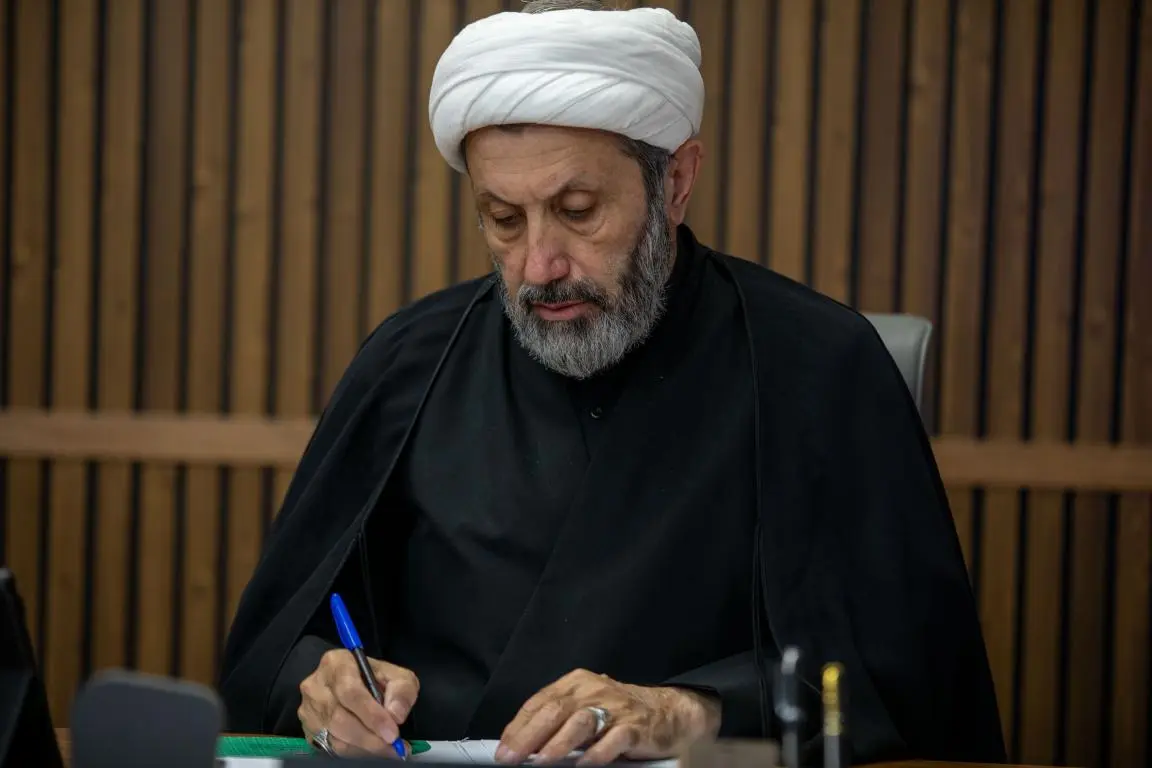
The head of the Islamic Culture and Relations Organization, explaining the global significance of the Arbaeen pilgrimage, said: “The tens-of-millions-strong Arbaeen event in Islamic cities can be presented as a driving force for a new global civilization.”
According to the Public Relations Department of the Islamic Culture and Relations Organization, while the United States and other components of the system of domination are using all their hard and soft power to weaken the will of free Muslim nations and to attack independent countries such as Iran, Iraq, Lebanon, and Palestine, this year’s magnificent Arbaeen ceremony is being held in Iraq.
This year, as we witness intensified attacks against our country and efforts to create insecurity in the region, fundamental questions have emerged regarding the relationship between the Arbaeen epic and the “discourse of resistance” and the “civilizational future of the Islamic world.” To examine these issues, Hojjatoleslam Mohammad-Mahdi Imani-Pour, Head of the Islamic Culture and Relations Organization, discussed the relationship between the Arbaeen epic and current developments in the international system in an interview with Tasnim News Agency.
Below is the full interview:
At a time when enemies are using military and security instruments, as well as continuous and repeated aggression against the territory of Iran and other countries, to create an atmosphere of fear in the region, we see that Arbaeen is being held with the same grandeur as before, and even with greater enthusiasm. What message does this coincidence—the holding of the Arbaeen epic amid threats from enemies—convey about the “authenticity of the discourse of resistance”?
Imani-Pour: First, I extend my condolences on the occasion of Arbaeen to the countless true followers of Imam Abu Abdullah al-Hussain (peace be upon him) and the school of Ashura throughout the world. To understand the message of this coincidence, we must first provide an accurate definition of “resistance.” In religious thought, resistance is not merely a defensive or passive reaction to an attack; rather, it is a form of active steadfastness based on truth and justice. When an enemy chooses aggression against the territory of Islamic countries as a means of changing the behavior of nations, its objective is to create fear and paralyze people's will.
Holding the Arbaeen ceremony under such circumstances is precisely a complete rejection of the enemy's calculations. The message of Arbaeen is that “resistance extends beyond the battlefield and is embedded in everyday life.” The fact that millions of people from around the world travel toward Karbala without fear of security and military threats demonstrates that the discourse of resistance within the culture of the followers of the Ahl al-Bayt has become a school of thought, rather than merely a tactic or even a military strategy.
The enemy seeks to create insecurity through pressure and threats, while Arbaeen responds with security rooted in faith in God. This means that resistance has become deeply rooted within this community. Arbaeen is the continuation of the epic of Ashura, and Ashura represents resistance against oppression. Just as Lady Zaynab (peace be upon her), in Kufa and Damascus, demonstrated the discourse of resistance through her speeches amid the enemy's apparent victory, Arbaeen today, through its millions of participants, declares that “resistance is everlasting.”
This gathering is not merely a religious ritual; it is also a demonstration of the power of the Muslim community in the face of the hybrid warfare of the system of domination.
Some analysts regard Arbaeen as a “vast communication network.” From the perspective of cultural diplomacy, how can this “network” become a “resistance system” against the international order? Can we say that Arbaeen is creating a new civilizational infrastructure?
Imani-Pour: Exactly. We view the ongoing, continuous and annual Arbaeen phenomenon as a “civilizational capacity,” rather than simply a calendar event.
In today's international system, power is defined through network-building. Western hegemony has been built upon interconnected financial, media and military networks. Arbaeen, however, presents a competing model of networking: “network-building based on the pursuit of truth, justice and spirituality.”
Arbaeen is creating a civilization-building network. Consider this carefully: this network has neutralized the geographical boundaries that the system of domination has drawn in order to divide us. When an Iranian pilgrim, an Iraqi pilgrim, a young Yemeni and a Lebanese resistance fighter find themselves together on the same path, this means “the formation of the Ummah.” This network constitutes the human infrastructure of resistance.
When these connections are formed during Arbaeen, the same individuals can become a support network for resistance during times of crisis.
An important point is that this system is dynamic. Beyond what has already been mentioned, Arbaeen creates a “software for governing society”: faithful living, religious solidarity, human conduct, noble ethics, sincere service and cooperation in good deeds. These are precisely the elements required to advance a “new Islamic civilization.”
Therefore, Arbaeen not only complements our military resistance on the various battlefields, but also provides its intellectual and spiritual fuel.
The Islamic Republic of Iran, as a center of resistance, is facing unprecedented pressure and sanctions. How do you assess and analyze the connection between “Arbaeen” and Iran's comprehensive resistance against conspiracies, threats and aggression by its enemies?
Imani-Pour: Today, Islamic Iran is a flag-bearer of the discourse of resistance, and the system of domination has clearly understood that Iran's power does not lie only in its “missiles”; Iran's power lies in a “discourse” that creates resistance.
The enemy seeks to isolate Arbaeen because Arbaeen strengthens this discourse. Iran has now become the “beating heart of the geography of resistance,” and the phenomenon of Arbaeen has become a rich source of nourishment for this beating heart.
This is a strategic reality: the connection between Iran and other countries through Arbaeen goes beyond conventional bilateral or multilateral relations; it represents a “civilizational bond” that no power can sever.
When we speak of resistance and the school of resistance, we mean resistance in all spheres: the military sphere, the economic sphere, the political sphere and, of course, the cultural sphere. Arbaeen is a major counterforce to the enemy's “cognitive warfare.”
The enemy wants to set the Islamic Republic of Iran against the Iraqi people and government, whereas Arbaeen portrays the Islamic Republic of Iran as a country supporting its Iraqi Muslim brothers and sisters.
We regard spreading the global message of Arbaeen as a universal mission, and we see Arbaeen as the “largest exhibition of the soft power of the resistance discourse.”
The connection between this epic and the resistance of the Iranian people means exporting the “model of resistance” to the entire Islamic world. When other nations see that Iran, despite all the pressure it faces, continues to play a leading role in holding Arbaeen, they may conclude that “steadfastness leads to victory.” This is an important source of hope.
Arbaeen has extended Iran's influence beyond geographical borders to “ideological and faith-based frontiers.”
Many thinkers believe that we are on the threshold of a transition from the current global order to a new order. What is the civilizational role of Arbaeen, and what message does it carry for the future of humanity? Can Arbaeen have a global audience beyond the Shi'a world?
Imani-Pour: The existing global order, which is based on “profit-oriented thinking,” “individualism” and “domination,” is in decline. Humanity today has grown tired of this unjust, soulless and spiritually empty order and is yearning for “justice-centered spirituality.”
This is precisely where Arbaeen enters the picture.
The civilizational message of Arbaeen is “humanity based on faith and the pursuit of truth.” Arbaeen does not belong exclusively to Shi'a Muslims; it belongs to everyone who rejects oppression and seeks “authentic freedom.”
During Arbaeen, we witness the participation of Sunnis, Christians and even people who are searching for the truth. This means that Arbaeen is becoming a “common language of the humanity of the future.”
The new global order of which we speak requires an “ethical foundation.” Liberalism has failed to provide this foundation. Arbaeen represents the “ethical software” capable of connecting different dimensions of civilization—from science and technology to economics and governance—and bringing humanity together around the principles of “fighting injustice” and “supporting the oppressed.”
We are preparing the ground for the emergence of a civilization in which justice is not merely a slogan but a way of life.
Arbaeen is a practical exercise in the “Mahdist society”—a society in which “self-sacrifice” takes precedence over the accumulation of wealth.
This civilizational message not only has a global audience, but represents the only path toward saving humanity from its current deadlock. We must communicate this message to the world through art, diplomacy and the media—to a world that today needs the teachings of Imam Hussein more than ever.
As the head of the Islamic Culture and Relations Organization, what is your roadmap for civilizational engagement in this field? How can we use Arbaeen to strengthen the “global resistance front” and achieve lasting influence in the international system?
Imani-Pour: Our roadmap for the future rests on three pillars: “discourse-building,” “elite networking,” and “people-to-people diplomacy.”
In this regard, we must introduce and explain the “values of Arbaeen” in a “global language.” We must also activate human media actors and develop “Arbaeen diplomacy.”
This means that we should use the potential of Arbaeen pilgrims as “Arbaeen ambassadors.” Every pilgrim is an ambassador who can communicate the values embedded in this event, the reasons behind its formation, and the concepts emerging from it—such as **“resistance”—**in their own country.
Our mission is to engage a world in which “resistance,” in its broad sense, is not merely a political term but a way of life, and in which the creation of a “new civilization” is a shared objective.
If we can properly introduce and establish the true message of Arbaeen, the system of domination will no longer be able to break the will of nations through its various instruments.
At the Islamic Culture and Relations Organization, we are currently laying the groundwork for this great movement.
Arbaeen must become a “civilizational driving force.”
We are confident that the future belongs to the oppressed, and that Arbaeen will be the point from which this future begins to emerge and dawn in human history.

Write your comment.