

From Existential Commonalities to Resistance Against Division and Fragmentation
The head of ICRO wrote: Overcoming the problem of sectarian and political division in the Islamic world is a “vital necessity and essential premise” for preserving the survival, identity, and wealth of the unified ummah.
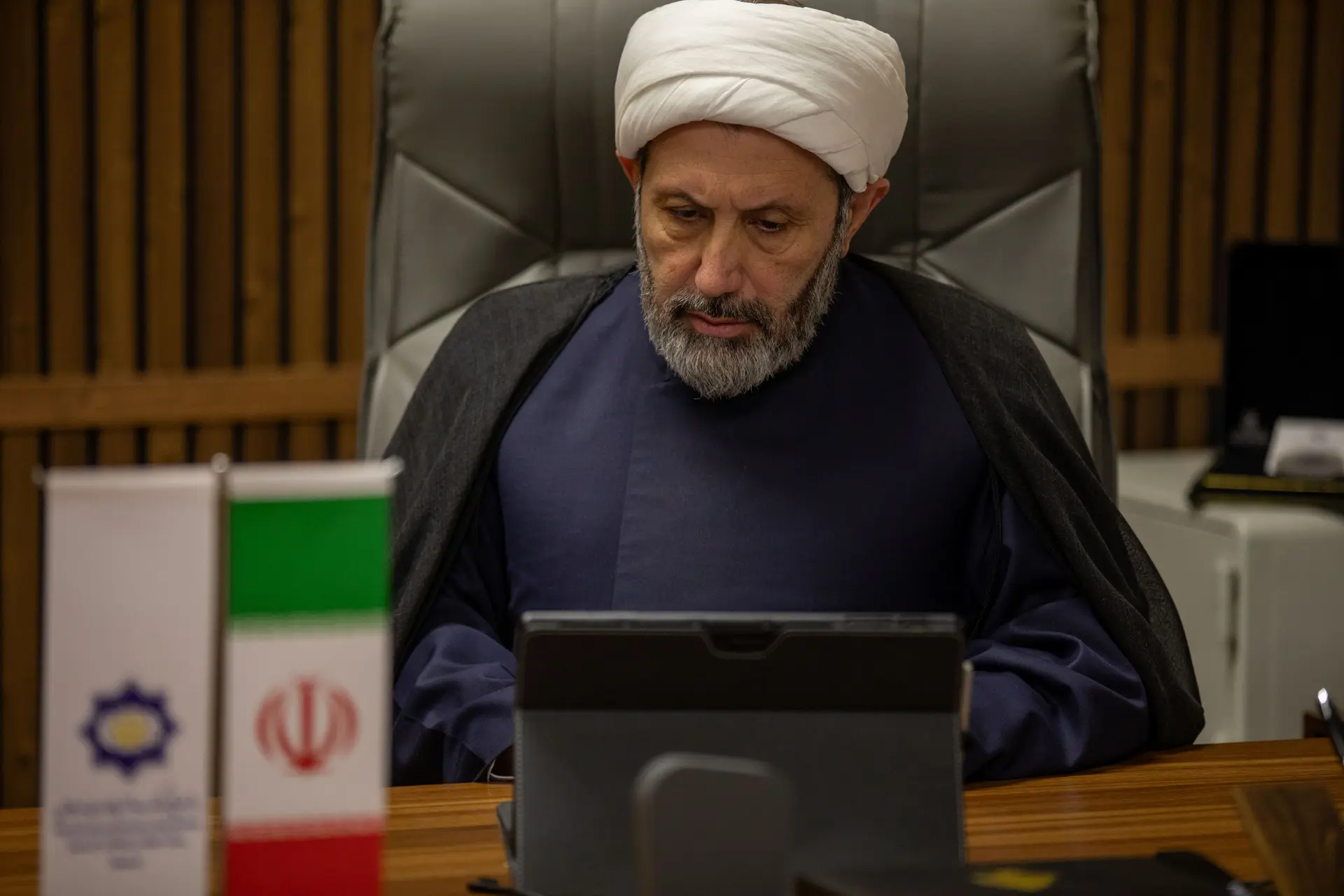
According to the Public Relations Office of the Organization for Culture and Islamic Relations, Hujjat al-Islam Mohammad Mehdi Imani-Pour, the head of the country’s public diplomacy, wrote in a note provided to “Tabnak”:
The Supreme Leader of the Islamic Revolution, Ayatollah Seyyed Mojtaba Khamenei, in a guiding message on the occasion of Unity Week, congratulating the anniversary of the birth of Prophet Muhammad (peace and blessings be upon him) and Imam Jafar al-Sadiq (peace be upon him), described the plans of Islam’s adversaries and enemies as highlighting differences to weaken the Islamic ummah and bring it under control. He emphasized that the criminal rulers of America and the fake Zionist regime are sworn enemies of Islamic unity and of all Muslims, including the peoples of Western Asia and North Africa. Therefore, know your real enemy and confront its plan.
Throughout history, the colonial order and the structure of domination have always defined the survival of their rule as being dependent on weakening alternative centers of power. In this regard, the “Islamic world”, benefiting from deep religious power and a rich civilizational capacity—unique human potential, control over the world’s most important energy corridors and transit straits (from Hormuz and Bab al-Mandab to Malacca and Gibraltar), a young population, and more—has always been considered the most serious threat to a single-polar, imperial order.
The domination system and Zionist-Western think tanks, aware of the enormous potential hidden within this body, have updated their oldest—and at the same time most effective—weapon: inciting division, creating identity gaps, and structural fragmentation. Moving beyond this situation and restoring civilizational effectiveness requires a precise understanding of the nature of these plots, and then designing a practical roadmap based on authentic common ground among the Islamic ummah. In this regard, there are points that must be considered:
1) The Enemies Do Not Rely Only on Religious-Ideological Gaps
First, the enemies of the Islamic ummah, in order to prevent the emergence of this system, do not merely rely on sectarian and religious cleavages. Rather, they have set up a combined, multi-layered system to prevent the convergence of the Islamic world:
-
Cognitive warfare and media imperialism: Western media arms, through engineering perceptions, turn minor religious differences (Shia and Sunni) and ethnic diversity (Persians, Arabs, Turks, Kurds, etc.) from the frame of “natural diversity” into “irreconcilable contradiction.” Promoting religious hatred and producing distorted narratives of historical events provides a stable foundation for removing mutual trust among Muslim peoples.
-
Cultivating and feeding Takfiri terrorism: The creation and support of terrorist groups such as ISIS within enemy think tanks has a dual function:
- On the one hand, it drains the internal capabilities and human capital of Islamic societies.
- On the other hand, it strengthens the international-scale project of “Islamophobia” in order to justify the shameless, intrusive Western and Zionist regime intervention within the geographic boundaries of the Islamic world.
-
The doctrine of containment and political polarization: New colonialism, by using Western-oriented and dependent currents within the Islamic world, creates false regional poles, replacing a new “enemy” (so-called “Muslim brothers”) for the “main and historical enemy” (the occupying regime of Jerusalem and colonial forces). Projects such as “normalizing relations” with the illegitimate Zionist regime are part of this sinister plan.
2) The Ummah’s Existential Assets Are Stronger Than Fragile Economic or Geographic Deals
The second point concerns the existential resources and bond-building treasures of the Islamic world. Unlike many regional agreements that are formed purely on the basis of fragile economic interests or sheer geography, the Islamic ummah possesses the most authentic and most durable pillars of existential unity.
Belief in the one God, the prophethood of the Seal of the Prophets (peace and blessings be upon him and his family), and his noble conduct, along with the Qur’an as the guiding book and the single qiblah, provide an unbreakable foundation.
Rituals such as the great Hajj congress and the civilization-building gathering of Arba‘een are living symbols of a trans-ethnic and trans-sectarian ummah, demonstrating the practical realization of equality and shared destiny. At the same time, one must not ignore the ethical and human rules emphasized by Islam.
Respect for the sanctity of life, wealth, and honor of Muslims, justice-seeking, rejecting oppression, defending the oppressed, and honoring Islamic brotherhood ties are among the undeniable principles of all Islamic schools, including Imami (Twelver Shia), Hanafi, Maliki, Shafi‘i, and Hanbali. The existence of shared ideals such as freedom for Palestine also serves as a point of connection for the consciences of Muslim nations.
The issue of freeing Jerusalem al-Quds and supporting the oppressed Palestinians has always been a broad and non-partisan characteristic and can serve as a convergence point for the unity of all Islamic movements.
3) Practical Solutions: Move From Description to Effectiveness
The third point concerns operational solutions to overcome the challenges of division and pluralism in the Islamic world. The most effective first step in this regard is moving beyond the stage of describing the problem and reaching the stage of effectiveness.
One practical step is to conclude common Islamic-regional agreements (within the framework of non-aggression and collective Islamic defense) in reality, and to replace them with the protective umbrella of anti-Islam and extraregional powers.
Another matter that must be considered is the focus of concerned, committed Islamic scholars and Muslims in social and international arenas on collective confrontation with the enemies’ divisive tactics. Division is the final stronghold of a system whose signs of decline have become visible across the world.
Imperial powers know well that the awakening, unity, and reliance of the Islamic world upon its endless commonalities means the reconfiguration of the global order and the rise of power that no force will be able to match.
Overcoming the problem of division in the Islamic world is a vital necessity and essential premise for safeguarding the survival, identity, and wealth of the Islamic ummah.
By holding firmly to the strong divine rope and by invoking this luminous verse that clearly states: “And hold fast to the rope of Allah all together and do not be divided”, through strengthening the bonds among elites and the people, and turning identity commonalities into institutional, economic, and security ties, it is possible to break the plots of crisis-creating centers and usher in a new era of civilization, progress, and dignity across the geography of Islam. Insha’Allah.

Write your comment.