

Strengthening the Components of Islamic Civilization Through the Arbaeen of Imam Hussein
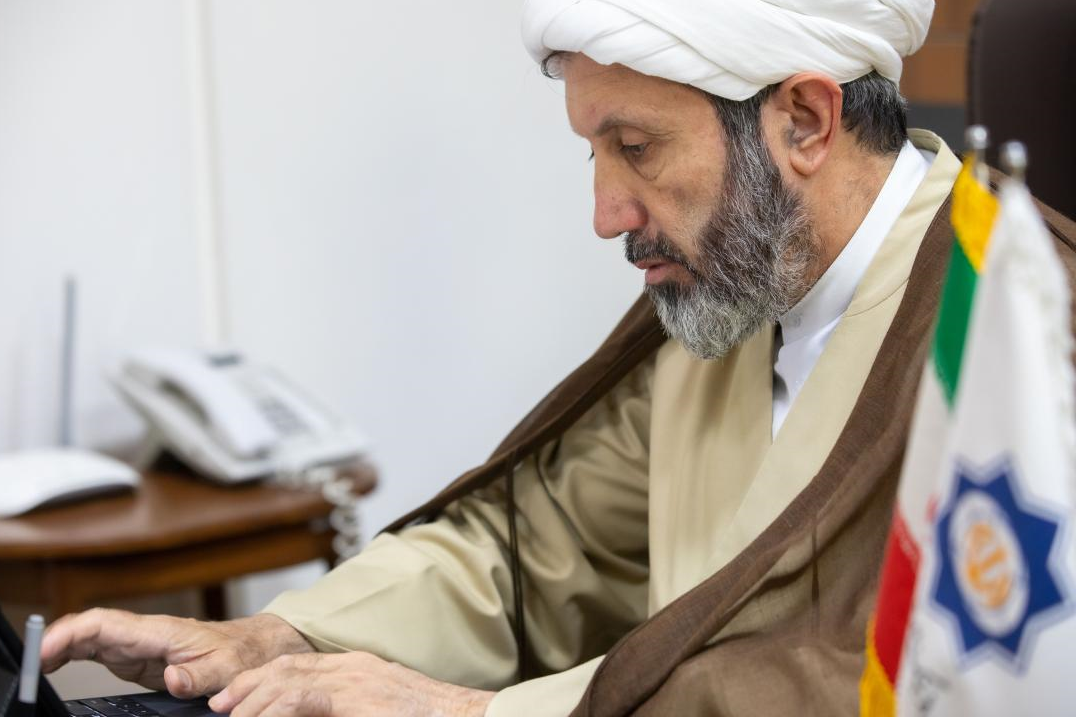
As the Arbaeen of Imam Hussein approaches, the country’s leading figure in public diplomacy has reflected on this historic occasion and interpreted it as a “civilizational platform.”
According to the Public Relations Department of the Islamic Culture and Communication Organization, Hojjat al-Islam Mohammad-Mahdi Imani-Pour, President of the Islamic Culture and Communication Organization, wrote in an article published in Hamshahri newspaper that the Arbaeen pilgrimage, as the world’s largest religious gathering, is in reality an expression of the soft power of the Islamic world.
Below is the full text of the article, which was published on July 31 (10 Mordad) in issue No. 9728 of the newspaper:
The Arbaeen of Imam Hussein has, over the past several years, transcended the boundaries of a major religious ritual and evolved into one of the greatest social, cultural, and political phenomena of the contemporary world. Today, in addition to its spiritual dimension, this great movement possesses extraordinary discursive, civilizational, and strategic potential—something that has caused concern among the enemies of Islam. The fear of the Arbaeen gathering within the camp of global hegemony is not merely because of the enormous number of participants. Their primary concern is that Arbaeen could become a platform for connecting nations and fostering the formation of a united Muslim community. They are concerned about the emergence of a civilization-building discourse—a civilization based on a life of faith, dignity, generosity, and resistance.
Arbaeen is not merely a march; it is a roadmap for the future. For this reason, care must be taken to ensure that the unparalleled potential and opportunity of Arbaeen to showcase an “ideal Islamic society” does not disappear from public view under the shadow of censorship by mainstream media. In a world where conflicts are no longer determined solely on the military battlefield, and where a significant part of global struggles takes place in the realms of imagery, perception, narrative, and meaning, protecting and communicating the global message of Arbaeen is a collective responsibility, particularly for intellectuals and cultural leaders. Arbaeen can—and should—become one of the most important and compelling manifestations of the “New Islamic Civilization.”
In the words of our martyred leader, Imam Khamenei, “the goal of every Muslim today should be to create a new Islamic civilization.” Civilization has various dimensions, ranging from technological and scientific aspects to economic dimensions and beyond. However, above and before all these dimensions, the emergence of any civilization requires an ideology and intellectual school of thought. Arbaeen is one of the important pillars of this intellectual framework. Since Arbaeen creates and strengthens the components of Islamic civilization, it has become a target of hostility from the global hegemonic front. Therefore, the Muslim Ummah must change its perception of Arbaeen—from viewing it as a simple spiritual pilgrimage to recognizing it as a civilization-building phenomenon—so that it can advance more rapidly toward the second phase of the Islamic Revolution. In this regard, several important points deserve attention.
First, in conventional analyses, religious ceremonies are generally categorized under ethnic and religious traditions. However, the annual Arbaeen of Imam Hussein has evolved into a “communication infrastructure” within the broader concept of resistance. It is a massive gathering that does not merely produce an assembly but creates connections—connections among nations, languages, social classes, generations, and even different historical experiences, all united under the values embedded in the epic of Imam Hussein.
During Arbaeen, every person walking, every service-providing mawkib, every intercultural conversation along the route, and every direct human interaction functions as a point of connection within a civilizational network.
From another perspective, Arbaeen is a “living medium” that communicates its message through lived experience. This characteristic gives Arbaeen a strategic advantage: it provides the possibility of creating a shared social identity on a transnational scale at a time when the world is suffering from a crisis of collective identity. This is why Arbaeen can simultaneously be social, cultural, political, and civilizational, without being confined to any one of these dimensions.
Second, this point concerns the reasons for the fear of the enemies of Islam and the Islamic Resistance toward the phenomenon of Arbaeen and, consequently, its systematic censorship by media outlets affiliated with hegemonic powers. Such fear cannot simply be attributed to the presence of tens of millions of pilgrims. The primary concern of the opponents is the “meaning” and “message” embodied in the essence and form of the Arbaeen of Imam Hussein.
The reinterpretation of the epic of Imam Hussein during the massive Arbaeen pilgrimage, the keeping alive of the Ashura movement, and the promotion of the school of resistance against oppression are the principal reasons for this fear. Furthermore, Arbaeen demonstrates in practice that it is possible to organize a massive social gathering without a materialistic logic of self-interest, without an official propaganda machine, and without consumerist motivations—simply around a “truth.”
For the current enemies of humanity, this represents a threat because the Western order is purportedly structured around concepts such as individualism, welfare-centered living, and security based on domination. Arbaeen, by contrast, promotes the building of the Ummah instead of individualism, and hope instead of fear. It is precisely here that the connection between Arbaeen and the concept of resistance becomes clear.
Resistance, in its broader meaning, is not merely military opposition to aggression. Resistance means choosing a faith-based way of life in opposition to an unnatural lifestyle; resistance means defending human dignity against systems designed to humiliate people; and resistance means protecting the rights of nations and ensuring equitable access to the blessings bestowed by God.
When Arbaeen is described as a “roadmap for the future,” what is meant is precisely that it presents a new model of “elevated social life.” This is what the opponents fear, because whenever an alternative model of life acquires meaning and legitimacy in the world, the claimed monopoly of liberal democracy as a successful model of governance is weakened.
Third, a significant portion of today’s global conflicts takes place in the arenas of perception, imagery, narrative, and meaning. In such a world, the Arbaeen of Imam Hussein is not limited to being an event or ceremony. Rather, it constitutes a “strategic asset” in the cognitive war and, consequently, a global civilization-building capacity.
It is natural that hostile media outlets either remain silent about Arbaeen or simplify the vast dimensions of this great movement, attempting to reduce it to an ethnic or religious ceremony. This is what can be described as “structural censorship”: removing a civilizational reality from the global field of vision. The responsibility of those devoted to the school of Arbaeen is to narrate such an epic repeatedly and in the languages of different peoples, so that global audiences can develop a meaningful understanding of it.
Through this honest and comprehensible storytelling for global audiences, an “ideal society” should be presented on a large scale—a society in which the key elements of the New Islamic Civilization can be observed: social ethics, human dignity, voluntary participation, peaceful coexistence, the pursuit of justice, and active spirituality.
Arbaeen demonstrates that spirituality can serve as a “social organizing force,” rather than merely being an individual and isolated experience. From this perspective, Arbaeen is, in the truest sense, a “civilizational platform”: a concentrated example of how, when religious values enter the social sphere, they can produce an unprecedented form of social order.
This framework carries a clear civilizational message for the future: the post-liberal world needs a new ethical and meaningful foundation. Arbaeen can serve as one of the most credible sources of inspiration for such a foundation—not through slogans, but through the lived experience of a society in motion.
Our strategy in this situation is clear: the unparalleled potential of Arbaeen to demonstrate an ideal society must not be obscured by censorship and distortion. If Arbaeen is properly narrated and effectively networked, it can become the most prominent manifestation of the New Islamic Civilization.

Write your comment.