

The Emergence of a Generation Opposed to Injustice in the West
The country’s public diplomacy chief has addressed this issue in a commentary following the release of the latest Harvard-Harris poll indicating that two-thirds of Generation Z in the United States prefer Hamas to Israel.
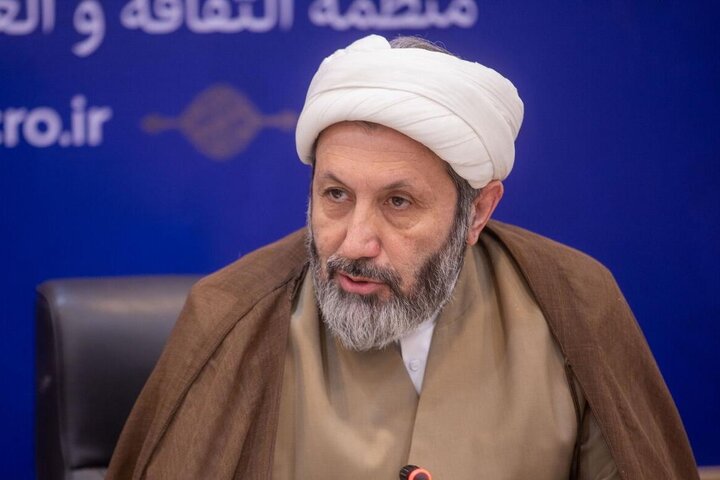
According to the Public Relations Office of the Islamic Culture and Relations Organization (ICRO), Hojjat al-Islam Mohammad-Mehdi Imanipour, Head of the Islamic Culture and Relations Organization, wrote the following commentary, which he provided to Hamshahri newspaper. The article, dated July 21, 2026, was published on the front page of Issue No. 9719 of the newspaper:
The publication of the results of the latest Harvard-Harris poll this month (July 2026) has delivered another shock to Western-Zionist rulers in the White House. The poll indicates that approximately 60 percent of Americans under the age of 24 have expressed support for the Palestinian Resistance Front in opposition to the Zionist regime (1). When these findings are considered alongside other surveys and field studies conducted in the West, they point to significant conclusions regarding the influence of a new generation in the West on the equations of governance. Several important points deserve attention:
First, one of the most significant and hopeful developments in global public opinion in recent years has been the awakening of a new generation in the West to the realities that have long remained hidden within the international system. This is a generation that has clearly recognized the oppression, occupation, and brutality of those in power in the United States and the Zionist regime, and is no longer willing to view events such as the Gaza war, the Lebanon war, the Third Imposed War, and other conflicts through the lens of media outlets aligned with the dominant power structure and their one-sided and distorted narratives.
Amid a flood of manufactured news, censorship, and double standards, this generation has gradually found its way toward the truth and has taken a stronger stand than ever before against occupation, aggression, discrimination, and injustice. This awakening is not merely an emotional reaction or a passing wave; rather, it represents a profound change in the political and moral understanding of Western society and constitutes a prelude to moving beyond an injustice-based structure within the international system.
Second, for many decades, the international system has been built upon a form of institutionalized inequality—a system in which major powers seek to justify their interests in the language of human rights, security, freedom, and democracy. Yet, in practice, they remain silent in the face of the suffering of oppressed nations or, beyond that, actively contribute to reproducing such suffering.
What has preserved this injustice-based order until today has not been limited to military aggression and economic pressure against conscious nations. The creation of extensive propaganda networks, control over public opinion, and management of narratives have played a major role in establishing and perpetuating this process. Therefore, whenever public opinion escapes the control of official narratives, one of the principal pillars of this unjust order begins to shake.
In this context, the role of Western youth is more prominent than ever. Because of their broad access to social media, independent media, eyewitness accounts, and the lived experiences of other peoples, they are less confined than previous generations to the framework of mainstream media.
Students, social activists, independent journalists, and grassroots groups in the West are asking more than ever: Why, in the contemporary world, is the life of one group of human beings portrayed as more valuable than that of others? Why is occupation ignored in one place while resistance in another is labeled terrorism? Why are aggression, siege, killing, and forced displacement met with silence or justification when carried out by allies of the United States and the Zionist regime?
These are not simple questions. They challenge the foundations of the legitimacy of the Western order.
When the new generation takes to the streets in the heart of countries that claim to uphold freedom and justice, occupies university campuses, questions official narratives in the public sphere, and stands in defense of the oppressed around the world, it is in fact exposing the gap between rhetoric and reality. This is the point at which moral awakening becomes political action.
The final point concerns the impact of the awakening of the new generation in the United States and Europe on the dismantling of the Western-made order. The awakening of Western youth can contribute in several ways to the transition away from the injustice-based structure of the international system.
This awakening breaks the monopoly over narratives. As long as major powers can manage their own public opinion through media, entertainment, and fear, they can continue pursuing policies of domination. But when the younger generation no longer accepts the official narrative unquestioningly, the first crack appears in the wall of legitimacy.
This awakening also increases social pressure on Western governments and political institutions. Governments may disregard public opinion in the short term, but in the long term they cannot ignore profound changes within their own societies. Student protests, civil movements, grassroots campaigns, and public demands gradually compel policymakers to become accountable for discriminatory policies, support for occupation, and participation in warmongering.
More importantly, the new generation in the West is redefining the concept of human solidarity. In a world where borders, media, and political interests seek to separate people from one another, awakened young people in the West have demonstrated that it is possible to transcend geography and stand with the oppressed on the basis of conscience, justice, and truth. This transnational solidarity is one of the most important capacities for building a more humane and just world.
Nevertheless, it should not be assumed that this path is easy or without cost. Systems of oppression do not readily allow dominant narratives to collapse. Character assassination of activists, restrictions on freedom of expression, pressure on universities, labeling of protesters, and the securitization of demands for justice are among the natural responses of systems based on domination to such awakening.
However, experience has shown that when a transformation is rooted in the public conscience and the awareness of a new generation, it cannot be completely eliminated through repression. Instead, it re-emerges in new forms.
This phenomenon is a sign of the world's gradual transition from a stage in which power alone was regarded as the measure of legitimacy. Today, a generation is shaping a new horizon in which truth is determined not by the think tanks and centers of power, but by the awakened consciences of human beings.
The expansion of this awareness through a sustained network of civic, intellectual, and media activism will be one of the most important factors in weakening the injustice-based structure and laying the foundations for a more just order in the world.
Put more clearly, the future of the Western governance system will not be written in the think tanks of today's adversaries, but in universities, streets, social media networks, and the minds of young people who are no longer willing to be complicit through silence in the face of occupation and aggression.
This awakening may still have a long road ahead, but it is undoubtedly one of the clearest signs of genuine change.

Write your comment.