

The Enemies of Humanity Fear the Qur’an’s Power to Build a United Community
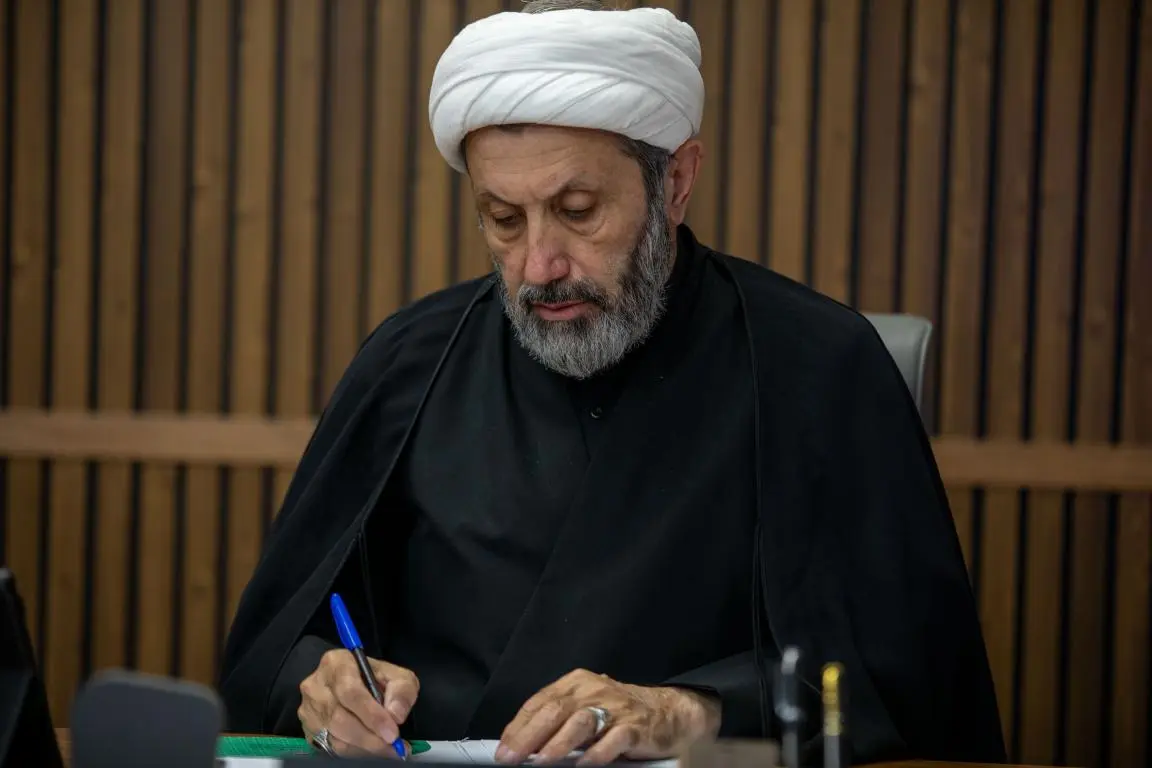
Hojjat al-Islam Dr.ImaniPour, the head of Iran’s public diplomacy, has addressed in a written article the hidden dimensions of the audacious acts committed by the Zionist regime and its American ally.
According to the Public Relations Department of the Islamic Culture and Relations Organization, following the continued and explicit insults by enemies of humanity and religion against the great miracle of the Seal of the Prophets (peace be upon him), Hojjat al-Islam Dr. Mohammad-Mehdi ImaniPour, Head of the Islamic Culture and Relations Organization, has stressed the need for Muslims around the world to move beyond merely reciting the Holy Qur’an to contemplating and reflecting upon its transformative verses. He examines the role of this divine miracle in shaping a dynamic, independent, ethical and civilization-building society.
Below is the full text of the article, published today (28 Mordad) as issue No. 9741 of the Hamshahri newspaper on pages 1 and 3.
Abdul-Malik al-Houthi, the courageous leader of Yemen’s Ansarullah movement, in his latest remarks condemned the repeated acts of disrespect and insults against the Holy Qur’an by the Zionist regime and the United States. He described these desperate actions as stemming from the teachings of the last and most complete divine scripture and from the Qur’an’s unique emphasis on standing firm against falsehood.
In recent months, we have witnessed the continuation of explicit insults against the Holy Qur’an by enemies of humanity and religion. The blatant burning of the Qur’an by a candidate in the U.S. congressional midterm elections, repeated insults against this sacred book by Zionists on social media, and continued Western support for those who insult the Qur’an under the false and fabricated pretext of freedom of expression have provoked anger among Muslim nations and free-minded people throughout the world.
Insulting the Holy Qur’an is not merely an attack on a sacred book or an attempt by extremist right-wing groups to hurt the religious sentiments of millions of Muslims. Rather, such behaviour should be understood as an indication of concern about the enormous social, cultural and civilizational potential of this sacred book within Muslim societies. In the intellectual framework of Muslims, the Qur’an is not merely a book for personal prayer, ritual recitation or moral recommendations limited to private life. It is a book for building the human being, reforming social relations, establishing justice, strengthening human dignity and creating a responsible society.
For this reason, sensitivity toward the Qur’an cannot be explained merely within the framework of theological disagreements. What some anti-Islam movements fear is the kind of human being that the Qur’an nurtures: an aware, dignified, responsible, justice-seeking and oppression-resistant person; someone who does not remain indifferent to humiliation, discrimination and injustice and who does not regard his or her individual destiny as separate from that of society.
In this regard, four important points deserve attention:
1. The Qur’an builds a higher human identity
The first great capacity of the Holy Qur’an is its ability to create an elevated identity for the human being. From the Qur’anic perspective, human beings are not aimless, consumerist and passive creatures. They possess inherent dignity. The Qur’an emphasises:
“And We have certainly honoured the children of Adam.” (1)
This dignity is not merely an individual privilege; it forms the basis of a person’s responsibility toward themselves, their family, society and the world around them.
The Qur’an liberates human beings from submission to oppression, fear, dependency and indifference. A person who considers themselves addressed by divine revelation cannot remain indifferent to the humiliation of human beings, occupation, genocide, the spread of poverty, discrimination, corruption and the violation of peoples’ rights.
By emphasising thought, reason, reflection and questioning, the Qur’an distances human beings from blind imitation and calls them toward conscious choice. In fact, the Qur’an elevates individual identity beyond the level of narrow personal interests. In the Qur’anic worldview, a believer does not live solely for personal success or individual comfort. Rather, they see themselves as part of a larger body and feel responsible for the suffering and pain of others.
This is the point at which individual identity becomes a shared and social identity. Therefore, the fear of the Qur’an among opponents such as the United States and the Zionist regime should be understood as fear of a human being who is unwilling to trade away their dignity; a person who does not surrender to intellectual domination, cultural humiliation or economic pressure and who strives to preserve their own dignity and that of their society.
2. The Qur’an promotes resistance to oppression
The second reason for concern about the Qur’an’s potential is the central place of resistance to oppression in this divine book.
The Qur’an does not separate faith from social responsibility. According to revelation, genuine religiosity is not limited to individual acts of worship. It must also be reflected in social conduct, support for the disadvantaged, defence of truth and resistance to injustice.
Establishing justice and fairness is among the important objectives of the mission of the prophets. This perspective takes the Qur’anic human being out of passivity. In the face of oppression, they are neither a spectator nor an apologist. Rather, they consider themselves responsible for defending what is right to the extent of their ability and for preventing the normalisation of injustice.
The insults directed at the Holy Qur’an by its enemies are aimed at weakening the spiritual foundation of the struggle for justice in Muslim societies. Whenever people’s connection with concepts such as dignity, justice, responsibility and resistance becomes weaker, the conditions become more favourable for imposing humiliating and unjust models.
However, the Qur’an keeps this connection alive and reminds humanity that no power should consider itself above the standards of truth and justice.
3. The Qur’an can transform division into a united and purposeful community
The third point is the Qur’an’s capacity to take society beyond fragmentation and transform it into a compassionate and purposeful community.
The Qur’an does not merely call human beings to an individual relationship with God. It also provides frameworks for family, economic, legal, ethical and social relations. From this perspective, the Qur’an is a book of social system-building; that is, it can serve as a foundation for creating a social order and, beyond that, a civilizational order based on ethics, spirituality, human dignity and cooperation.
A Qur’anic society is not built upon indifference, destructive competition or excessive individualism. Concepts such as charity, self-sacrifice, solidarity, enjoining what is right, forbidding what is wrong, respecting the rights of others and supporting those in need are all components of a responsible society.
Such a society is better equipped to face crises because its members do not see themselves as separate from one another.
The Qur’an also introduces the concept of the Ummah, opening a broader horizon for Muslims. Ummah does not mean eliminating national, linguistic or cultural differences. Rather, it means creating a bond of shared values among people who unite around monotheism, justice and human dignity.
This bond can make Muslim nations more resilient against projects aimed at division, religious hatred and identity-based conflicts.
The Qur’an’s real power lies in this capacity for synergy: transforming scattered individuals into a society with a shared vision. From this perspective, the concern of the Qur’an’s opponents is not merely with the sacred text itself, but with the possibility of its teachings becoming a part of public culture, social solidarity and collective will.
4. The strongest response is deeper understanding and practical application
The fourth point is that the most effective response to the insults against the Holy Qur’an carried out by extreme right-wing forces in the West and in the occupied territories is not merely an emotional or temporary reaction.
Instead, such incidents should lead to a deeper, rational and practical re-reading of the Qur’an in individual and social life.
Defending the Holy Qur’an begins above all with understanding this divine book. The stronger the connection between Islamic society and Qur’anic concepts such as justice, rationality, dignity and responsibility, the less opportunity there will be to distort the image of Islam or exploit religious sentiments.
Ultimately, the Qur’an demonstrates its greatest power when it moves from recitation to reflection, from reflection to ethics, and from ethics to the building of society.
The Qur’an creates a human being who knows their dignity, demands justice, refuses to remain silent in the face of oppression and takes responsible steps toward building a better future.
Such a human being is the foundation for a living, independent, ethical and civilization-building society.

Write your comment.