

The Manifestation of the Thought of the Leaders of the Islamic Revolution in the Awakening of the Iranian Nation
Imani-Pour Writes: The awakening ("Bi'that") of the Iranian nation can be regarded as the point at which the process of awakening and renewal in today's world becomes manifest.
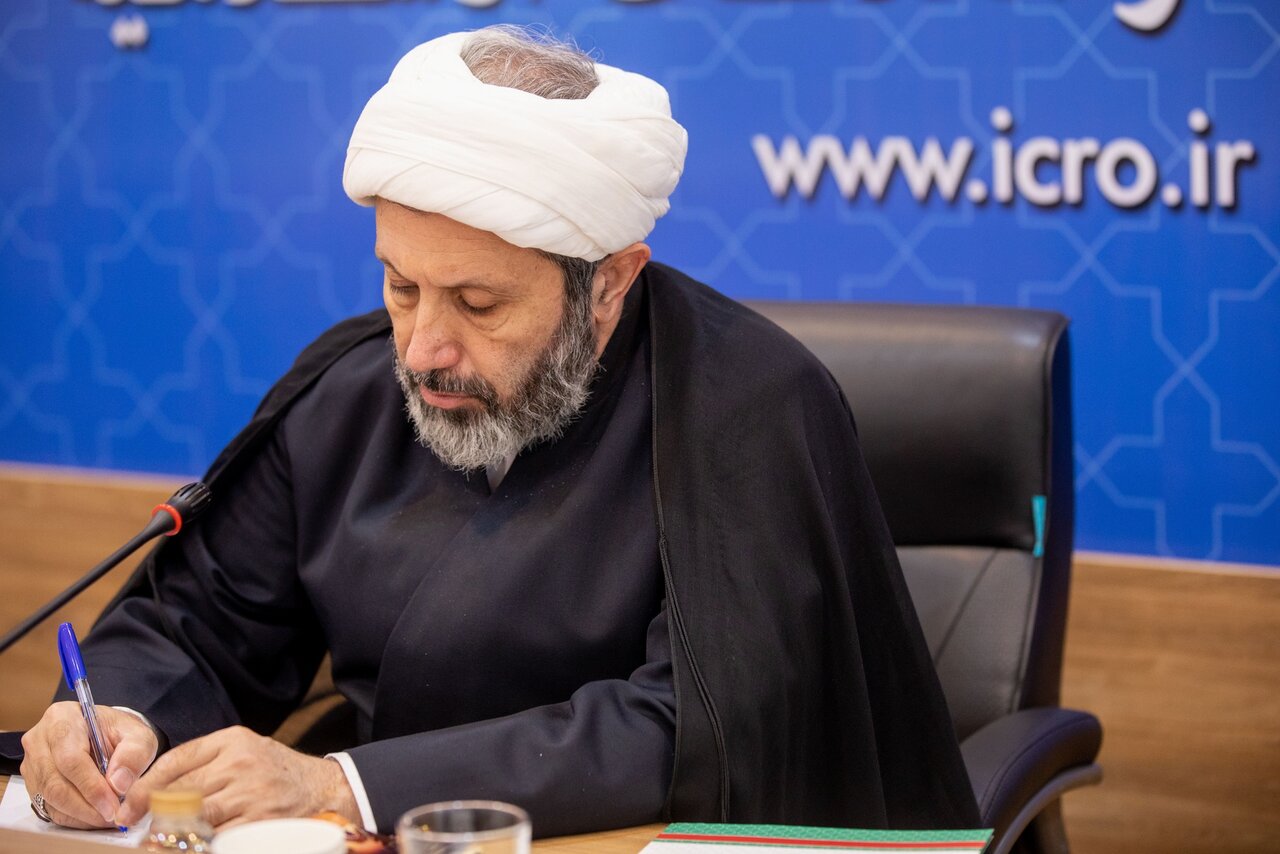
According to the Public Relations Office of the Islamic Culture and Relations Organization, Hojjat al-Islam wal-Muslimeen Mohammad Mehdi Imani-Pour, Head of the Islamic Culture and Relations Organization, wrote a commentary on the occasion of the message of the Supreme Leader of the Islamic Revolution, Grand Ayatollah Seyyed Mojtaba Khamenei (May God Protect Him), marking the thirty-seventh anniversary of the commemoration of Imam Khomeini (May God Have Mercy on Him).
The Supreme Leader of the Islamic Revolution, Grand Ayatollah Seyyed Mojtaba Khamenei (May God Protect Him), in his message commemorating the thirty-seventh anniversary of Imam Khomeini, highlighted important and valuable points concerning the role of the thoughts of the Founder of the Islamic Revolution and the martyred former Leader of the Revolution in the awakening of the Iranian nation.
In part of his message, he stated:
"Today, our beloved nation takes pride in its renewed awakening, standing alongside the Front of Resistance, becoming a source of honor before the conscious eyes of the world and the free nations of humanity, while once again demonstrating the truth of Imam Khomeini's Last Will and Testament. The school of the beloved Khamenei is the very same school of the Great Khomeini, continuing the path of Pure Muhammadan Islam, whose foundation is rising solely for the sake of God. The followers of this school stand shoulder to shoulder, ready to establish truth, eradicate falsehood, and strive along this luminous path. The Great Khomeini and the martyred Khamenei discovered and revived the nation's readiness."
In explaining the awakening of the Iranian nation and the role of the ideas of the two leaders of the Islamic Revolution in bringing about and realizing this phenomenon, several points deserve attention.
First, the awakening of the Iranian nation draws upon the concept of Bi'that (divine mission) in the divine tradition, whereby prophets are sent to awaken humanity, reform the course of life, and invite people to the truth. When this concept is applied in a social and historical context, it signifies that a society has reached a meaningful level of maturity, insight, self-awareness, and responsibility.
The first meaning of the awakening of a nation is collective consciousness and the rediscovery of its historical and cultural identity. Throughout history, many societies have experienced periods of neglect or alienation from themselves, during which social self-confidence declines and communities fail to recognize their own inherent capacities.
Under such circumstances, nations often remain on the margins of historical developments and play only a limited role in determining their own destiny. A nation's awakening occurs when this condition changes and society attains a new level of self-awareness.
At such a moment, people come to believe that they can shape their own future and actively confront challenges and difficulties. This awakening is usually accompanied by a reexamination of history, a redefinition of identity, and the revival of fundamental values.
The intellectual and discursive framework of the late Imam Khomeini and the martyred Leader of the Revolution guides conscious nations throughout the world toward precisely this process of reexamination, reflection, and self-awareness. From the perspective of the two leaders of the Islamic Revolution, nations must develop a sound understanding of their own era, discern the proper direction of history, and recognize their own role within it.
Nations must understand that their identity is not merely a collection of attitudes and characteristics inherited from the past; rather, it is a valuable asset for building the future. When a society reaches such an understanding, its perception of itself and of the world fundamentally changes.
A stronger sense of collective responsibility emerges, and a conscious solidarity centered upon social identity takes shape—one capable of laying the foundation for major historical transformations.

Write your comment.