

During his reign (1587–1629 CE), Shah Abbas I constructed new caravanserais along major routes to enhance road safety and stimulate trade, in addition to restoring existing caravanserais from earlier periods. Today, these caravanserais are considered part of the great heritage of Iranian civilization, and several of them have been inscribed on UNESCO’s World Heritage List.
Features of Khwaja Nazar Caravanserai in Jolfa
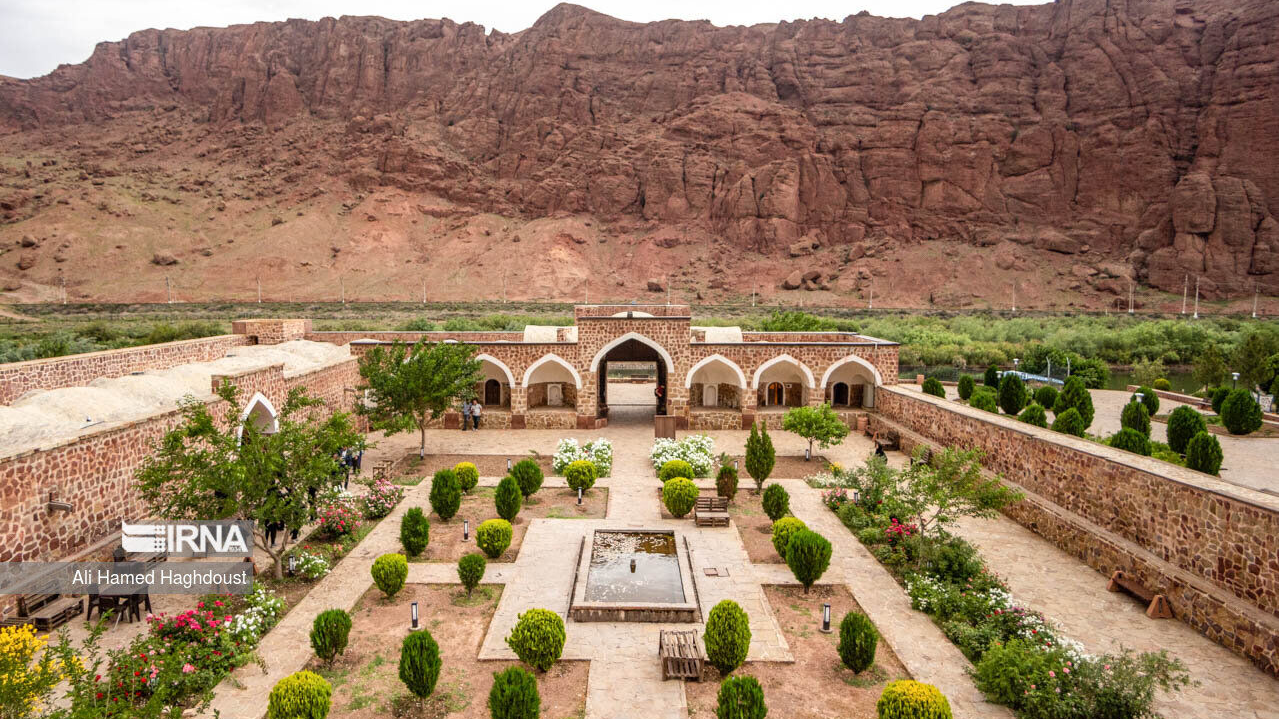
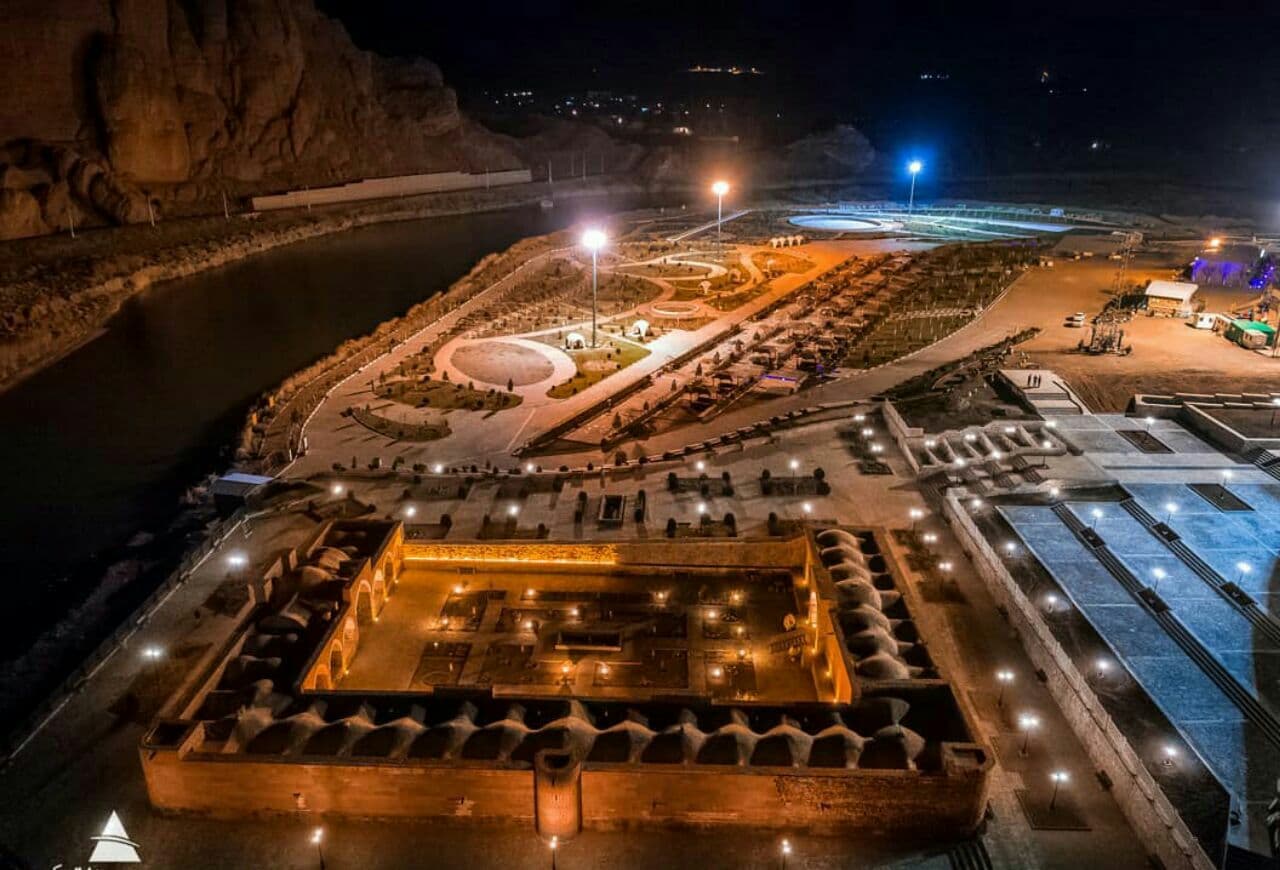
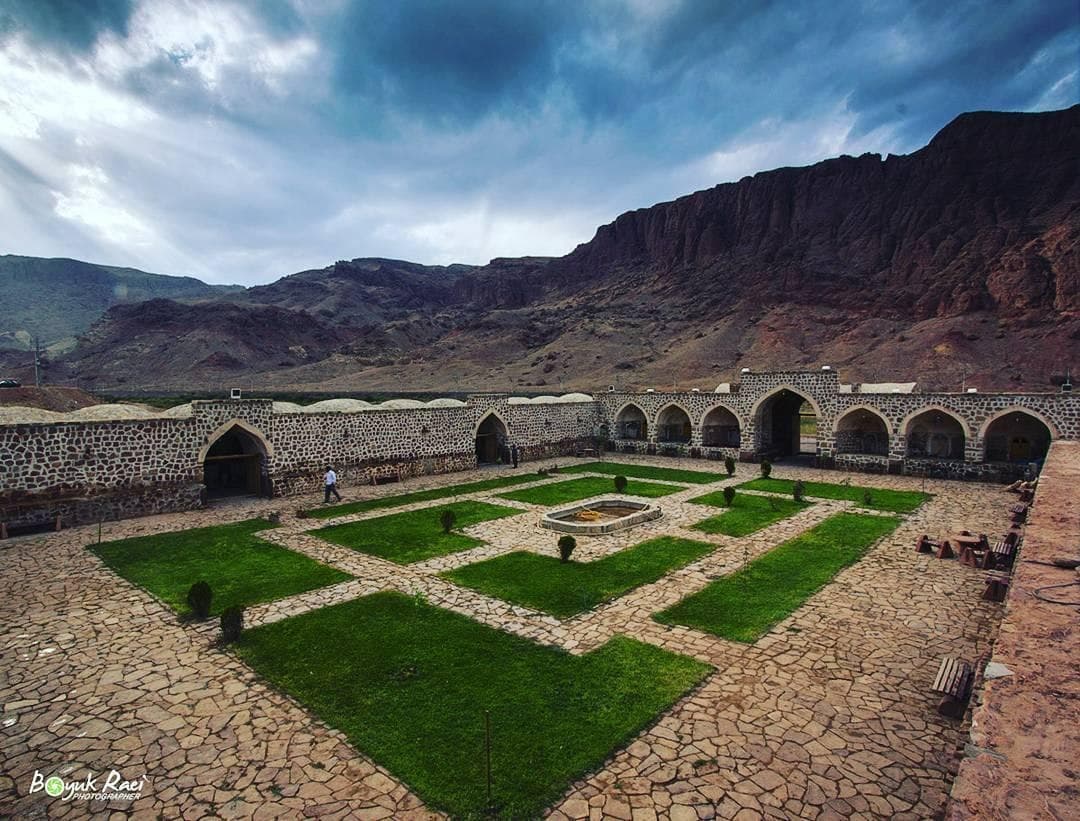
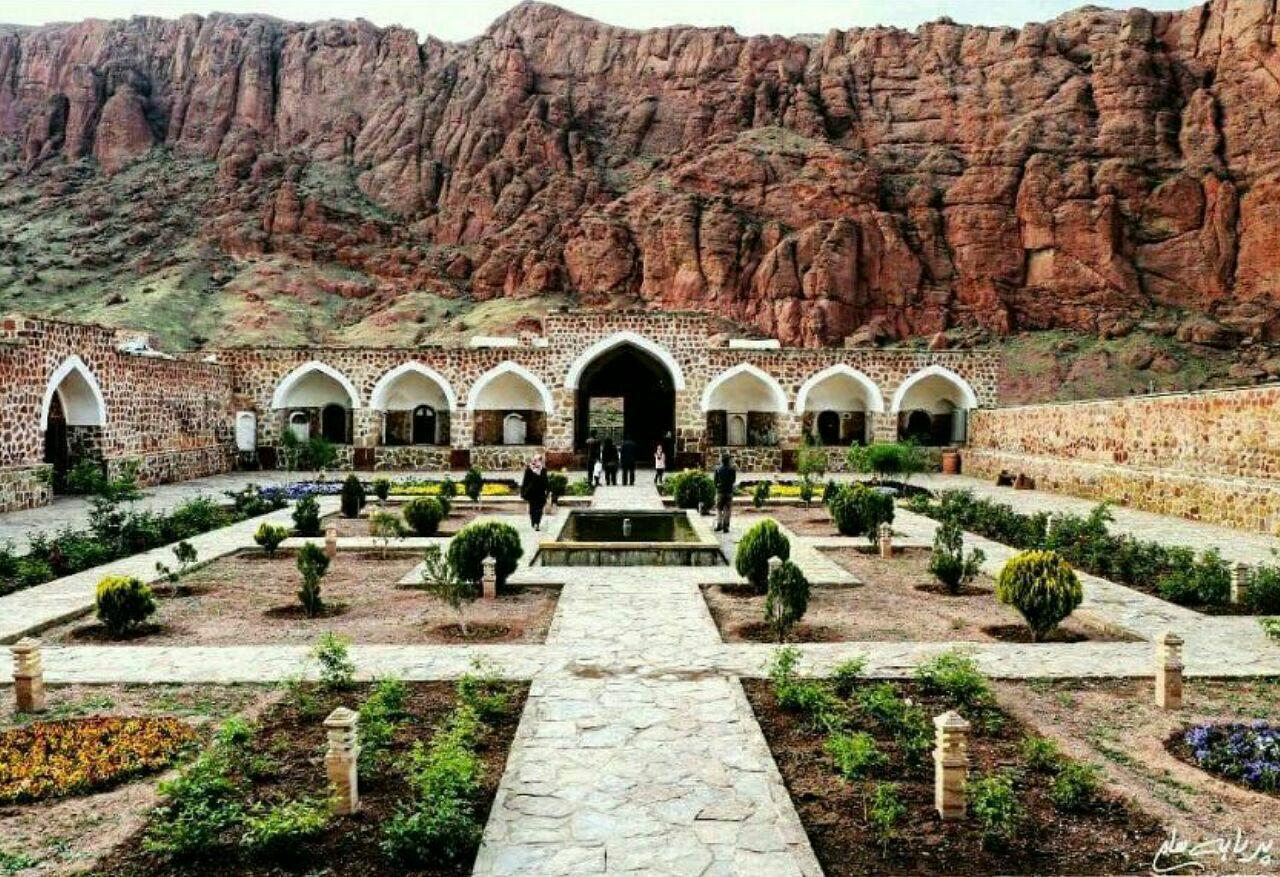
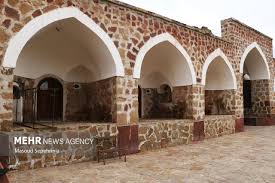
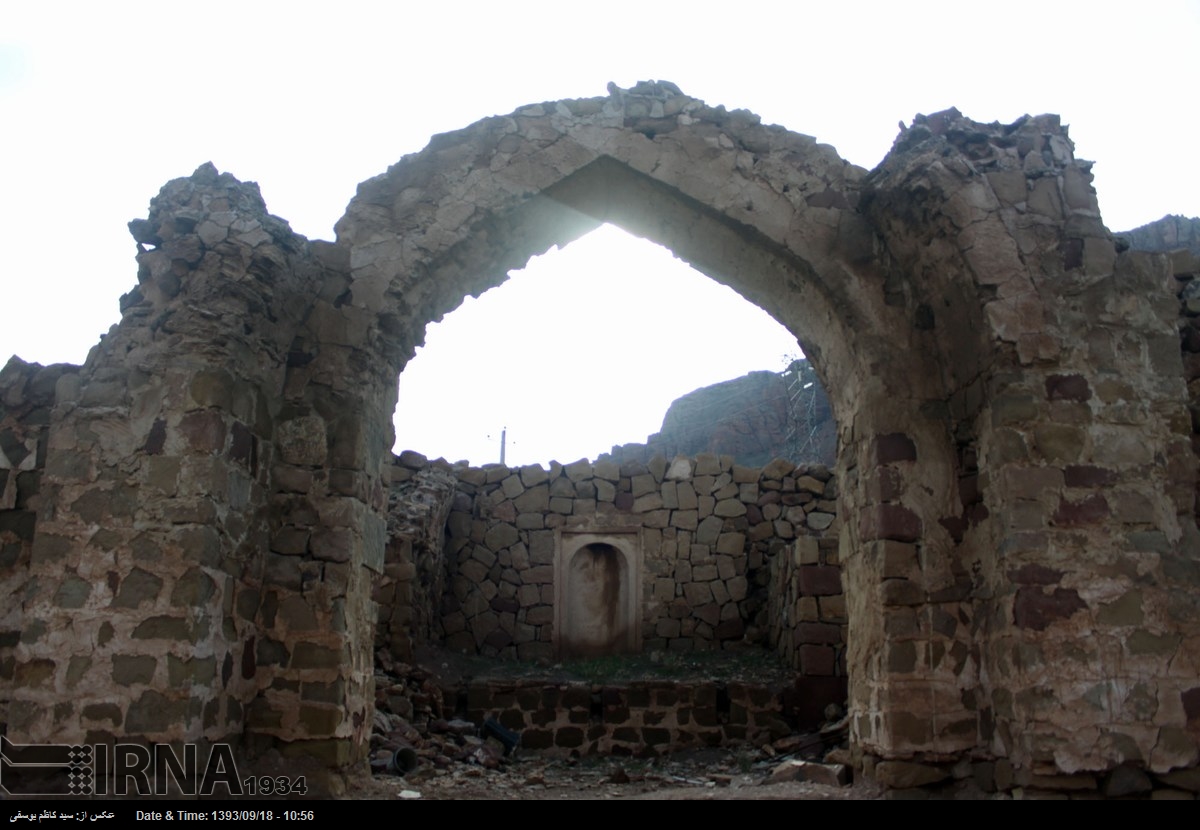
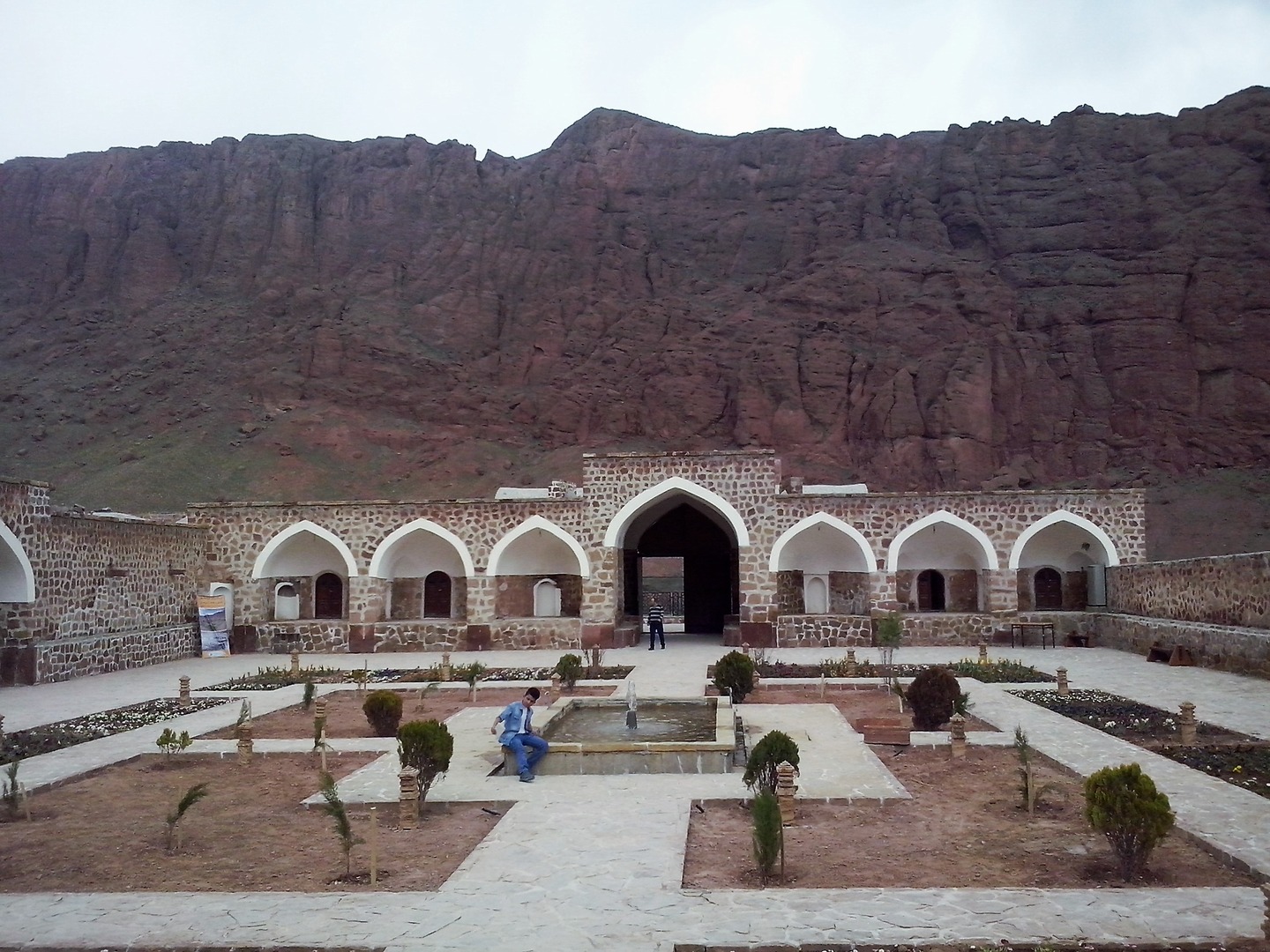
The Khwaja Nazar Caravanserai shares some similarities with the caravanserais known as “Shah-Abbasi” structures. It has a rectangular plan and is constructed using cut stones and bricks, a combination that creates a lattice-like pattern on the walls and enhances its aesthetic appeal. Like many Iranian caravanserais, Khwaja Nazar Caravanserai features a central courtyard surrounded by three iwans (porches). These iwans were traditionally used as places for travelers to sit and rest, and sometimes served as spaces for displaying goods and setting up marketplaces for trade.
The caravanserai features a domed roof constructed with pointed (ogival) arches. Inside the structure, corridors provide access to its various sections. In recent years, parts of the caravanserai have been repurposed as a living museum of pottery and ceramics, a handicrafts shop, and a traditional teahouse/restaurant. Additionally, a short distance from the caravanserai, sculptures of people and several camels have been installed, evoking the atmosphere of historical trade caravans and adding to the cultural experience of the site.
One of the remarkable features of the Khwaja Nazar Caravanserai in Jolfa is its location at the foot of rugged rocky mountains. The symmetry between the caravanserai’s architecture and the surrounding natural landscape creates an extraordinary harmony, offering a breathtaking view that resembles a painted tableau. Its position along the southern bank of the Aras River further enhances its beauty. In addition, the caravanserai is located less than one kilometer from the Chupan Church, one of Iran’s UNESCO-listed heritage sites. Thanks to this exceptional setting, choosing the Khwaja Nazar Caravanserai as a travel destination can be an ideal option for visitors and nature lovers alike.
Tavernier’s Account of the Khwaja Nazar ChurchJean-Baptiste Tavernier, a French traveler and merchant of the 17th century, made several journeys to Iran and neighboring regions during the height of Safavid rule. In his travel writings, he recorded detailed observations about the Iranian society of that era. One of these accounts describes his visit to the Church of Khwaja Nazar. Tavernier introduces Khwaja Nazar as one of the Armenians of Jolfa who, after achieving success in trade, gained the favor of Shah Abbas I. The shah appointed him as the kalantar (chief) of the Armenian community. Originally from Jolfa, Khwaja Nazar built two large caravanserais in the city, both of which were completed after his death. The Khwaja Nazar Caravanserai is one of these two structures; it appears that the other has since been destroyed.
Where is the Khwaja Nazar Caravanserai located?
To visit the Khwaja Nazar Caravanserai, you need to travel to Jolfa, a city in the northern part of East Azerbaijan Province. The caravanserai is situated outside the urban area of Jolfa. The route from Jolfa to the caravanserai passes by several notable landmarks, including the Zia ol-Molk Bridge and Dorna Park.
National and UNESCO Registration of Khwaja Nazar Caravanserai
The Khwaja Nazar Caravanserai was inscribed on Iran’s National Heritage List in 2003. At the 41st session of the UNESCO World Heritage Committee, held in 2023 in Riyadh, this historic structure—together with 53 other caravanserais—was also inscribed on the World Heritage List under the collective title Iranian Caravanserais. This ensemble is recognized as the 27th Iranian property added to UNESCO’s World Heritage List. The 54 caravanserais included in this inscription are spread across 24 provinces of Iran, highlighting just how significant and widespread the tradition of caravanserai construction has been throughout the country’s history.