

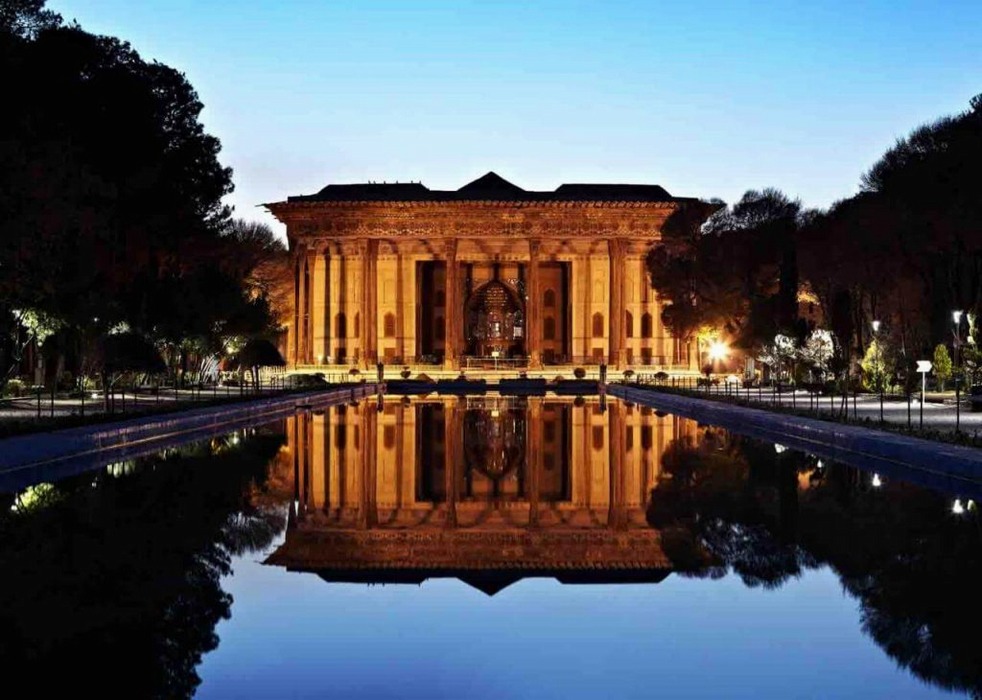
In the heart of Isfahan, nestled within a vast, verdant garden where ancient plane trees and cypresses cast cool, welcoming shade, stands a palace that is far more than a royal residence. It is a masterpiece of architectural proportion, a symphony of water and mirrors, and a symbol of the Safavid Empire’s artistic achievements, power, and splendor. With its magnificent twenty-columned portico, whose reflection in the pool before it creates a dreamlike image; its richly decorated interiors, featuring mirror work that multiplies light; and its monumental, colorful wall paintings depicting episodes from Iranian history, Chehel Sotoun Palace is one of the finest examples of Persian palace architecture. It also forms part of the UNESCO-listed Persian Garden, inscribed on the World Heritage List in 2011. Chehel Sotoun may aptly be described as a “symphony of water and mirrors”: a palace where architecture and the Persian garden are so seamlessly intertwined that the boundary between human craftsmanship and nature seems to disappear, inviting visitors into a world of grandeur, art, history, and dreams.
The story of Chehel Sotoun began with the ambitious vision of Shah Abbas I of the Safavid dynasty. After moving the capital from Qazvin to Isfahan, Shah Abbas sought to create a city that would be not merely a political center, but a place worthy of the title “Half the World.” In addition to Naqsh-e Jahan Square and its magnificent mosques, he needed a ceremonial palace where he could receive ambassadors and foreign dignitaries and host official functions and royal celebrations. The original core of Chehel Sotoun was built during the reign of Shah Abbas I as a modest pavilion set within an expansive garden. However, the magnificent palace we see today was largely developed during the reign of Shah Abbas II, with major additions and decorative works carried out around the mid-seventeenth century. Shah Abbas II, a patron of the arts, oversaw the transformation of the palace into a grand ceremonial venue. Throughout its history, Chehel Sotoun witnessed important events, including receptions for foreign ambassadors and royal celebrations such as Nowruz. Claims that specific political treaties were signed here should be included only when supported by reliable historical sources. During the Qajar period, parts of the palace and its decorations suffered damage and alterations. Some accounts associate damage to Isfahan’s historic buildings with Zill al-Sultan, the Qajar governor of Isfahan, although the precise extent of his role in the palace’s condition should be established through historical records. In more recent decades, conservation and restoration work has helped preserve this important monument.
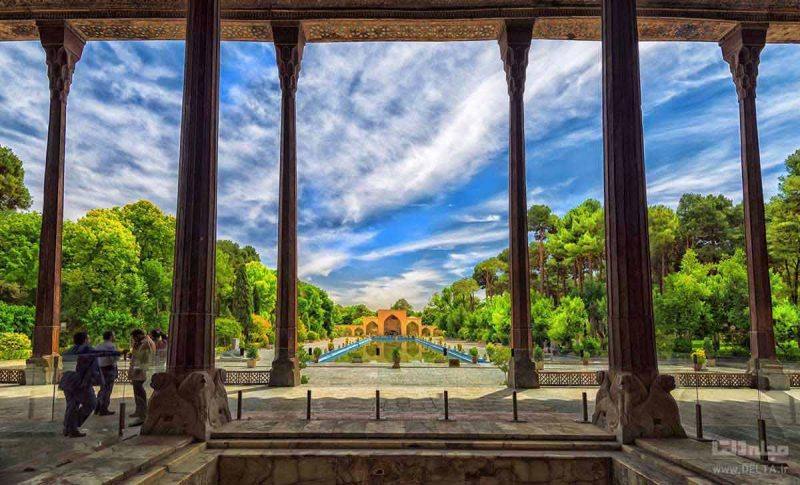
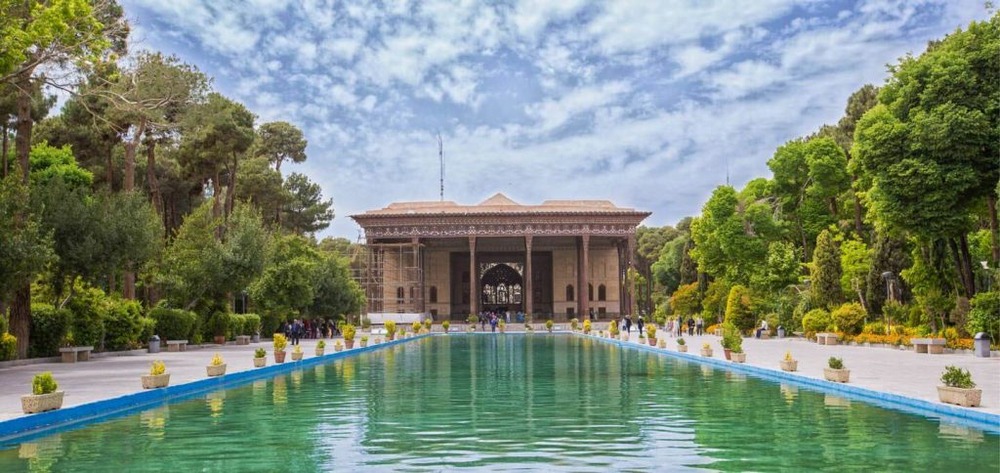
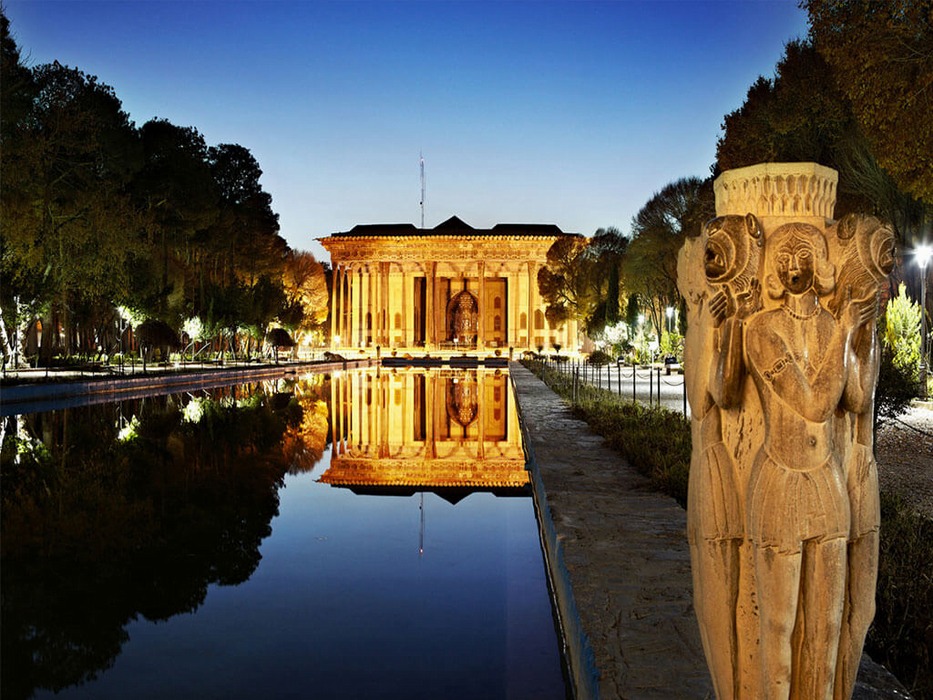
The first and most distinctive feature of Chehel Sotoun is its twenty-columned portico. The portico is supported by twenty tall, slender wooden columns, whose reflection in the pool in front creates the visual impression of forty columns and gives the palace its name. Together, the columns frame a shaded, semi-open space overlooking the garden and its reflecting pool. The wooden columns contribute to the elegance of the structure, while their carefully crafted forms and the decorative details of the portico enhance its architectural character. The columns stand on stone bases, and their capitals and surrounding ornamentation add to the grandeur of the space. Their regular arrangement creates a pleasing visual rhythm, and standing among them while looking out toward the garden is a memorable experience. The portico ceiling is adorned with geometric designs and colorful floral motifs in shades of red, blue, gold, and green, reflecting the richness of Safavid decorative art. In Iranian and Islamic culture, the number forty is often associated with abundance and completeness, and Chehel Sotoun—literally, “Forty Columns”—evokes a palace of numerous, majestic columns. The portico served as a ceremonial space where the Safavid ruler received ambassadors and other distinguished guests. The reflection of the columns in the pool creates the dreamlike image that has become one of the palace’s most recognizable features.
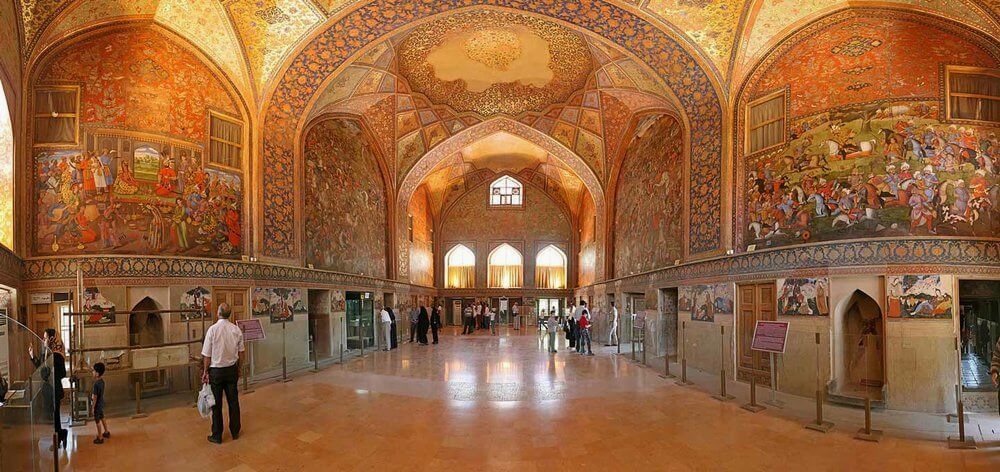
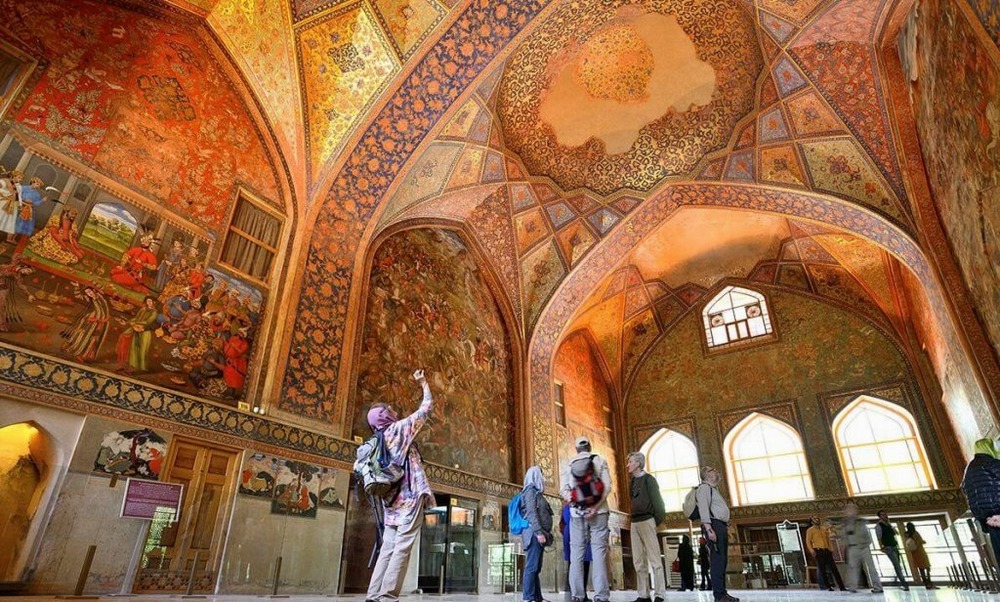
The palace’s reception halls and richly decorated interiors are among its most striking features. Mirror work, elaborate stucco ornamentation, painted ceilings, and magnificent wall paintings contribute to the palace’s luminous and richly layered atmosphere. Small pieces of mirror arranged across selected surfaces reflect natural light and, historically, the light of lamps and candles, creating intricate visual effects. Decorative elements and reflective surfaces enhance the sense of depth and splendor within the palace. Any reference to a specific “Mirror Hall” should correspond to the hall’s established name in reliable architectural or heritage documentation.
The wall paintings of Chehel Sotoun are among Iran’s most important artistic treasures. Located in the palace’s principal halls and adjoining rooms, they depict scenes of royal receptions, battles, and courtly life. Among the best-known compositions is the reception of Vali Muhammad Khan of Bukhara by Shah Abbas I, which conveys the grandeur of the Safavid court. Another painting depicts the Battle of Chaldiran, fought in 1514 between the Safavid army under Shah Ismail I and the Ottoman army under Sultan Selim I. The scene of Shah Tahmasp I receiving the Mughal emperor Humayun is another celebrated work, offering a glimpse into diplomatic relations between the Safavid and Mughal courts. Its detailed depictions of clothing, vessels, musicians, and other courtly elements illustrate the richness of Safavid visual culture. Another major composition depicts Shah Ismail I in battle against the Uzbeks; the precise identification of the battle and the figures portrayed should follow the relevant art-historical source. The paintings should not all automatically be attributed to the same period, as some historic compositions were altered, restored, or repainted in later eras.
The garden of Chehel Sotoun, often reported to cover approximately 67,000 square meters, is a notable example of the Persian garden tradition. Its layout reflects principles associated with the Chaharbagh, or four-part garden, although the precise plan should be described in accordance with the documented design of the site. The long reflecting pool in front of the portico mirrors the palace’s façade and strengthens the visual relationship between the architecture and the landscape. Published sources give slightly different measurements for the pool; it is commonly described as approximately 110 to 115 meters long and about 16 meters wide. The garden was historically supplied with water through madi channels—traditional watercourses branching from the Zayandeh Rud River. The natural gradient of the land helped distribute water through channels and fountains. Ancient plane trees, cypresses, and pines, together with flowing water and fountains, create a peaceful and enchanting atmosphere.
For contemporary architects and designers, Chehel Sotoun offers enduring lessons in harmonious architectural proportions, the integration of buildings with water and gardens, the use of reflection and light in design, and the creation of impressive ceremonial spaces. This symphony of water and mirrors continues to stand in the heart of Isfahan, evoking the artistic achievements, courtly traditions, and idealized vision of the Safavid era.