

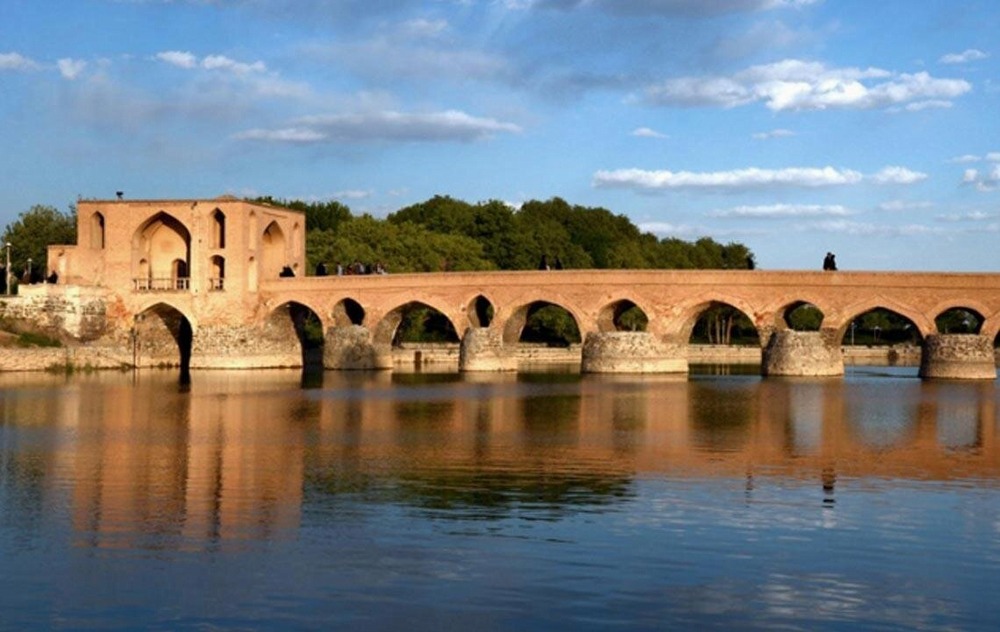
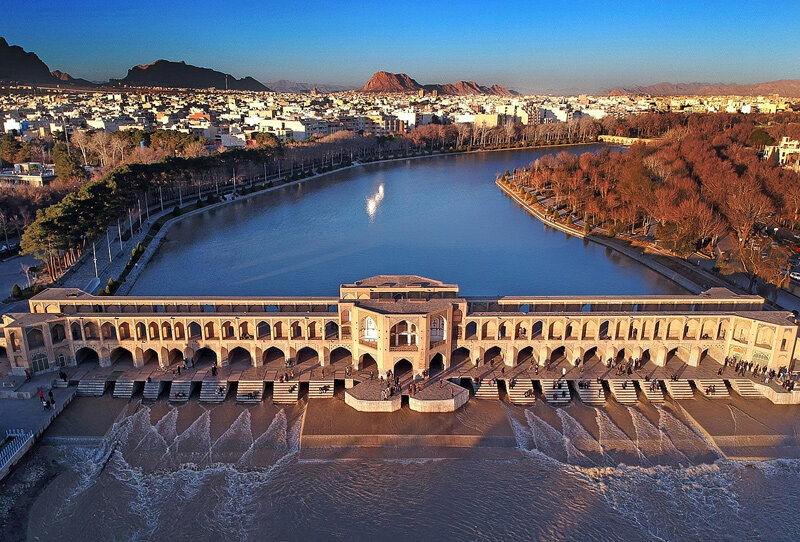
In the modern world, a bridge is often viewed as a single-purpose structure: a means of crossing a physical barrier. We build bridges to cross rivers and other barriers more quickly and safely, without getting our feet wet or our wheels stuck in the mud. In historic Iran, however, a bridge was never merely a means of passage. Here, bridges functioned as true “civic spaces,” “linear squares,” “markets over water,” and sometimes even “pleasure palaces.” Iran’s historic bridges, from Si-o-se-pol in Isfahan to Kashkan Bridge in Lorestan, from the Old Dezful Bridge to the Gap Bridge in Khorramabad, tell a remarkable story of the integration of engineering, art, and social life—a story in which technical infrastructure became an architectural masterpiece and a vibrant social heart of the city.
To understand the ingenuity of Iranian bridge building, we must first broaden our definition of what a bridge can be. In the traditional Iranian worldview, a bridge was not merely an engineering structure designed to overcome a natural obstacle; it was a “space of connection”—linking the two banks of a river and connecting neighborhoods, bringing people closer to nature through the sight and sound of flowing water, and even connecting people with the divine through charitable donations and endowments for bridge construction. For this reason, Iranian bridges were often accompanied by spaces such as prayer halls, covered passageways, seating platforms, and elaborate decorative elements. A bridge was an “open-air room” suspended above the water—a place to pause, gather, and experience the surroundings, not merely a means of crossing.
This holistic approach to bridge design has roots in an ancient tradition dating back to the Achaemenid and Sasanian periods. Ancient bridge-dams, known in Persian as band-pol structures, such as the Shushtar Band-Bridge and Dezful Band-Bridge, were designed to serve several functions simultaneously: providing passage for people and livestock, controlling and regulating water for agriculture, and providing water power for mills. This multifunctionality, now recognized as a principle of sustainable design, had become an established engineering tradition in Iran centuries before.
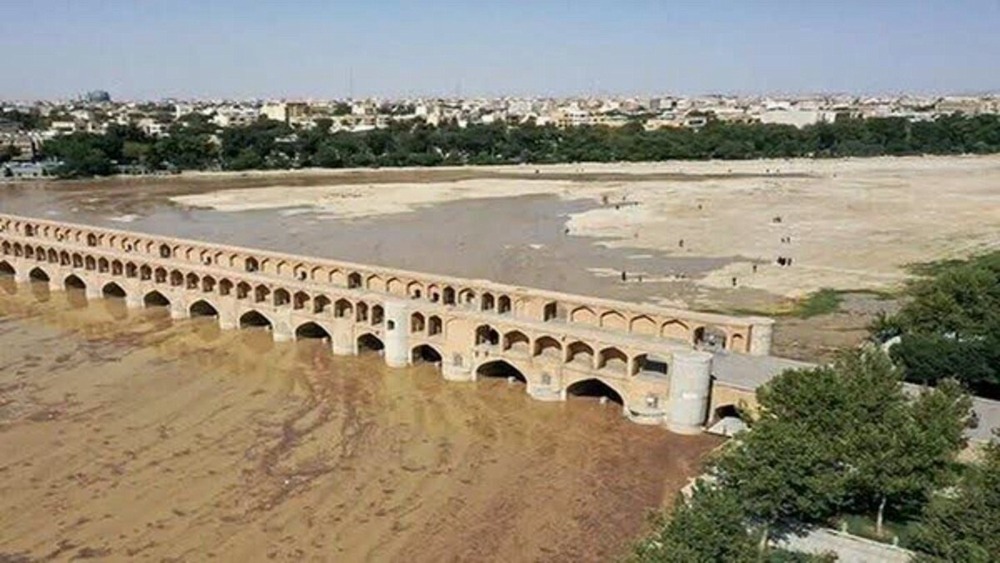
One of the finest expressions of this tradition can be seen in Safavid Isfahan, most notably in Si-o-se-pol. Built in the early seventeenth century, Si-o-se-pol, also known as Allahverdi Khan Bridge, is 295 meters long and is one of the longest historic bridges in Iran. Yet its length is far less remarkable than the way the bridge integrates architecture and public life. Si-o-se-pol is, in essence, a “street over water.”
Two rows of arches flanking the central passage create a semi-open space where pedestrians can walk, sit, and enjoy views of the water and the city. These arches follow a rhythmic sequence that is reflected in the water below, creating a visual symphony. On moonlit nights, moonlight filters through the arches, while the interplay of light and shadow transforms the space into a poetic dream.
Yet Si-o-se-pol was more than a recreational space. The bridge served as a major link between Chaharbagh Abbasi Avenue to the north of the city and the Armenian quarter of Jolfa to the south. It also functioned as a shared public space where people from different religious and social communities could encounter one another. Muslims, Christians, Jews, and Zoroastrians could all encounter one another beneath its arches, creating a setting in which people from different communities could share the same public space. In this sense, Si-o-se-pol can be understood as an architectural expression of coexistence in Safavid Isfahan—a bridge where infrastructure, public life, and architecture came together above the water.
Yet Iran’s bridges are not limited to Isfahan or the Safavid period. Deep in the Zagros Mountains, along the raging rivers of western Iran, bridges were built that may not rival those of Isfahan in ornamentation or visual grandeur, yet remain remarkable achievements of engineering and structural design.
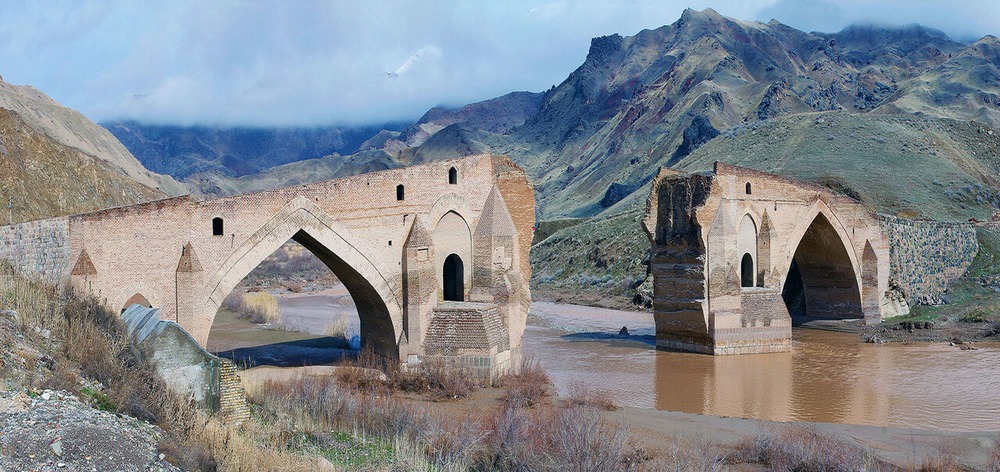
One such example is Kashkan Bridge in Lorestan Province. Built in the fourth century AH during the Buyid period over the turbulent Kashkan River, the bridge stretches for nearly 320 meters, making it one of the longest historic bridges in Iran. The bridge stood on one of Iran’s important ancient routes, connecting the central Iranian plateau with Khuzestan and Mesopotamia. Building a durable bridge over such a turbulent, flood-prone river, deep within the rugged Zagros Mountains, in the fourth century AH was a remarkable feat of engineering. Its construction demonstrates the extraordinary technical knowledge and structural ingenuity of the bridge builders of the period.
The most remarkable feature of Kashkan Bridge is its massive stone piers, reinforced on the upstream side by triangular buttresses. These buttresses represent a remarkable example of hydraulic engineering: they help divide and redirect the force of turbulent floodwaters while reinforcing the bridge piers against hydraulic pressure and impact. Their robust design has helped the surviving piers withstand centuries of exposure to powerful river flows and flooding. The bridge features pointed arches, which provide a tall and structurally efficient profile while allowing greater clearance for floodwaters to pass beneath the bridge. Unfortunately, only a portion of the bridge survives today, with many of its spans having collapsed. Yet even the surviving remains still convey a powerful sense of the bridge’s former grandeur and monumental presence.
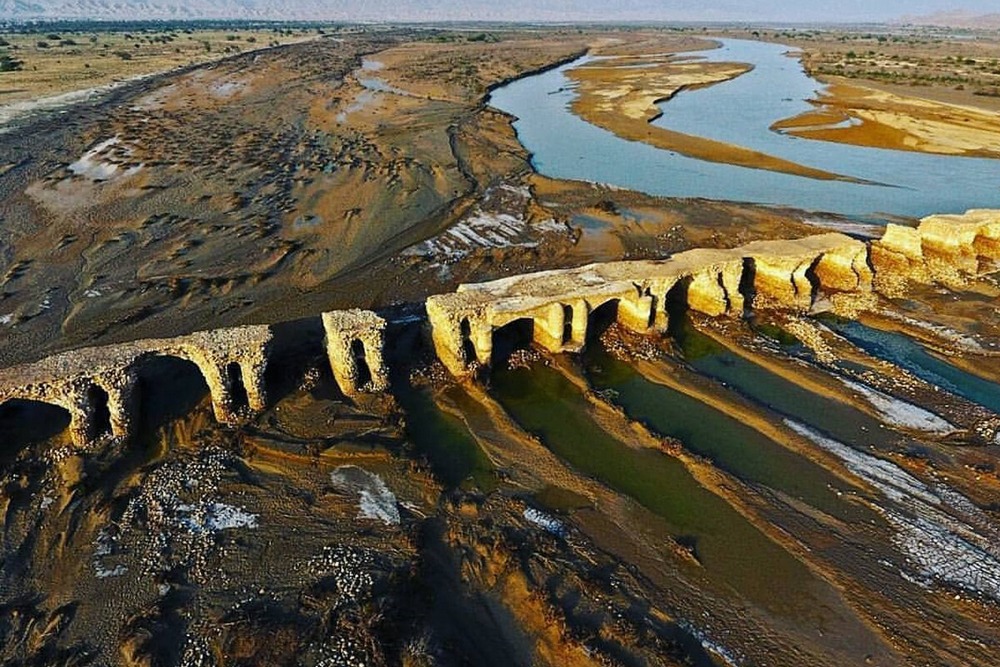
Elsewhere in western Iran, in the city of Khorramabad, stands the Gap Bridge, also known as Shapuri Bridge, another remarkable example of ancient Iranian bridge construction. Dating back to the Sasanian period, the bridge features 28 spans and stretches for approximately 330 meters, making it one of the longest historic bridges in Iran. Its massive stone piers and triangular buttresses, like those of Kashkan Bridge, demonstrate the advanced hydraulic engineering knowledge of ancient Iranian builders.
What lessons do Iranian bridges offer the modern world? The first is “multifunctionality.” At a time when urban infrastructure is often single-purpose, visually utilitarian, and disconnected from social life, Iranian bridges demonstrate that a bridge can simultaneously serve as a passageway, a recreational space, a marketplace in some cases, a prayer space, and an urban landmark. The second is “connection with nature.” Rather than separating pedestrians from water and sky with concrete walls, Iranian bridges invite people to look at the water, hear the sound of flowing water, and feel the cool breeze from the river. This sensory approach to architecture, now an important principle in contemporary design, was already embodied in Iranian bridge design centuries ago. The third is the “social dimension” of the bridge. Iranian bridges demonstrate that urban infrastructure can become a “public space”—a place where people do not simply pass through, but pause, converse, drink tea, and sit watching the sunset over the water. Iran’s historic bridges offer a valuable reminder that infrastructure designed for movement can also accommodate human interaction, leisure, and connection with nature.