

_3.jpg)
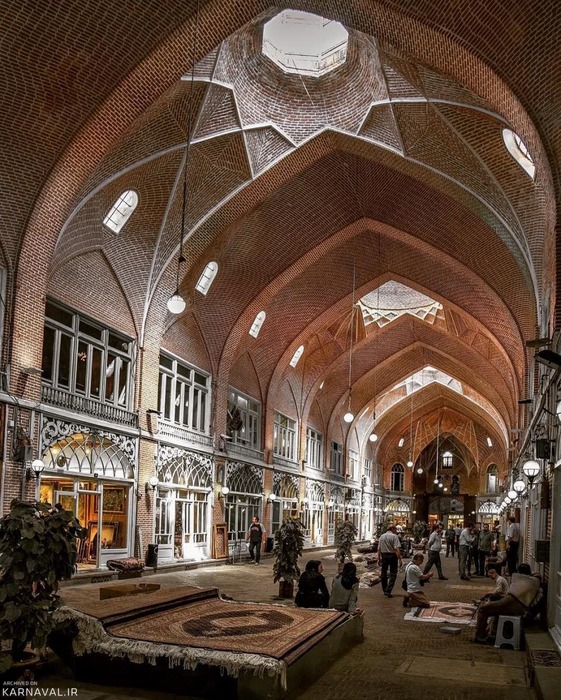
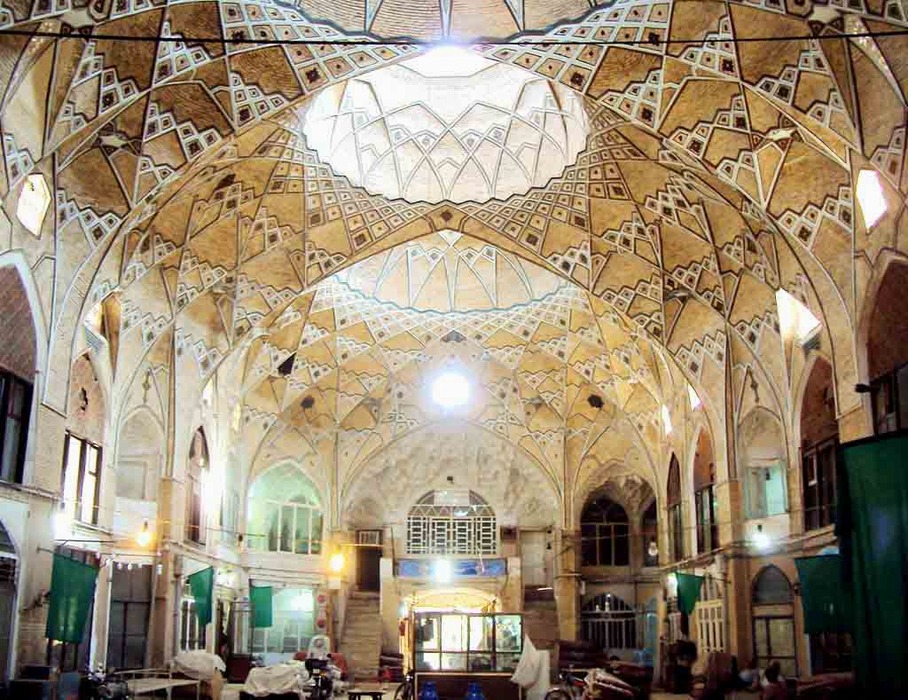
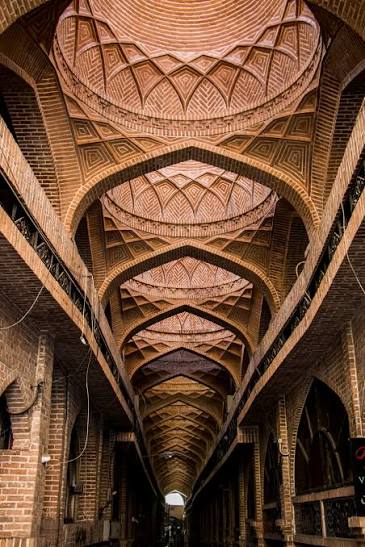
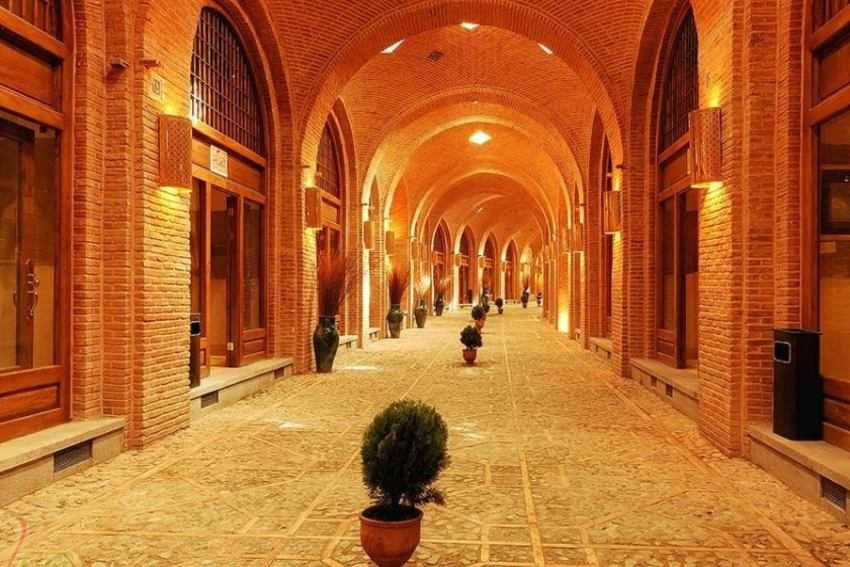
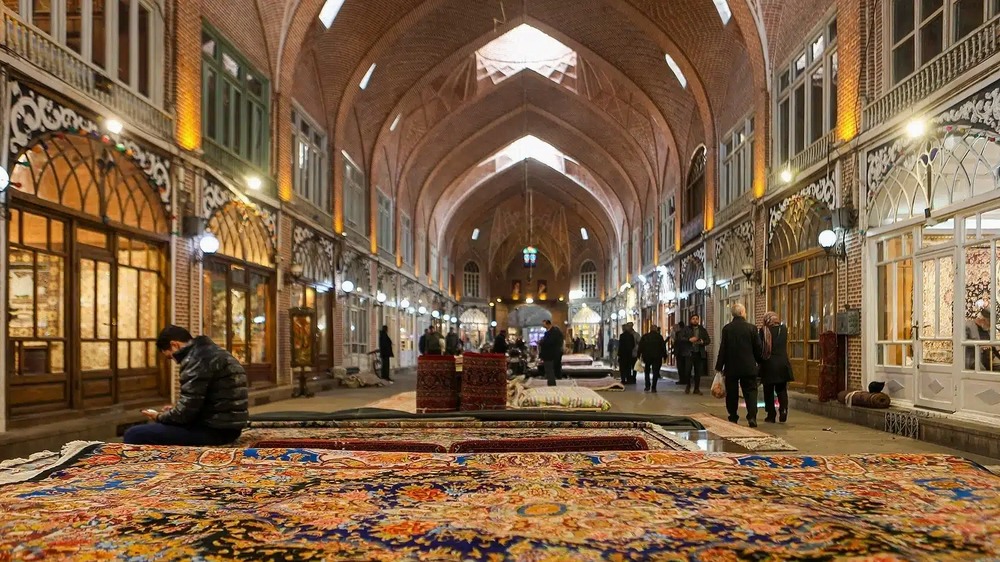
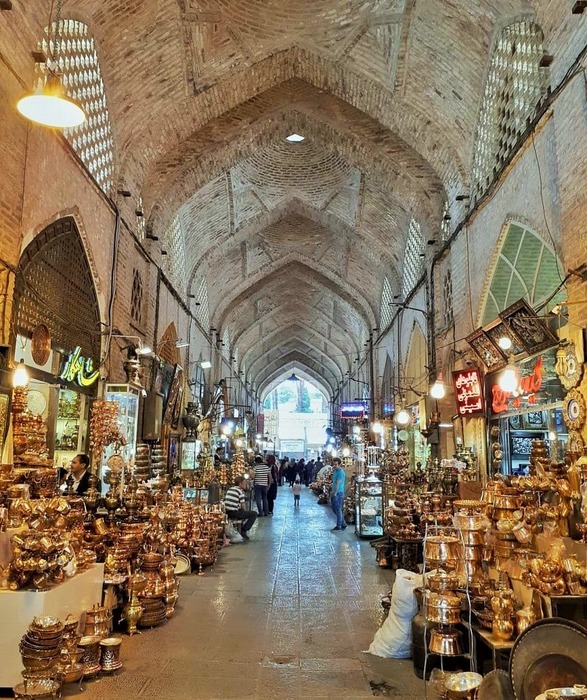
When we think of a marketplace, we usually imagine rows of shops, the bustle of trade, and the aromas of spices, perfumes, and leather. Yet the traditional Persian bazaar was something entirely different. It was not merely a commercial center, but rather a city within a city. Its covered passageways functioned liklike the arteries of a living organism, carrying life and activity throughout the city. . At the heart of the bazaar, one could find mosques, schools, bathhouses, caravanserais, teahouses, and even traditional Persian athletic houses known as zurkhanehs . In other words, A person could spend days within the bazaar and find many of their daily needs fulfilled without leaving its surroundings. in order to pray, study, bathe, eat, conduct business, or exercise. The Persian bazaar was not simply a marketplace—it was a complete social, cultural, and economic ecosystem.
Traditional Persian bazaars were usually located at the very heart of the city, close to both the citadel and the Jameh mosque. This arrangement was far from accidental. It allowed easier access between the ruling authorities, merchants, and the urban population. while ensuring that the public had easy access to the city's most important institutions. The bazaar was organized around one or more main corridors, known as rastehs, from which smaller passageways branched out toward different neighborhoods. Some of these markets stretched for several kilometers. The Tabriz Bazaar, one of the largest covered bazaar in the world, extends more than seven kilometers of interconnected passageways. Its principal axis extends from east to west, while numerous branches run north and south.
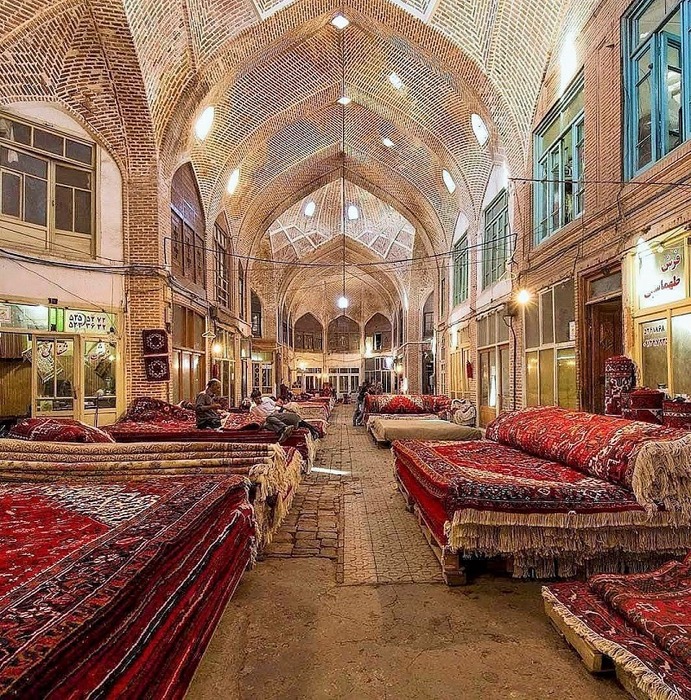
The roofs of traditional Persian bazaars were usually constructed in the form of domes or vaulted arches, incorporating openings known as jāmkhāneh or rouzan. These carefully designed openings allowed daylight to enter while shielding the interior from the direct heat of the sun. Beneath these roofs, temperatures remained pleasantly cool during the summer and relatively warm throughout the winter. The thick vaults and brick masonry provided excellent natural insulation. In some bazaars, windcatchers (badgirs) were also built into the roofs to improve air circulation. As a result, moving through the bazaar never felt hot, oppressive, or suffocating. Even amid the constant flow of merchants, customers, and travelers, the environment remained remarkably comfortable and inviting.
The floors of the bazaar were usually paved with bricks, and along both sides of the passageways, raised platforms known as takhts were constructed, typically about half a meter high. The shops themselves were located behind these platforms. Merchants displayed their goods on the takhts, while customers either sat or stood nearby to examine the merchandise. Trade within the bazaar was carefully organized according to profession and craft. Goldsmiths occupied one section, carpet merchants another, and spice dealers yet another. This arrangement allowed customers to find what they needed quickly and efficiently. Even today, the names of these specialized sections survive in many traditional markets. In Tehran's Grand Bazaar, for example, one can still find the Goldsmiths' Bazaar, the Cloth Merchants' Bazaar, and the Shoemakers' Bazaar, among many others.
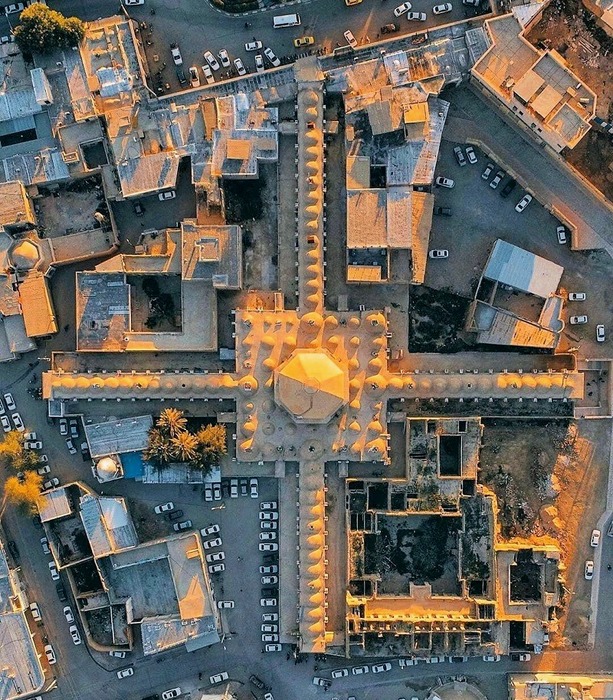
The bazaar was far more than a passageway. At various points along its course, the narrow corridors opened into broader spaces known as chaharsuqs. A chaharsuq was the point where one commercial avenue intersected with another. These spaces were typically crowned with lofty domes that allowed greater amounts of light to filter through the openings above. The chaharsuq also served as a gathering place for the public. It was where news was announced, where merchants and travelers met, and, on occasion, where speeches were delivered and protests took shape. In the larger chaharsuqs, a fountain or pool often stood at the center, surrounded by a few trees. After long hours of trade and negotiation, people would sit beside the water, rest, and enjoy a cup of tea.
Within the bazaar, there were also timchehs and saras, each serving a distinct purpose. A timcheh was a covered space crowned by a lofty dome and illuminated by numerous skylights. These structures were generally reserved for the sale of valuable goods such as carpets, precious fabrics, and silk. One of the finest examples is the Timcheh Hajib al-Dowleh in Tehran's Grand Bazaar. A sara, by contrast, was a more open complex, typically arranged around a central courtyard and surrounded by rows of chambers. Rather than functioning as retail shops, these spaces served primarily as warehouses and commercial depots. Caravans unloaded their goods in the saras, where wholesale merchants conducted business and stored their merchandise. In this way, the Persian bazaar functioned not merely as a place of exchange, but as a carefully organized network of trade, storage, and social interaction.
Another essential element of the bazaar was the caravanserai. The caravanserais located within the market were smaller than those found along major trade routes, yet they shared a similar structure: a central courtyard, chambers for storing goods, and stables situated at the rear. When a caravan arrived, the camels were brought into the caravanserai, the goods were unloaded and transferred to the saras, and the merchants themselves rested in the upper chambers. Many of the caravanserais within the bazaars of Tabriz and Isfahan still stand today. The camels and caravans, however, have long since disappeared, leaving behind only the enduring architecture that once sustained the movement of people, goods, and ideas across vast distances.
A bazaar was not complete without mosques, religious schools, and bathhouses. The bazaar mosque was usually located near the main chaharsoo (crossroads). Examples include the Imam Mosque (Shah Mosque) in the bazaar of Isfahan and the Jameh Mosque in the bazaar of Tabriz. Next to the mosque, there was often a religious school. Students of religious sciences lived in the school chambers, studied there, and sometimes also worked in the bazaar. This close connection between commerce and religion has deep roots in Iranian history.
The bazaar bathhouse was also an important facility for merchants and shopkeepers. Examples include Haji Rais Bathhouse in the bazaar of Isfahan and Haji Farajollah Bathhouse in the bazaar of Tabriz. After a long day working in their shops, resting and bathing in the public bathhouse (hammam) became a regular part of their weekly routine. But the bazaar was not only about architecture; it was also about social conduct and customs. The bazaar had its own traditions and codes of behavior: when a customer entered a shop, the merchant was expected to offer tea. Merchants were traditionally expected to honor agreements and maintain trust with their customers.
, provided it was within the accepted period. The bazaar would close on religious holidays and during periods of public mourning.
The customer had rights, and the merchant had responsibilities. Fraud and deception were not considered acceptable practices in the bazaar (at least in theory). The guild system, made up of masters and apprentices, regulated almost every aspect of commercial life: prices, the quality of goods, and even the number of apprentices allowed in each shop. The bazaar was a place of commerce, but it was also a center for the exchange of news and ideas. During the Qajar era, political and social developments were often first heard in the bazaar. The telegraph office located within the bazaar, merchants arriving from other cities, and travelers staying in caravanserais all contributed to making the bazaar a hub of information. The bazaar exchanged not only goods, but also news, opinions, and social ideas.
During the Tobacco Protest, the Constitutional Revolution, and the nationalization of the oil industry, the bazaar played a key role. Merchants would close their shops, gather in mosques, and organize strikes. This practice of “bast” (seeking sanctuary in a protected religious or public place, which could also become a form of collective protest) became one of the most powerful forms of protest in modern Iranian history. Today, the situation of bazaars has changed. Modern shopping malls, with escalators, parking facilities, and air conditioning, have become serious competitors to traditional bazaars. Many younger generations prefer visiting malls rather than old marketplaces.
Tourists, however, still appreciate the charm of traditional bazaars. The bazaars of Tabriz, Isfahan, Kerman, and the Qaysariyeh Bazaar remain among the main destinations for international visitors. Their historic fabric, brick vaults, traditional teahouses, and displays of carpets and handicrafts offer an experience that modern malls cannot provide. Some sections of the bazaars that had once become quiet and less active have been revived through the sale of souvenirs and traditional handicrafts, giving new life to these historic commercial spaces.
But the bazaar is not merely a tourist attraction. The bazaar is still alive. Every morning, the shop shutters rise, the fragrance of herbal shops fills the air, and the voices of merchants and produce sellers echo through the alleys. At noon, when the call to prayer is heard, shops close temporarily, and people make their way toward the mosque. In the afternoon, as the weather becomes cooler, the bazaar grows lively again. At night, the market gradually becomes quiet; only a few teahouses remain open, with groups of elderly men gathering together, sharing conversations over tea and hookah.
This rhythm of life has been repeated for centuries. The types of goods may have changed, but the customs and social character of the bazaar have remained largely the same. Iran’s bazaars are stories of commerce, but not commerce alone. They tell the story of how people buy and sell, how they build trust, how they argue, and how they find ways to compromise and live alongside one another.
At the heart of the city,The bazaar remains a living institution, continuing to play a role in the social and economic life of Iranian cities. And as long as there is someone who wants to buy and someone who has something to sell, the bazaar will endure.