

_2.jpg)
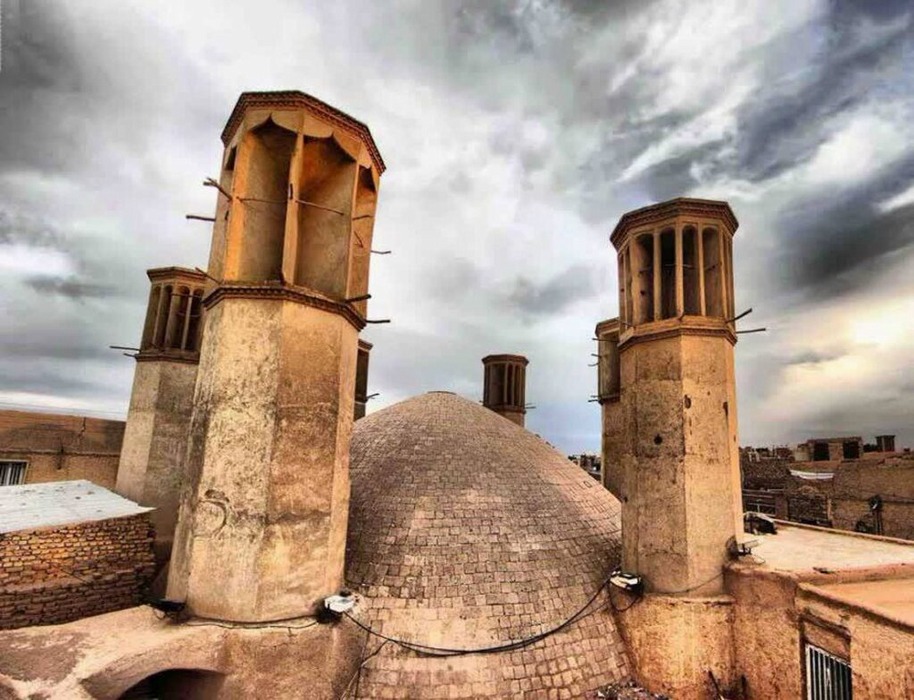
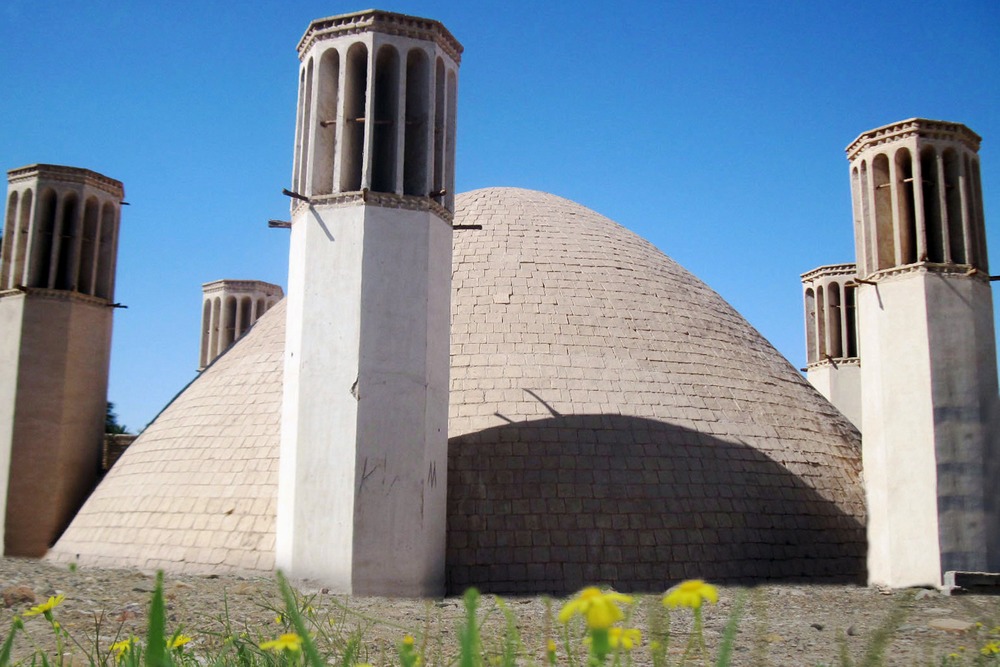
Among all the traditional water reservoirs of Iran, there is one that is more than just a water storage facility. It is an “architectural sculpture”—a symphony of wind and water. The Six-Windcatcher Water Reservoir of Yazd, with its six tall and distinctive windcatchers rising above a vast mud-brick dome, is one of Iran’s most renowned traditional water reservoirs and a remarkable example of desert architecture. Located in the historic Tel neighborhood of Yazd, near the Fahadan district, it is distinguished by its six windcatchers, making it an exceptional monument among the city’s many historic water reservoirs.
To understand the ingenuity of the Six-Windcatcher Water Reservoir, we must first imagine how a city like Yazd, situated in one of the driest and hottest climates in the world, managed to provide water for thousands of its inhabitants. Yazd receives barely 60 millimeters of rainfall a year, while summer temperatures can exceed 45°C. In such a city, water was not merely a commodity for everyday use; it was the very “source of life” and one of the most valuable resources. Water reservoirs were an essential part of Yazd’s traditional water-supply system, and the Six-Windcatcher Water Reservoir was one of its most remarkable examples.
This water reservoir was built during the Qajar period at the direction of Hajj Mohammad-Hossein Yazdi, a well-known philanthropist and benefactor of Yazd. The exact date of its construction is not known, but architectural evidence and inscriptions place it in the mid-Qajar period. The reservoir was built near an important urban qanat, allowing water from the qanat to be channeled into the underground tank. The Six-Windcatcher Water Reservoir was once part of a larger public-benefit complex that included a Hosseiniyeh and a payab, an underground access point to the qanat. Today, the water reservoir is the only surviving part of that complex.
The most distinctive feature of the structure is its six windcatchers. Arranged symmetrically in two rows of three around the dome, these tall, well-proportioned towers are constructed of traditional masonry and rise prominently above the structure. Historical accounts suggest that the windcatchers were not necessarily all built at the same time, with some believed to have been added later. Their design allowed them to capture prevailing winds and channel air into the underground reservoir.
Once inside, the moving air interacted with the relatively cool environment of the underground tank, helping lower the temperature and improve air circulation before leaving through the opposite openings. This continuous natural airflow helped keep the water cool and reduced stagnation, contributing to the preservation of water quality.
But this raises an intriguing question: why did this reservoir have six windcatchers when many of Yazd’s traditional water reservoirs have only one or two? One important factor was the large size of its underground tank and the considerable volume of water it could hold. With a capacity of approximately 2,000 cubic meters, the reservoir required effective natural ventilation. The arrangement of the windcatchers in two symmetrical rows helped distribute airflow throughout the structure and enhanced its passive cooling system.
The underground tank itself is a vast cylindrical chamber extending deep below ground level. Its position beneath the surface helped protect the water from the intense heat of Yazd’s desert climate and allowed it to benefit from the naturally cooler conditions underground. The inner walls of the tank were coated with a thick layer of sarooj, a traditional waterproof mortar made from materials including lime, ash, sand, and organic additives. Sarooj provided strong resistance to water penetration and was widely used in traditional Iranian water-related structures.
The dome is another defining element of the structure. Rising above the underground tank, its traditional brick and mud-brick construction protects the reservoir from external elements such as dust, insects, animals, and direct sunlight. With its harmonious proportions and distinctive form, the dome forms the visual center of the structure, while the windcatchers rise around it like towering guardians. Together, the massive dome and soaring windcatchers create a striking architectural landmark against the desert landscape of Yazd.
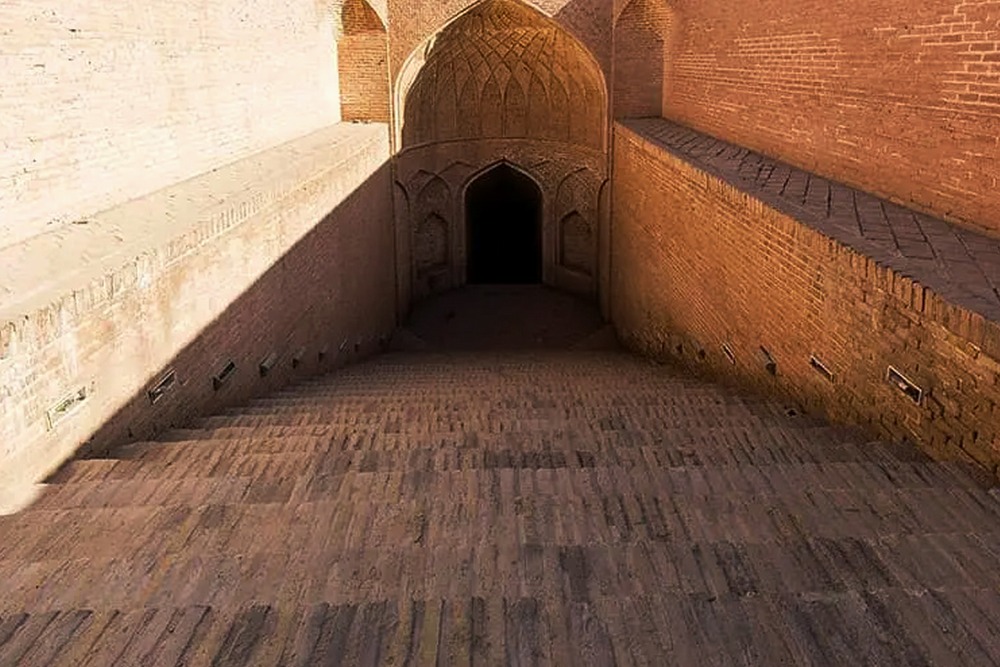
The water reservoir has two entrances, one on the southern side and another on the northern side of the tank. The southern entrance is marked by a simple yet dignified brick façade. From here, a long staircase descends deep into the ground. The staircase, consisting of approximately 55 steps, is covered by brick vaults that helped shield the passage from direct sunlight and excessive heat.
At the lower end of the staircase was a pashir, the traditional point from which people drew water from the reservoir. The original water-drawing fixtures have since been removed, but traces of their former location can still be seen within the structure.
The Six-Windcatcher Water Reservoir was not merely a functional structure; it also served an important civic and social role. In the past, local residents came here with pitchers and containers to collect water, making the reservoir an important gathering place within the neighborhood. In this sense, the water reservoir was more than infrastructure: it was also a social space at the heart of the community.
Today, although the Six-Windcatcher Water Reservoir of Yazd no longer stores water, it remains an important tourist attraction and a nationally registered historical monument, welcoming visitors from across Iran and around the world. As part of the Historic City of Yazd, which has been inscribed on the UNESCO World Heritage List, the reservoir represents the ingenuity, creativity, and accumulated knowledge of generations who developed ways of living in one of the world’s most challenging climates.
For contemporary architects, engineers, and designers, the Six-Windcatcher Water Reservoir offers a practical and inspiring lesson in passive and climate-responsive design, the intelligent use of windcatchers for natural ventilation and cooling, sustainable water management, and the role of public-benefit spaces in strengthening social cohesion.
The structure demonstrates how traditional knowledge, local materials, and a deep understanding of the climate could be combined to keep water cool and accessible in the heart of a scorching desert, without relying on mechanical or electrical cooling systems. With its mud-brick dome and soaring windcatchers, the Six-Windcatcher Water Reservoir remains a quiet yet powerful testament to the ingenuity, creativity, and sustainability embodied in traditional Iranian architecture.