

On the southern outskirts of Kashan, at the foot of dry, rocky mountains, where the desert gradually reveals itself and the relentless sun beats down on the earth, stands a garden that offers a striking contrast to the surrounding arid landscape. Fin Garden in Kashan, one of the oldest Persian gardens and part of the UNESCO-listed Persian Garden serial property, is far more than just a garden. It is a notable expression of the Persian garden tradition and a reflection of what Iranians have long called pardis, or “paradise on earth.” Fin Garden can be described as a harmonious union of water, geometry, and history. Here, water flows gracefully through channels and fountains, architecture brings a sense of calm through its order and geometric symmetry, and the historical layers preserved in the garden’s buildings and landscape tell the bittersweet stories of the land.
Some accounts suggest that the site’s history may extend back to pre-Islamic times, although the garden’s present form largely reflects developments from later periods. Some sources trace its origins to the Sasanian period and even the Achaemenid era, and suggest that an ancient fire temple may once have stood on the site; however, these claims require reliable historical or archaeological evidence. The garden underwent significant development during the Safavid period, particularly under Shah Abbas I, when it became a royal retreat and its pavilions, water channels, and pools were developed. Further changes took place during the Zand and Qajar periods, including the construction or renovation of additional pavilions and other structures. Throughout its history, Fin Garden has witnessed important events, from royal celebrations and receptions to the assassination of Amir Kabir, Iran’s reform-minded prime minister, in January 1852. His death remains a significant event in Qajar-era Iranian history.
Covering approximately 23,000 square meters, according to commonly cited figures, Fin Garden is an enclosed rectangular complex surrounded by tall mud-brick walls. This enclosure is one of the defining characteristics of the Persian garden: the garden is separated from the outside world by walls, creating a distinct inner landscape of greenery, shade, and tranquility. The main entrance is commonly identified as being on the northern side and features an imposing portal decorated with seven-color tiles bearing arabesque and floral motifs. Upon entering, visitors pass from the desert’s heat and dust into a greener, shaded environment. This transition from a hot, dry exterior to a cooler garden interior is one of the defining experiences of the Persian garden.
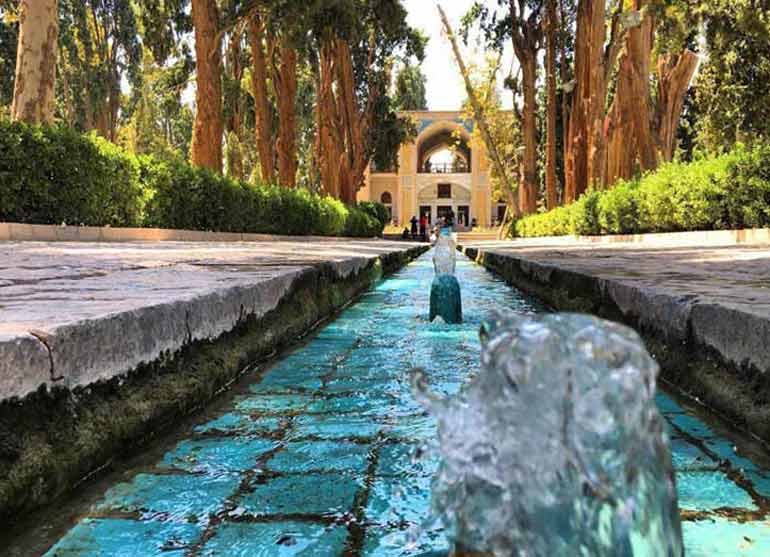
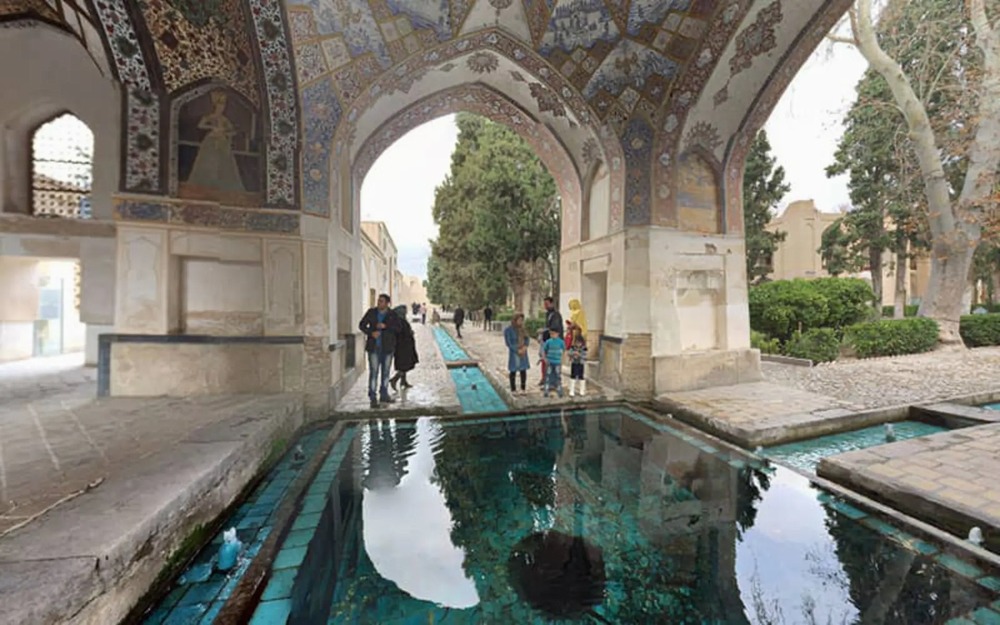
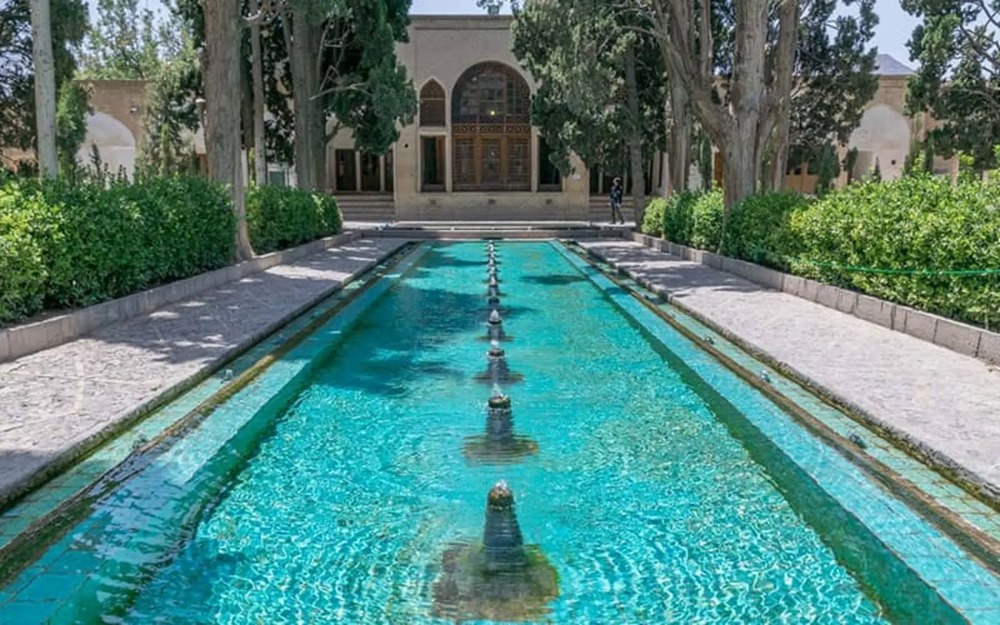
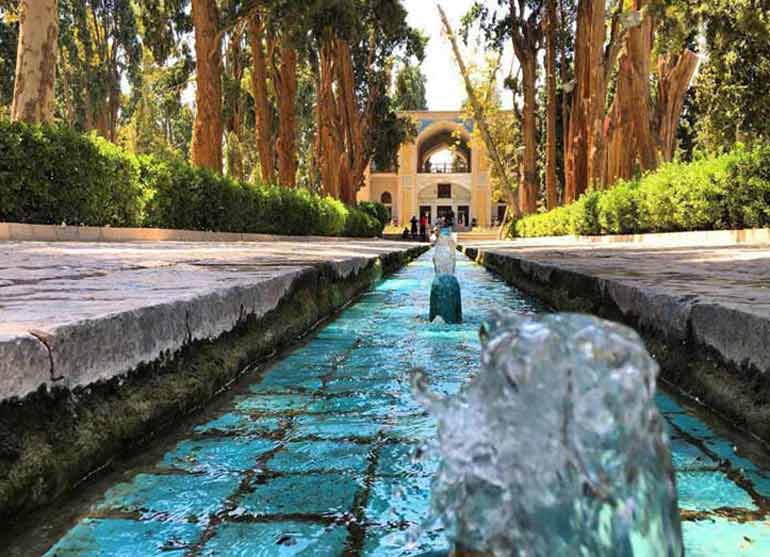
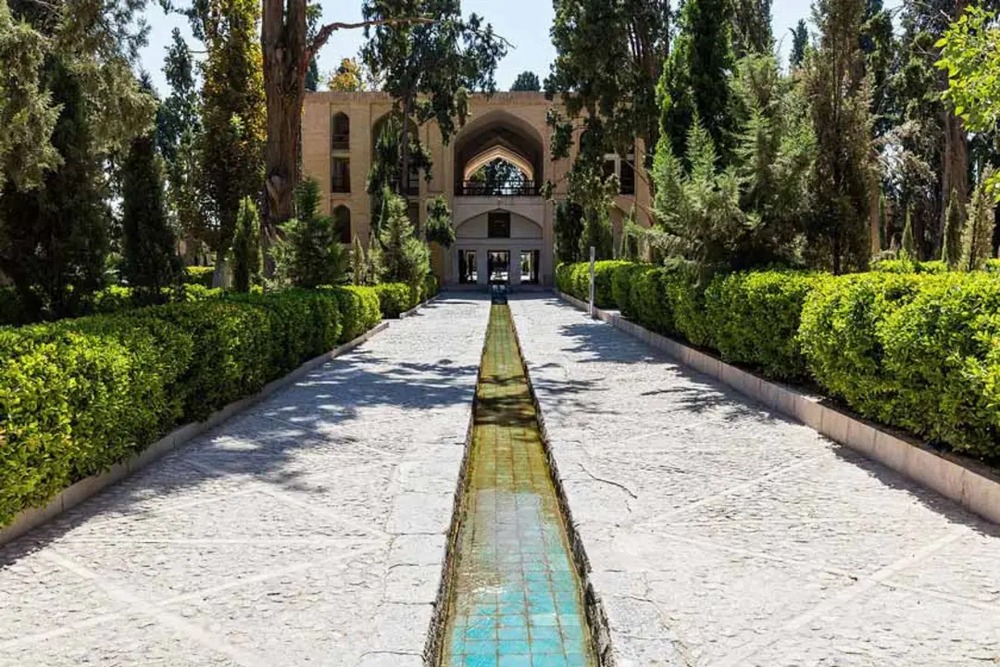
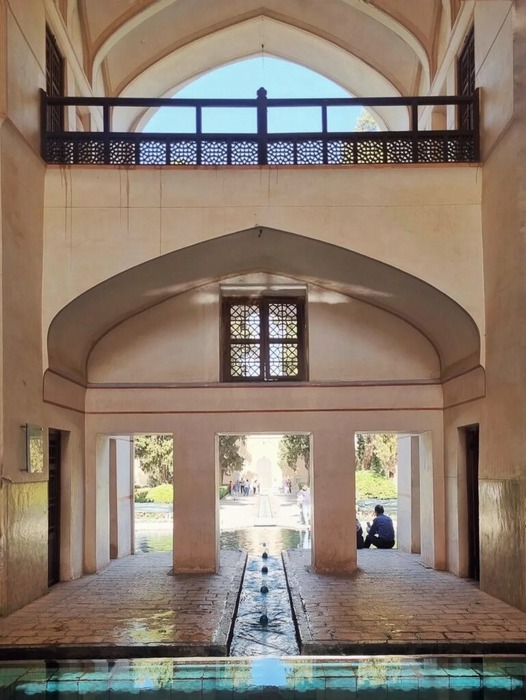
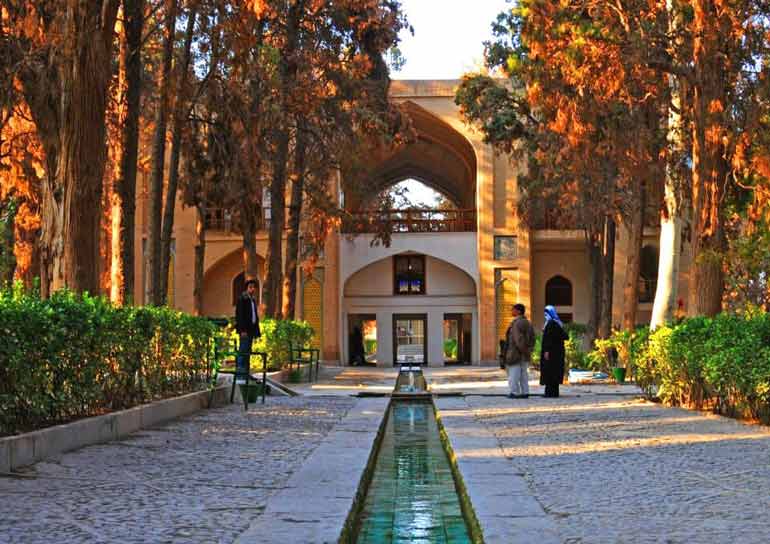
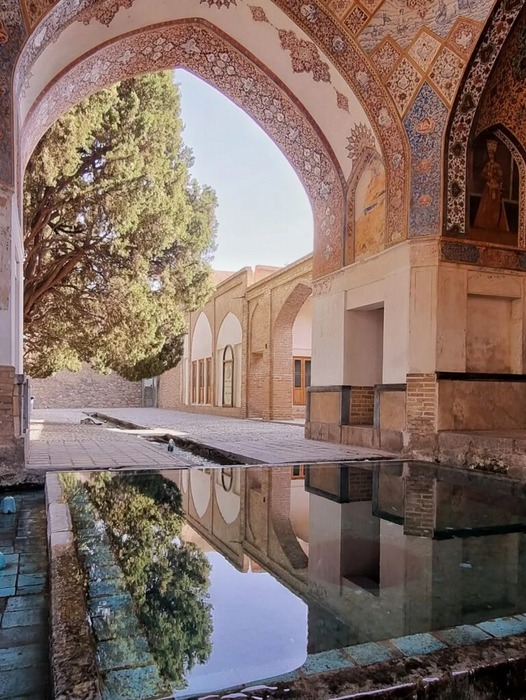
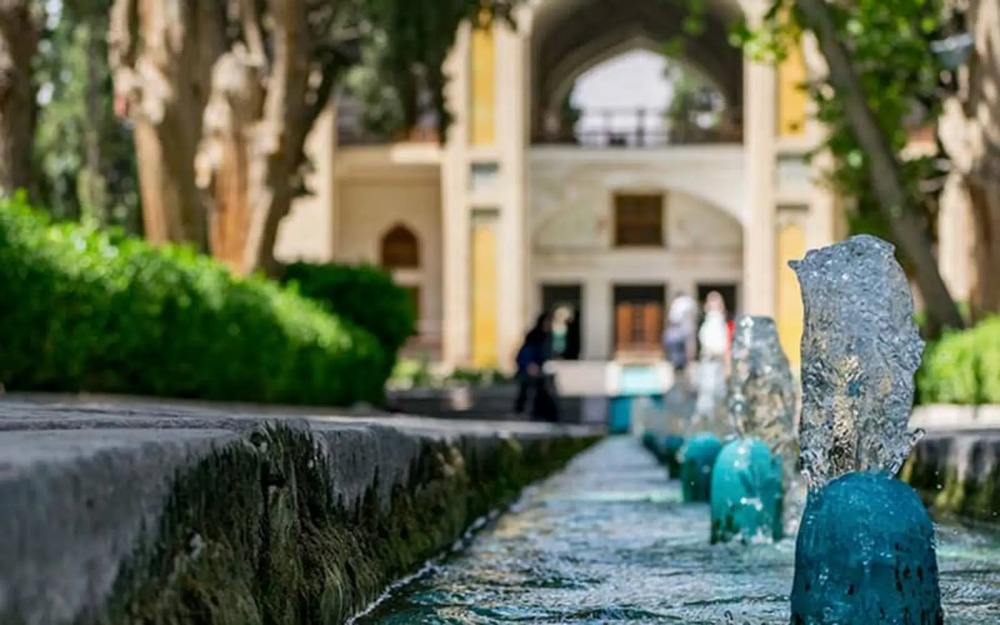
Water is the lifeblood of Fin Garden. It is not merely a decorative feature but a central element that shapes the garden’s character. Water supplied by the Soleymaniyeh Qanat feeds the garden’s traditional hydraulic system, flowing through channels and pools with the aid of the natural gradient and carefully designed water distribution. The channels, some of which feature turquoise tiles, run through the garden’s pathways, reflecting the light and sky and tracing bright lines through the greenery. The gentle, continuous sound of flowing water contributes to the garden’s tranquil atmosphere.
The pool known as the Howz-e Jush (“Boiling Pool”) is one of the garden’s focal points. Its floor is lined with stone, and it contains a network of outlets that produce upward jets of water using natural water pressure. Some accounts refer to 160 fountains or water outlets in the garden’s hydraulic system; however, this figure should be verified against reliable technical or heritage sources before publication. The hydraulic system reflects the water-management knowledge used in the garden’s design, employing differences in water level and pressure to create moving water without mechanical pumps. Beyond their visual appeal, the fountains illustrate how water was managed to serve both practical and aesthetic purposes.
The Howz-e Jush lies along the garden’s main axis, surrounded by tree-lined pathways. Geometric order and spatial organization are defining characteristics of the Persian garden. The traditional chaharbagh is a Persian garden concept organized around intersecting axes, often associated with a four-part layout created by pathways or water channels. This arrangement is frequently linked to the imagery of paradise in Persian literature and Islamic tradition, where streams flow beneath trees. However, the precise relationship between this idealized four-part plan and Fin Garden’s actual layout should be established through architectural documentation rather than assumed.
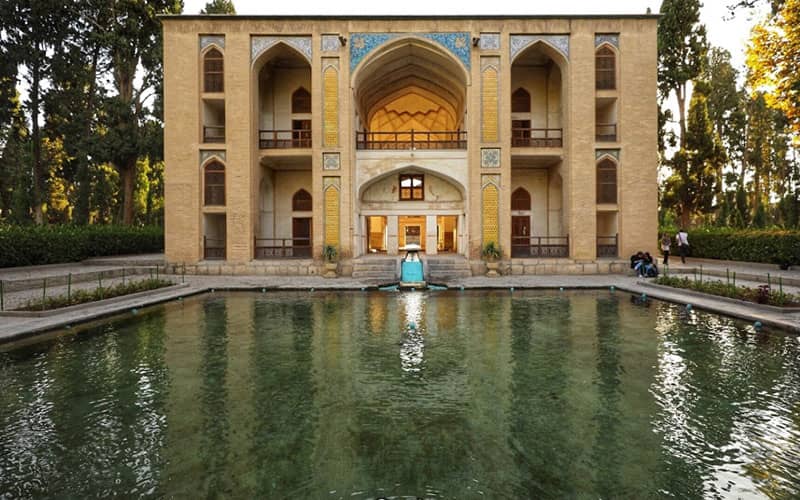
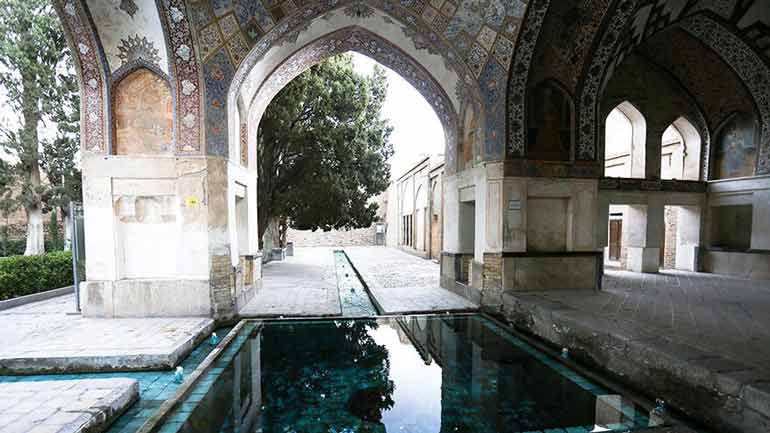
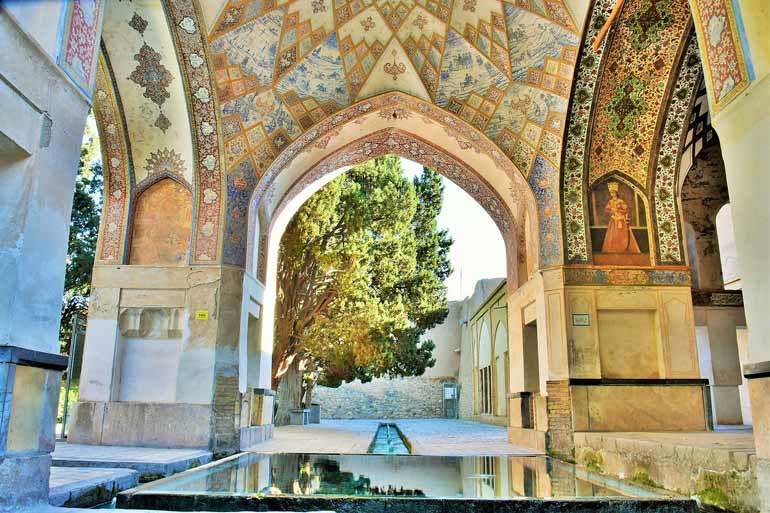
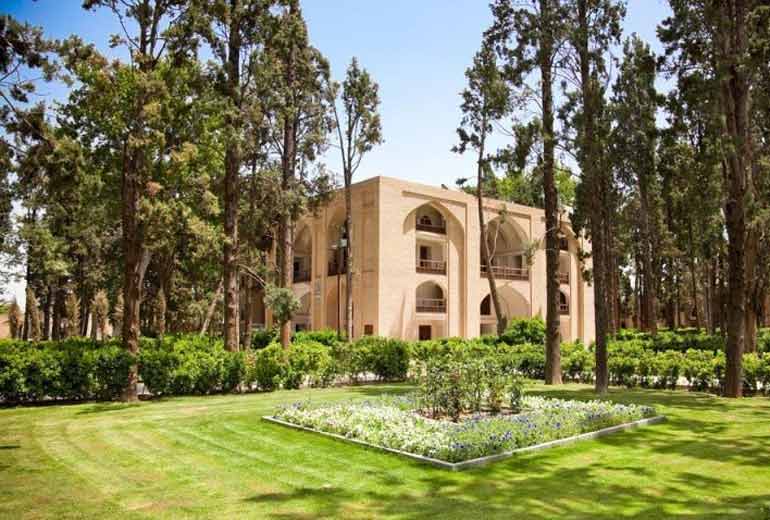
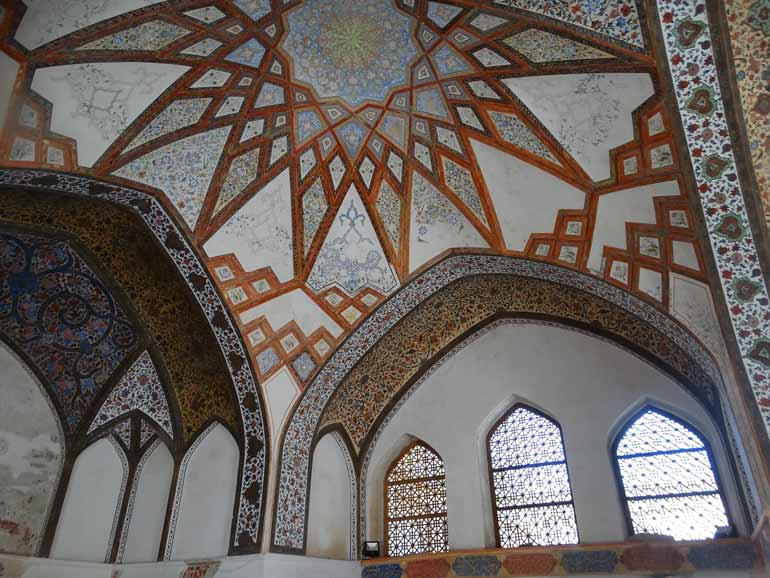
The main pavilion of Fin Garden stands within the garden complex, near its central water features. Its precise historical name should be confirmed through reliable heritage sources before it is identified specifically as the Safavid Pavilion or Central Pavilion. The garden’s buildings include architectural features such as columned porches, decorated halls, and traditional windows. From their open spaces, visitors can appreciate the relationship between water, trees, architecture, and sky. Interior decoration, including wall paintings, stucco work, and muqarnas, varies among the garden’s historic structures and should be described according to the features documented in each building.
In one part of the garden are two historic bathhouses, commonly referred to as the Small Bathhouse and the Great Bathhouse, also sometimes called the Royal Bathhouse. The complex includes features associated with traditional Iranian bathhouse architecture, such as tiled surfaces, decorative plasterwork, and stone elements. One of the garden’s historic bathhouses is associated with the assassination of Mirza Taqi Khan Amir Kabir, the prominent Qajar-era prime minister who was killed at Fin Garden in January 1852. The specific bathhouse in which the assassination took place should be identified according to a reliable historical source. Today, visitors can explore the bathhouses and learn about this important episode in Iranian history.
Mature cypress and pine trees line the garden’s pathways, providing shade and contributing to its historic landscape. Some trees are believed to be very old, although claims that individual trees are several centuries old should be supported by reliable documentation. Seasonal flowers, including roses and jasmine, add color and fragrance to the garden where these plants are present.
Fin Garden offers valuable lessons in hydraulic engineering and water management, landscape design and planting systems, geometric order and spatial organization, the creation of a microclimate in hot, arid regions, and the integration of architecture, water, and vegetation. As a notable example of the Persian garden tradition, this historic garden continues to evoke the idea of an earthly paradise through its flowing channels, fountains, carefully organized spaces, and historic architecture.