

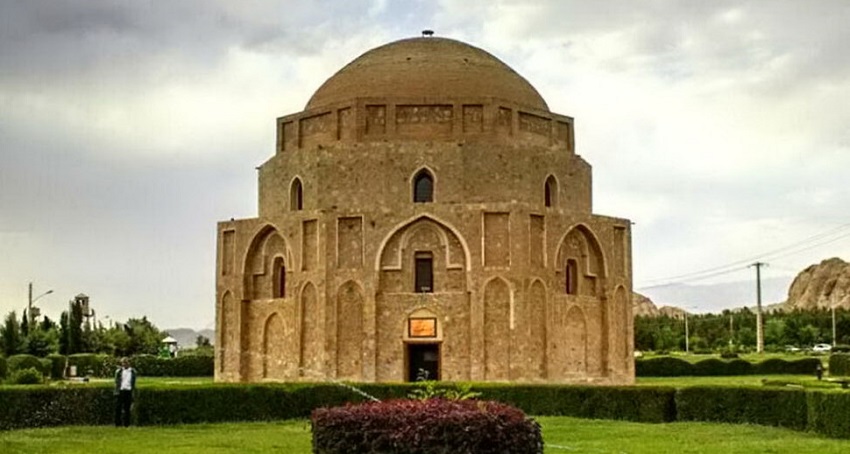
In the southeastern Iranian plateau, on the edge of the scorching Lut Desert and at the foot of towering mountains, lies a city that has stood like a jewel in the heart of the desert for centuries. Kerman, this ancient and resilient city, with a history reaching back to the Achaemenid period and even to Iranian mythology, is one of Iran’s most important yet relatively overlooked historic cities. Kerman can be described as the “City of Windcatchers and Desert Gardens”—a city where architecture evolved not to resist the harshness of the environment, but to coexist with it in a thoughtful and harmonious way. Here, soaring windcatchers blend with lush, paradise-like gardens, offering a remarkable story of the ingenuity, patience, and creativity of the people who have made their home in the desert.
Kerman is a “four-season city” in the heart of one of Iran’s driest climates. Situated at an elevation of around 1,750 meters above sea level, the Lut Desert lies to the north and east, while the Zagros Mountains extend to the south and west. This distinctive geographical setting has given Kerman cold winters and relatively mild summers, while also contributing to its development throughout history as an important center of agriculture, trade, and culture in southeastern Iran. During the Sasanian period, Kerman was known as a military stronghold and later, in the Islamic period, as an important commercial center along the Silk Road. Yet the city experienced a major period of architectural development during the Safavid and Qajar periods, when local rulers and wealthy merchants commissioned magnificent buildings throughout the city.
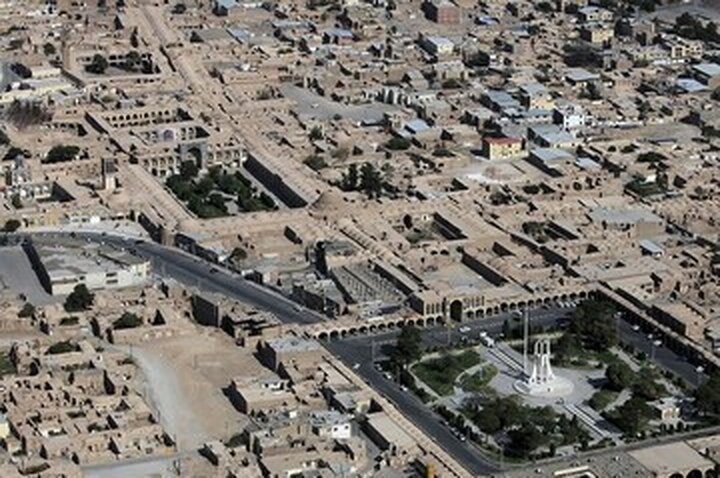
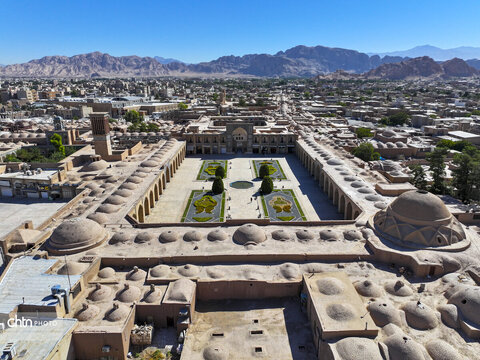
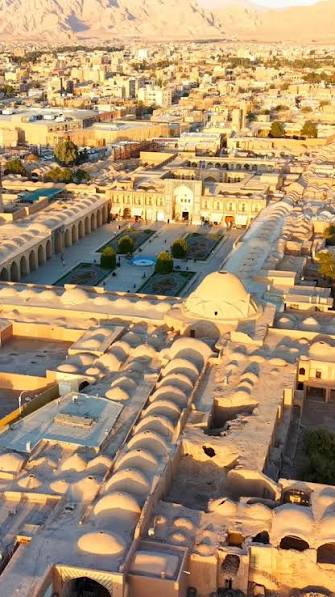
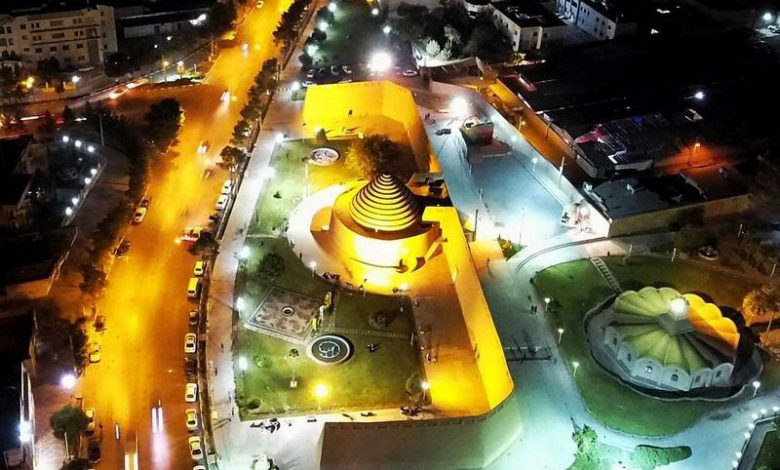
The beating heart of historic Kerman is the Ganjali Khan Complex, centered around a square built in the early 17th century on the orders of Ganjali Khan, the renowned governor of Kerman during the reign of Shah Abbas I of the Safavid dynasty. The complex includes a bazaar, mosque, bathhouse, school, caravanserai, cistern, and mint, making it a complete “miniature city” within the city. Unlike the vast and monumental Naqsh-e Jahan Square in Isfahan, Ganjali Khan Square offers a more intimate and compact atmosphere. A large pool at its center, merchants’ shops around it, and brick vaults casting cool shadows across the square transform the space into a welcoming “public courtyard.”
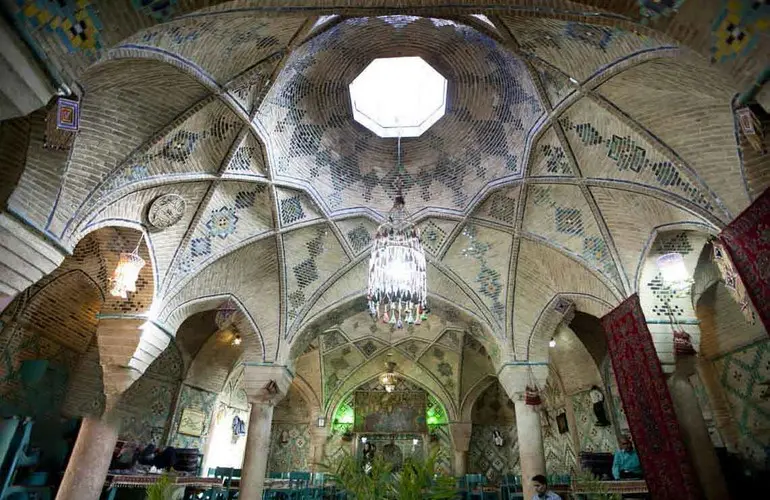
The Ganjali Khan Bathhouse is the shining jewel of the complex. Now converted into an ethnographic museum, the bathhouse features translucent marble, seven-color tiles, delicate plasterwork, and magnificent wall paintings, making it one of the most beautiful historic bathhouses in Iran. The stone sculptures of camel drivers, standing in the corners of the bathhouse, are among its most fascinating decorative elements. The sarbineh, or changing room, with a large pool at its center and platforms around it, provided a space for relaxation and conversation. The garmkhaneh, or main bathing area, with its stone columns and domed roofs, offered a pleasant space for bathing.
Kerman Bazaar, one of Iran’s most extensive and vibrant traditional bazaars, begins at Ganjali Khan Square and extends through numerous market lanes, timchehs, and saras to the city’s Jameh Mosque. Developed over the course of centuries, the bazaar still serves as a vital center of commerce and everyday life. The coppersmiths’ lane, with the rhythmic sound of hammers; the apothecaries’ lane, filled with the fragrance of spices and medicinal herbs; and the carpet merchants’ lane, with the dazzling colors of Kerman carpets, each form a lively world of their own.
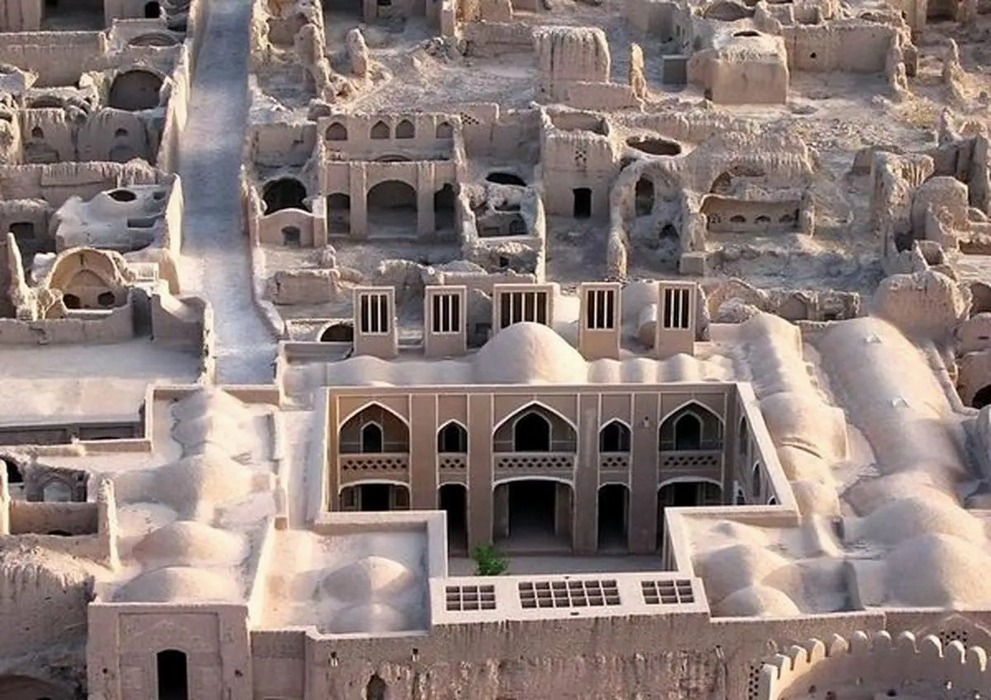
Yet perhaps the most remarkable architectural feature of Kerman is its windcatchers. These tall, four-directional windcatchers that rise above the city’s rooftops are not merely visual landmarks; they are passive and sustainable ventilation systems. Used in houses, cisterns, and even bazaars, these windcatchers capture breezes from different directions and channel them into residential and public spaces. The hot, dry desert air is cooled and refreshed as it passes over the water in pools and along damp surfaces before flowing into the interior spaces. This passive cooling system, developed centuries before the invention of electricity, demonstrates the remarkable ingenuity of Kerman’s architects in adapting architecture to the local climate.
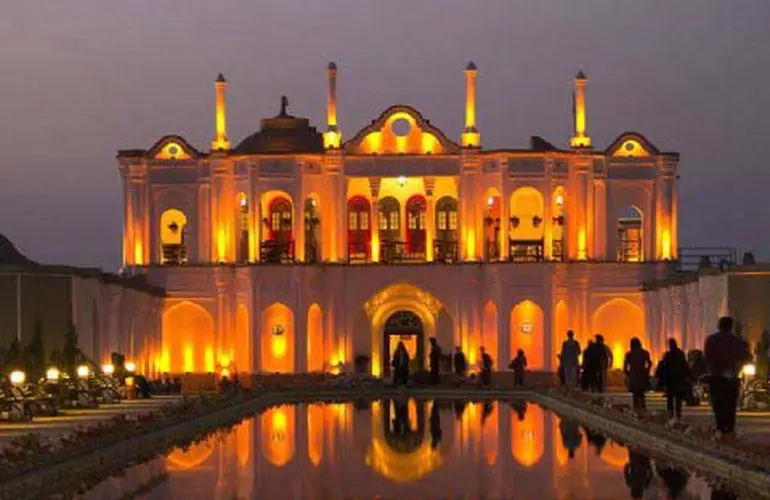
Kerman is also a city of gardens. Shazdeh Garden in Mahan, one of Iran’s most magnificent Persian gardens and a UNESCO World Heritage Site, lies near Mahan, on the outskirts of Kerman, in the heart of the desert. Built during the Qajar period, the garden, with its long water axis, cascading fountains, and rows of mature cypress and pine trees, forms an “artificial paradise” in the middle of the desert. The garden’s water is supplied by the Tigran Qanat. Taking advantage of the natural slope of the land, the water flows through the garden by gravity, filling its channels and feeding its fountains without the need for pumps. This form of “hydraulic engineering,” powered by gravity, is a brilliant example of the integration of beauty and function in Iranian architecture.
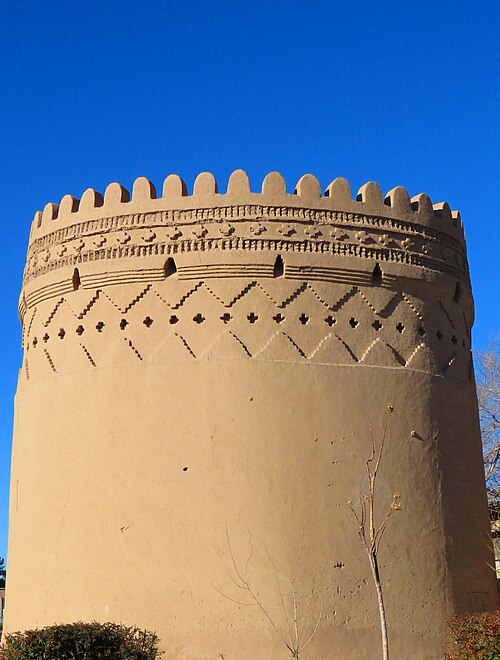
The Moayedi Ice House is another of Kerman’s remarkable architectural wonders. This massive mudbrick dome, rising 18 meters high, once supplied the city with ice during the hottest months of the year. The process of producing and storing ice in this structure was so ingeniously designed that, without relying on fossil fuels, the ice could remain frozen from winter until the end of summer. Its thick mudbrick walls, conical dome, and natural airflow all worked together to achieve this remarkable feat of traditional climate-responsive engineering.
The Jameh Mosque of Kerman is another of the city’s most prominent landmarks. Its original core dates back to the Buyid period, and the mosque was expanded and developed over the centuries. Today, with its four magnificent iwans, turquoise dome, and intricate mosaic tilework, it is regarded as one of the most beautiful mosques in southeastern Iran. The western iwan, adorned with seven-color tiles and delicate plaster muqarnas, represents the height of the mosque’s architectural splendor.
Kerman is also a city of ancient qanats. Some of these qanats date back thousands of years and have served as the hidden lifelines of the desert. Their water was used not only for drinking and agriculture, but also to supply the city’s gardens, fountains, and pools. In Kerman, the qanat was more than a water-supply system; it was a comprehensive “water-management system” and a “social institution.”
Kerman is a living textbook of “climate-responsive and sustainable design,” “intelligent water-resource management,” “the integration of diverse functions within a unified urban complex,” and “the creation of human-scaled public spaces.” This city demonstrates how, even in one of the world’s driest and hottest regions, it is possible to create a pleasant, beautiful, and sustainable living environment through the use of local materials, indigenous knowledge, and a deep understanding of nature.
With its soaring windcatchers, paradise-like gardens, and vibrant, resonant bazaars, Kerman stands as a symbol of the patience, creativity, and resilience of the people of the desert.