

_2_2.jpg)
A mosque. The first image that probably comes to mind is a turquoise dome, slender minarets, and shimmering tilework. And you would not be wrong. But if that is all you see, you are seeing only half the story.
In Iran, a mosque was never simply a house of worship visited once a week for Friday prayers. It was the heart of the city—not only because it stood at the center of a neighborhood or town, but because it was the center of community life. A mosque served as a school, a court of justice, a place where public announcements were made, a refuge for those in need, and, at times, even a gathering place for protest and social change.
The earliest mosques in Iran looked very different from the magnificent structures we know today. After the arrival of Islam, Muslims often established a mosque wherever they settled by setting aside an open space for communal prayer—sometimes the courtyard of the largest house, sometimes an empty plot of land.
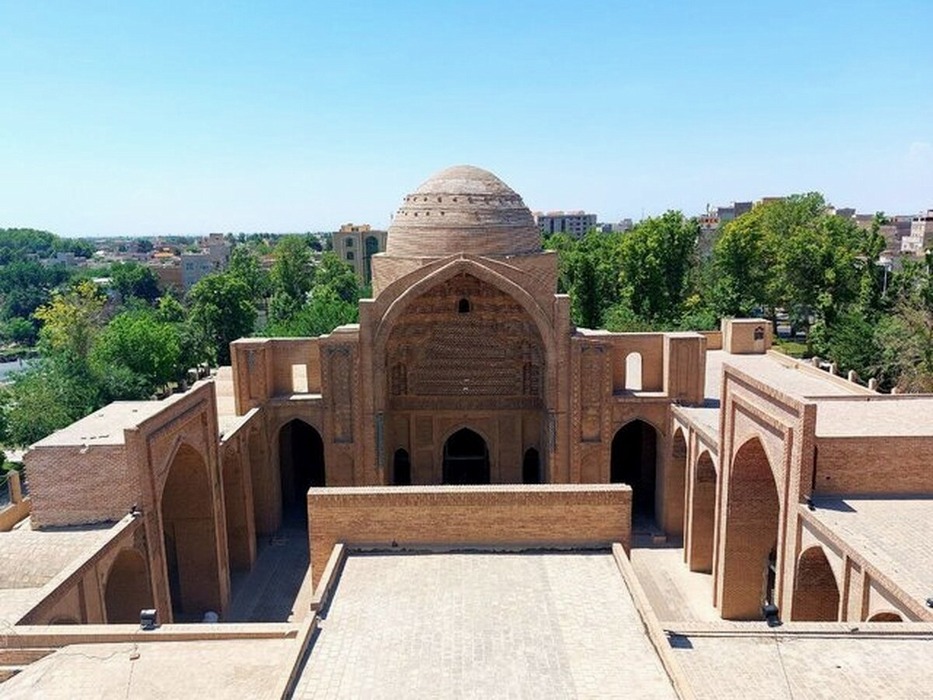
As Islam took root and a distinct Persian-Islamic identity began to emerge, these simple spaces gradually evolved into purpose-built mosques. They acquired the architectural features we now associate with them: soaring iwans, majestic domes, graceful minarets, intricately carved mihrabs, and elevated pulpits, known as minbars.
What is truly remarkable, however, is that many of these elements did not originate with Islam. The iwan had already been a defining feature of Sasanian palaces. Domes crowned pre-Islamic fire temples. Even the minaret is thought to have evolved from the landmark towers that once guided travelers along ancient roads.
In Iran, mosque architecture was never a simple imitation of the Arabian model. It emerged through a gradual process of adaptation—shaped by local building traditions, indigenous materials, Persian artistic taste, and the evolving needs of a new religious and cultural landscape.
Now, let us walk through a historic mosque—the Jameh Mosque of Isfahan. At first glance, it may seem like an architectural patchwork. And that is precisely what makes it extraordinary.
Every century, every dynasty, left its mark on this building. One corner dates back to the 8th century, another to the 16th, and yet another to the 19th. Architectural styles changed. Builders came and went. Yet the mosque remained a single, harmonious whole.
That is the true story of this monument. It is not the masterpiece of one architect or one generation, but the collective creation of centuries—built, expanded, and refined by countless hands across more than a thousand years.
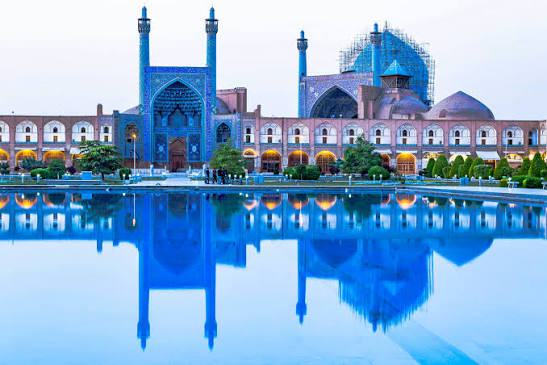
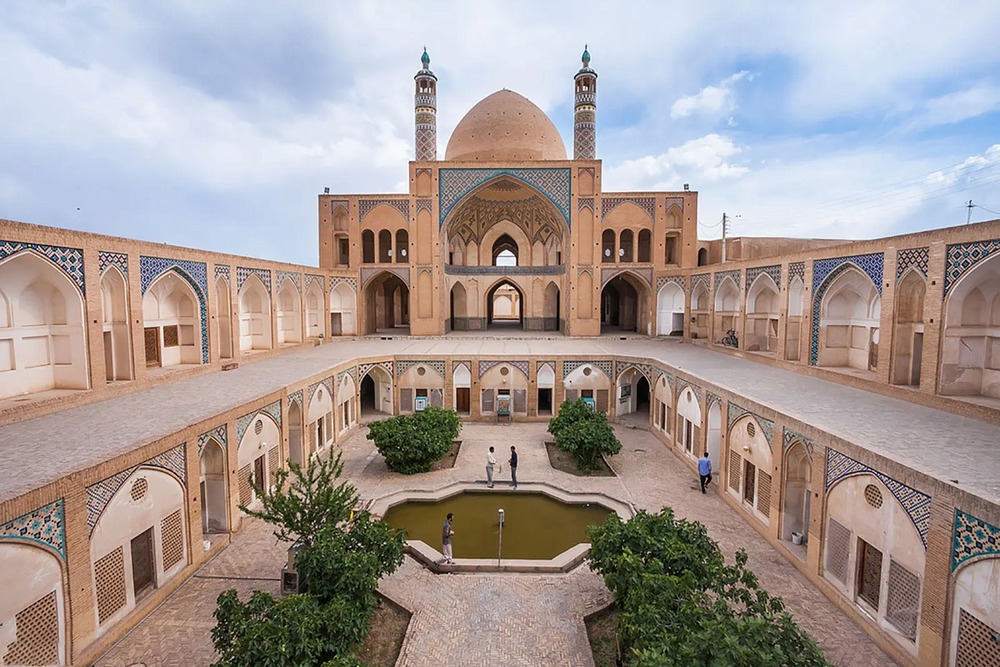
Most Persian mosques share a number of defining architectural features. The first is a central courtyard, with a pool at its heart. The water is there for ritual ablutions—but it serves a greater purpose than that. It reflects light, softens sound, and helps cool the surrounding air during the heat of summer.
Encircling the courtyard are arcades supported by tall columns. These shaded walkways provide shelter from the sun and allow people to move comfortably around the courtyard even on the hottest days.
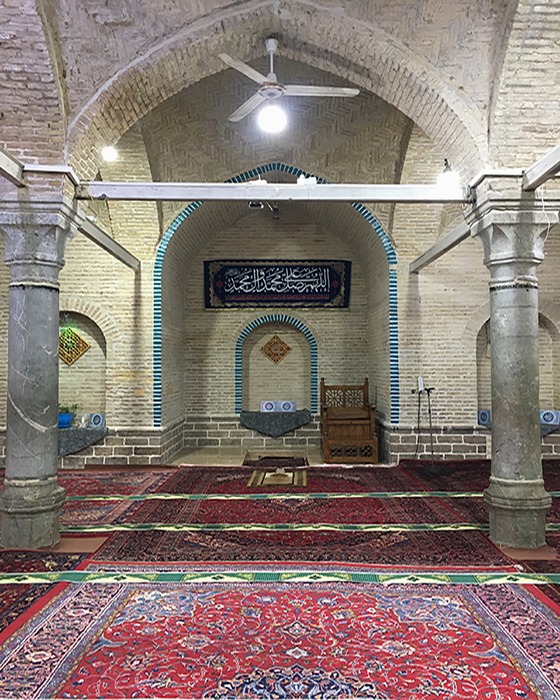
On the qibla side of the courtyard stands the largest of the four iwans, known as the southern iwan or the Maqsura Iwan. Beyond it lies the domed sanctuary. Beneath the dome is the mihrab—the niche that indicates the direction of prayer and serves as the focal point where the imam leads the congregation.
This four-iwan layout is one of the defining characteristics of Persian mosque architecture. It is a distinctly Iranian architectural tradition, not one typically found in the early mosque traditions of the Arab world, the Ottoman Empire, or the Indian subcontinent. Four monumental iwans, one on each side of a central courtyard, together create a composition that is unmistakably Persian.
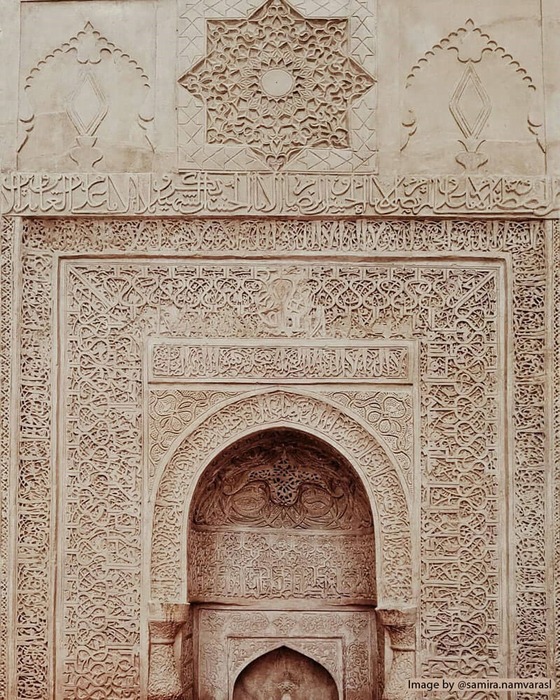
Now, look at the mihrab. It is usually the deepest recess and the most richly decorated part of the mosque. In great mosques, the mihrab is often crafted from marble or adorned with intricate mosaic tilework, embellished with Qur'anic verses in elegant Thuluth or Kufic calligraphy.
The mihrab is a symbolic focal point rather than a seat for the imam. In fact, the imam usually stands a few steps in front of it while leading the prayer. The niche commemorates the place where the Prophet Muhammad led prayers in the Mosque of Medina, marking the direction of prayer for the congregation.
In Persian architecture, however, the mihrab evolved into a work of art in its own right. One of the finest examples is the Mihrab of Uljaytu in the Jameh Mosque of Isfahan—a masterpiece of stucco carving so extraordinarily delicate that it leaves visitors speechless.
The minaret tells a different story. Rising beside the mosque's main iwan, it was originally built for a practical purpose: to carry the muezzin's call to prayer as far across the town as possible.
Before long, however, the minaret became much more than a functional tower. It evolved into a symbol of civic pride and architectural ambition. A city crowned with a taller, more imposing minaret proclaimed its prestige as much as its faith.
During the Seljuk and Ilkhanid periods, minarets reached remarkable heights, often soaring twenty or even thirty meters above the ground. Some were even built as freestanding towers rather than attached directly to a mosque, standing prominently in open squares or urban spaces. Examples include the Saveh Mosque Minaret in Iran and the Sinjar Minaret in Iraq, whose design clearly reflects the influence of Persian architectural traditions.
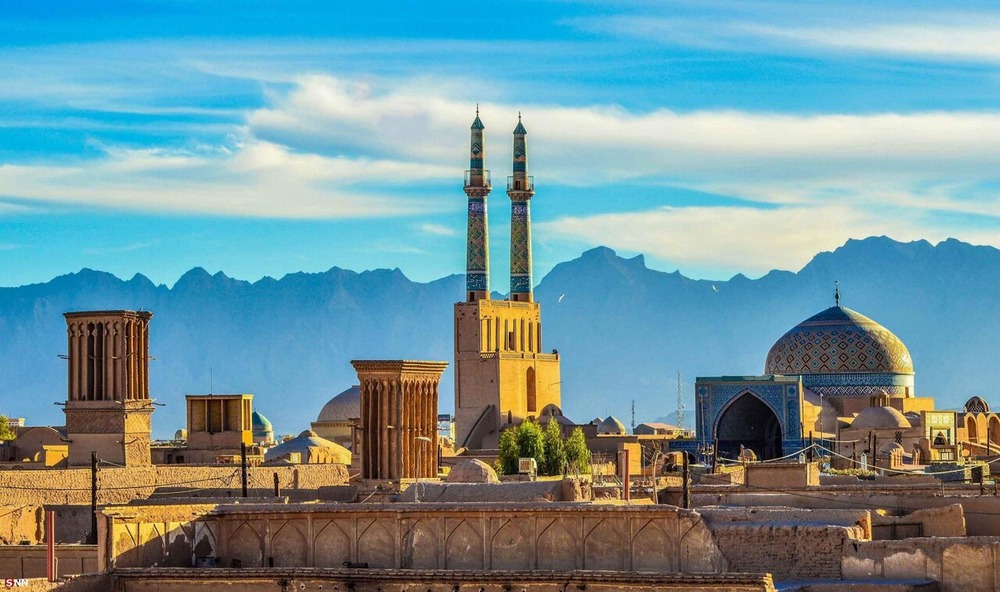
In later centuries, a new composition emerged: twin minarets flanking the main iwan. Their purpose was no longer primarily practical. Instead, they created visual balance, enhanced the monumentality of the façade, and became one of the defining features of Persian mosque architecture.
A mosque was never only a place of worship. It was also a centre of learning, where religious schools once operated within the mosque complex before many later became independent institutions. The public treasury was often kept there. Judges held court in the mosque, hearing the disputes of ordinary people. Important announcements were sometimes made there, accompanied by the beating of ceremonial drums. At times, the mosque also served as a place of sanctuary. Those who sought refuge within its sacred precincts could, under certain historical circumstances, receive temporary protection from arrest. This degree of independence from political authority occasionally brought the mosque into conflict with the state. Throughout Iranian history, mosques became gathering places for people protesting oppressive governors or heavy taxation. The Jameh Mosque of Tabriz played a role during the Constitutional Revolution, while the Goharshad Mosque became the site of the famous 1935 protest during Reza Shah's reign. In Iran, the mosque was never only the house of God, it could also become a stronghold of the community.
But beyond their many functions, let us turn to the materials themselves. Persian mosques were built primarily of brick, a material abundant across the Iranian Plateau and prized for its excellent thermal insulation. In later centuries, their facades were adorned with magnificent haft-rang, or seven-color tilework, in brilliant shades of lapis blue, turquoise, and gold. When sunlight touched these tiles, the mosque shimmered like a precious jewel. The domes themselves were masterpieces of engineering. They were built with two shells: an inner shell for structural strength and an outer shell to create the mosque's elegant profile. Between the two lay a narrow passage, allowing access for maintenance and helping to insulate the building. Inside, the dome was decorated with geometric and arabesque patterns. At its centre, a small opening let in a beam of natural light. As the sun moved across the sky, this shaft of light swept slowly across the interior, eventually reaching the mihrab. In some Persian mosques, architects used this movement of light to help mark the time for the noon prayer.
Here is a translation in the same style as before: The largest mosques in Iran include the Shah Mosque (now the Imam Mosque) in Isfahan, the Sheikh Lotfollah Mosque, the Jameh Mosque of Yazd, the Blue Mosque of Tabriz, and the Goharshad Mosque in Mashhad. Each is a masterpiece in its own right. Look closely at the Sheikh Lotfollah Mosque, and you will notice something unusual. It has no central courtyard and no minarets. Instead, a winding corridor leads from the entrance to the domed sanctuary. The mosque was built for the royal court and the Safavid harem, providing a private place of worship away from the public. Or consider the Blue Mosque of Tabriz, celebrated for its magnificent deep-blue tilework. Despite suffering severe damage over the centuries from earthquakes and the passage of time, it has been carefully restored, and its story is one of both loss and renewal.
Today, mosques hold a different place in Iranian life. In many big cities, historic mosques have become as much cultural landmarks and museums as places of worship. Most local residents now attend newly built neighborhood mosques, which often lack the architectural richness of their predecessors. In the villages, though, many old mosques are still very much alive. The call to prayer still echoes from their minarets. Elderly men still gather after prayers, sharing cups of tea as they talk about politics, the harvest, and their children's weddings. There, the mosque remains more than a historic monument, it's still the heart of the community.
Persian mosques are among the defining expressions of Iranian architecture, not merely for their domes, minarets, or dazzling tilework, but because they have always been woven into the lives of the people. Markets came and went, bathhouses flourished and faded, caravanserais rose and disappeared. But the mosque was always something more. It was a place where people came to find silence, to pray, to weep, or sometimes to raise their voices. Its stone floors have borne the footsteps of every walk of life, from kings to beggars. Perhaps that is the simplest way to describe it: The mosque is Iran in miniature.