

Si-o-se-pol: A Symphony of Arches and Light
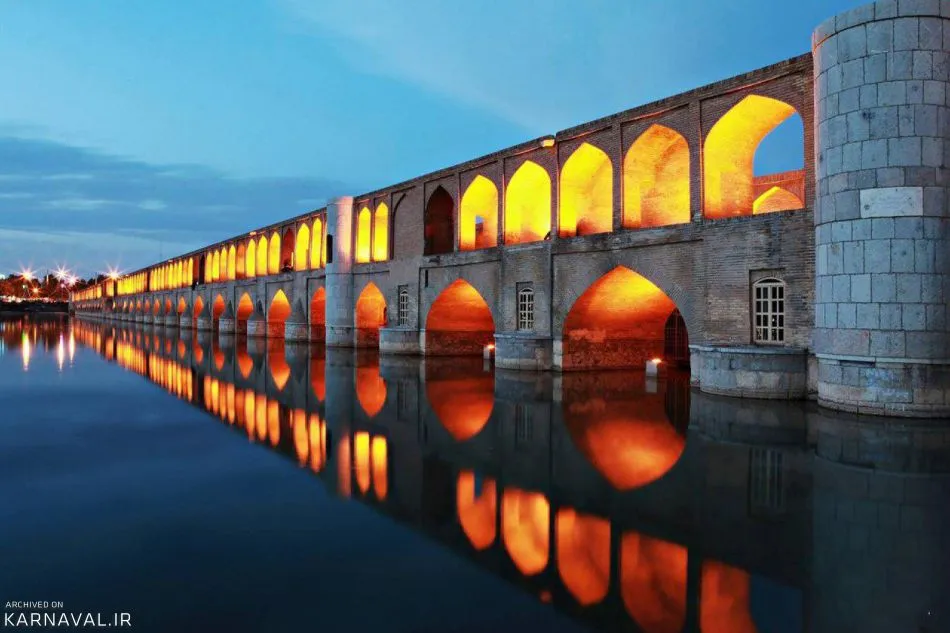
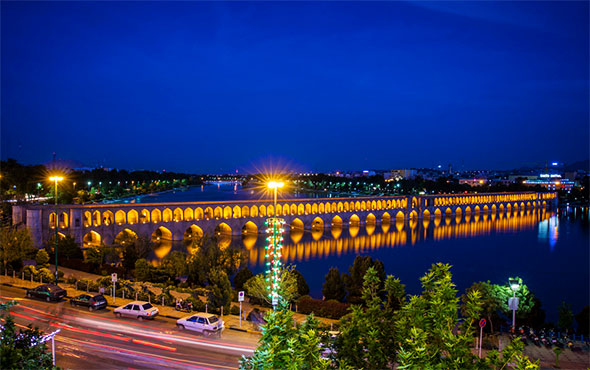
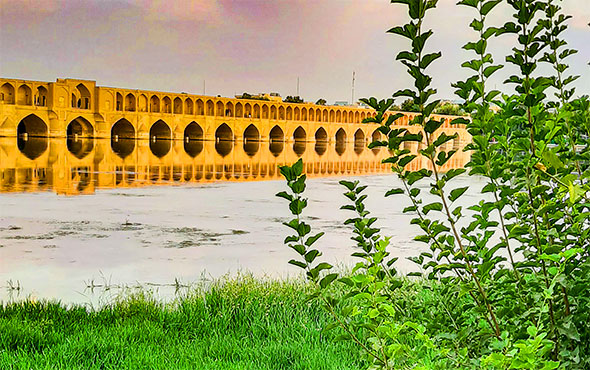
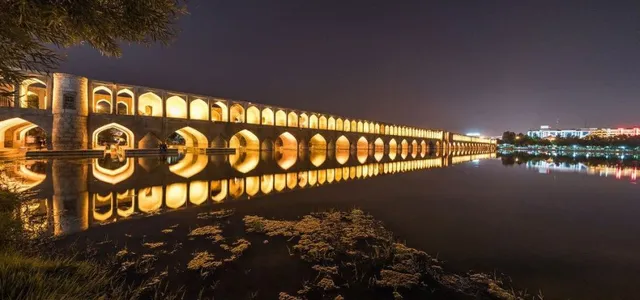
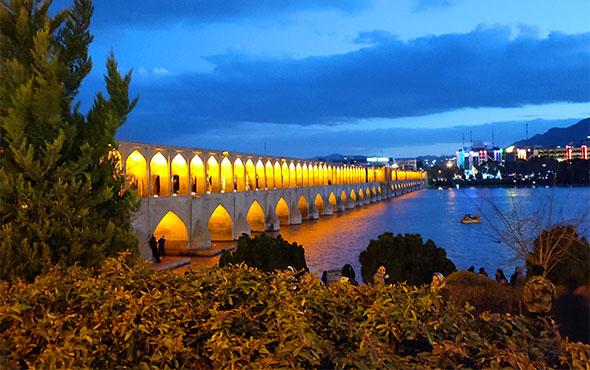
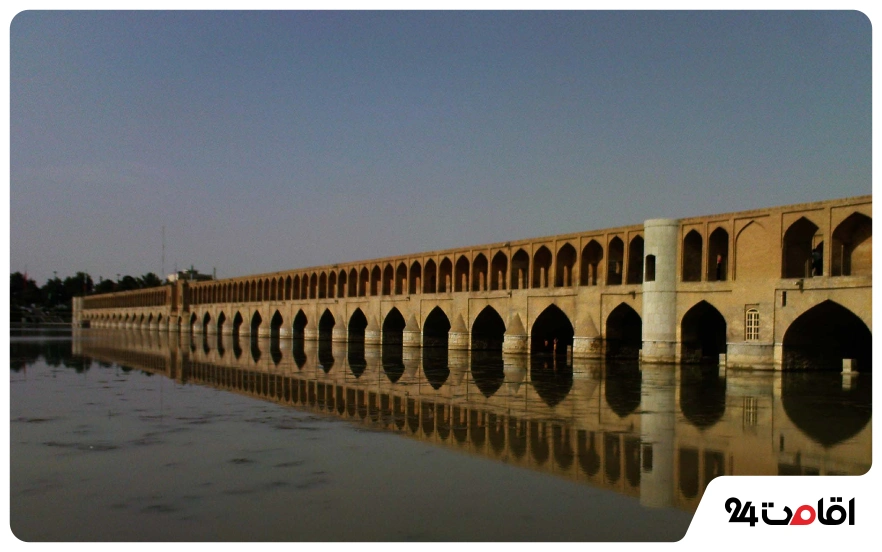
In the heart of Isfahan, where the Zayandeh Rud River winds through the historic landscape of gardens and Safavid architecture, stands a bridge that is far more than a crossing. It is a “street over water,” a “civic space,” and a “symphony of arches and light.” Si-o-se-pol, also known as Allahverdi Khan Bridge, is an outstanding masterpiece of Safavid architecture. Measuring approximately 300 meters in length and about 14–15 meters in width, it is one of Iran’s most remarkable historic bridges and a testament to the engineering skill and artistic achievement of Safavid Isfahan. Si-o-se-pol deserves to be called a “symphony of arches.” Here, the steady, almost hypnotic rhythm of brick arches, reflected in the waters of the Zayandeh Rud, transforms the bridge into an unforgettable visual and sensory experience.
History: A Bridge Born from a Vision
The story of Si-o-se-pol is closely intertwined with Shah Abbas I’s vision of transforming Isfahan into one of the most magnificent capitals in the world. Having moved the Safavid capital from Qazvin to Isfahan, Shah Abbas aspired to create a city that would serve not only as the political center of the Safavid Empire, but also as “half the world.” Through the construction of Naqsh-e Jahan Square, magnificent palaces, mosques, and bustling bazaars, he transformed Isfahan into a brilliant jewel of world architecture. Yet his new capital needed a vital artery to connect its northern and southern districts. The Zayandeh Rud, flowing through the city, was both a blessing and a barrier. It was a blessing because it supplied water for gardens, palaces, and urban life. At the same time, it separated important parts of the city, including the northern districts and the Armenian quarter of New Julfa to the south. To overcome this divide, Shah Abbas commissioned major bridges, including Si-o-se-pol and Khaju Bridge. Built under the supervision of Allahverdi Khan, a renowned Safavid military commander, Si-o-se-pol became one of the most important bridges of the Safavid capital.
Construction of Si-o-se-pol is commonly dated to around 1599–1602, although some scholarly sources suggest a later date range. The bridge was built on substantial foundations using brick masonry and traditional construction materials. Its 33 arches along the sides give it its familiar name, which means “Bridge of Thirty-Three Arches.” However, what elevates Si-o-se-pol from a purely functional bridge to an architectural masterpiece is not merely the number of its arches or its impressive length, but its ingenious, multifunctional spatial design.
Architectural Description: A Harmony of Form and Function
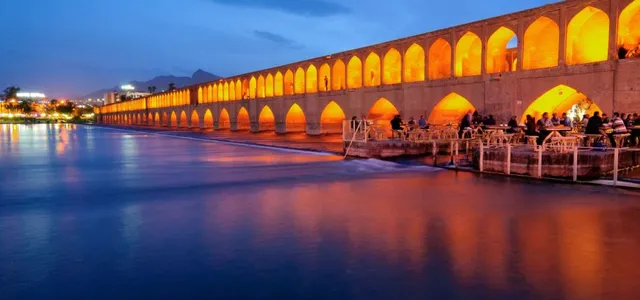
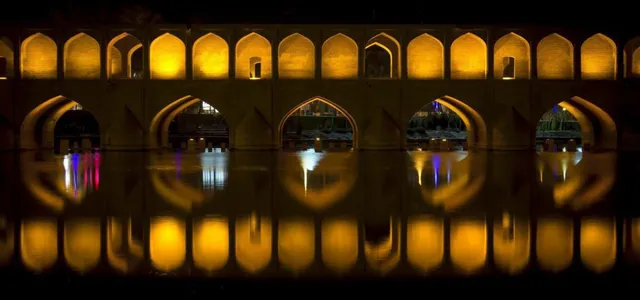
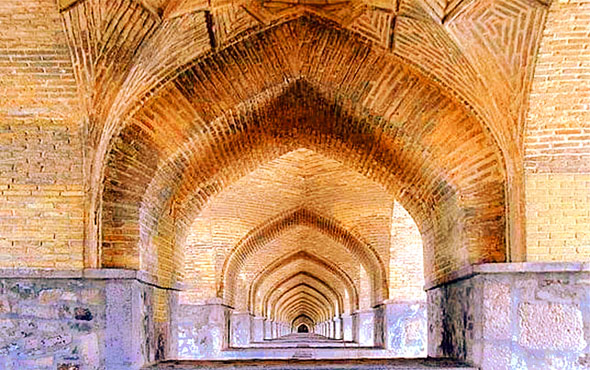
Si-o-se-pol originally featured a central passage for traffic and raised side walkways for pedestrians. Located on either side of the bridge and framed by brick arches, these side passages create shaded, semi-open spaces where people can stroll, sit, and enjoy views of the water and the city. The repeated arches create a regular, harmonious, almost musical rhythm. Reflected in the waters of the Zayandeh Rud River, this rhythm becomes a kind of visual symphony. On sunny days, sunlight filters through the arches, creating a dynamic interplay of light and shadow that brings the space to life. On moonlit nights, the moonlight passes through the arches and shimmers on the water, creating a dreamy, poetic scene.
The Social Role of Si-o-se-pol: A Shared Public Space
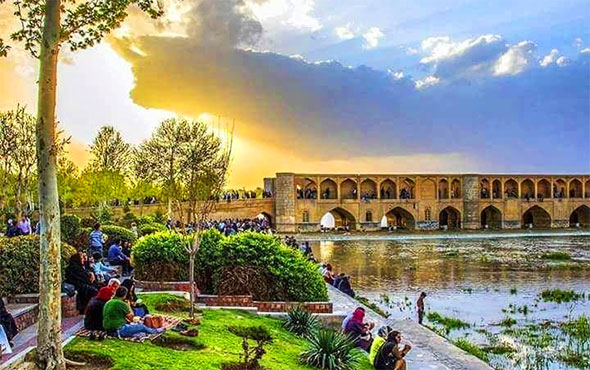
But Si-o-se-pol was more than a bridge for crossing the river or admiring the scenery; it was a social space and a linear public square. People from different walks of life, including courtiers, merchants, farmers, and laborers, could walk along the bridge, engage in conversation, and enjoy the cool breeze coming off the river. The bridge also served as a major link between Chahar Bagh Abbasi Avenue in the northern part of the city and the Armenian quarter of New Julfa to the south. By connecting different parts of Isfahan, including the city’s northern districts and the Armenian merchant community of New Julfa, Si-o-se-pol played an important role in the city’s public life. Today, it can be understood as a powerful symbol of shared public space and cultural interaction in Safavid Isfahan.
Engineering: A Remarkable Achievement of Safavid Architecture
From an engineering perspective, Si-o-se-pol is also a remarkable achievement. Its substantial foundations and arched structure were designed to support the bridge while allowing water to pass through its openings. Historical accounts describe how the arches allowed the river’s water to flow through during periods of high water, helping to accommodate seasonal floods. Measuring approximately 300 meters long and about 14–15 meters wide, the bridge was carefully proportioned to create visual harmony with the surrounding architectural landscape of Safavid Isfahan.
Si-o-se-pol Today: A Living Heritage
Unfortunately, with the Zayandeh Rud River running dry for much of the year, Si-o-se-pol has lost some of its magic. The arches that once shimmered in the water now sometimes cast their shadows over a dry riverbed. And yet, the bridge remains one of Isfahan’s most cherished public spaces. In the evenings, people gather on its stone platforms, sipping tea and watching the sun set behind the surrounding mountains. Even when the river is dry, Si-o-se-pol continues to serve as an important gathering place in Isfahan’s social life.
Lessons for Contemporary Architecture and Urban Planning
For contemporary architects, engineers, and urban planners, Si-o-se-pol is a living textbook of architectural and urban design. The first lesson is “multifunctional design.” In an age when bridges are often designed primarily as routes for motor traffic, Si-o-se-pol demonstrates that a bridge can serve several purposes at once: a route for crossing, a recreational space, a pedestrian walkway, and a place for social interaction. The second lesson is “connection with nature.” Rather than separating pedestrians from the water and sky with concrete barriers, Si-o-se-pol invites them to admire the river and enjoy the cool breeze rising from its waters. The third lesson concerns the “social dimension of urban spaces.” Si-o-se-pol demonstrates how urban infrastructure can become a shared public space—a place where people from different social backgrounds and walks of life walk side by side and share in the beauty of their city.
Si-o-se-pol, this symphony of arches, still stands over the Zayandeh Rud—even on the driest days—evoking the architectural ambition and ingenuity of Safavid Isfahan. This bridge is not merely a relic of the past; it is also a profound lesson for the future of architecture and urban planning in Iran and around the world.