

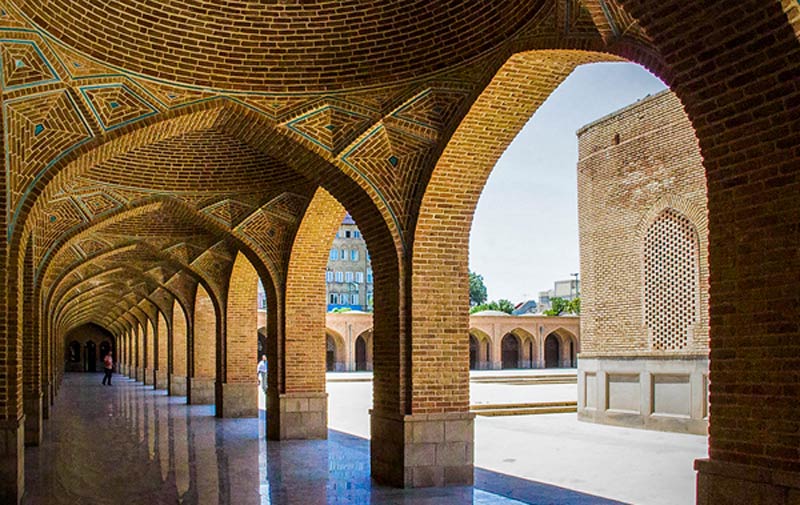
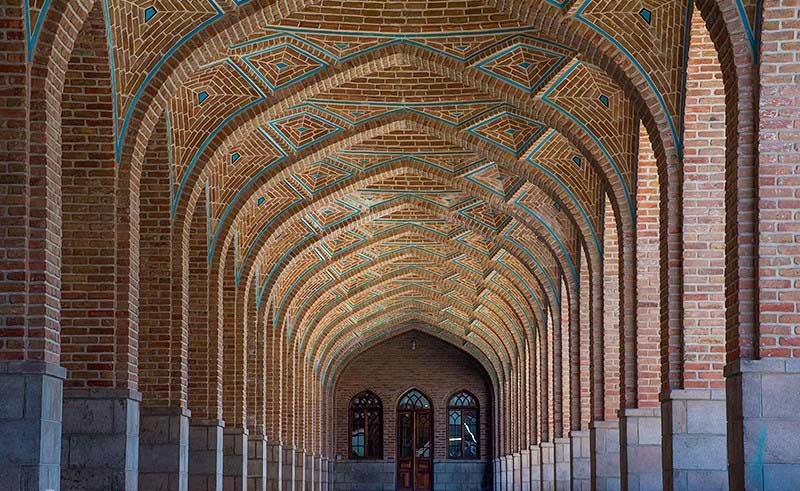
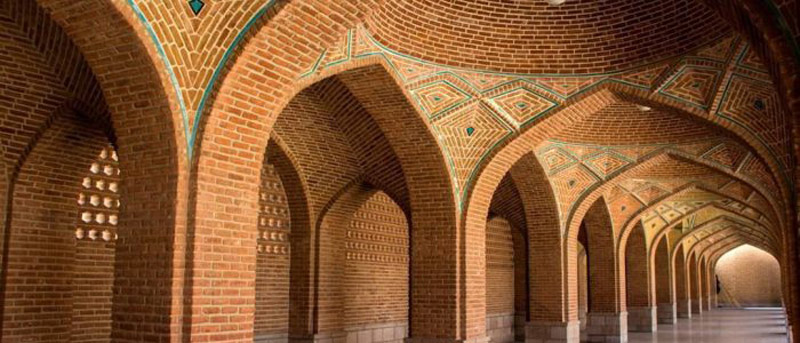
In the city of Tabriz, amid the bustle of the bazaar and the congestion of modern streets, stands a monument once known as the “Turquoise of Islam.” The Blue Mosque, or Göy Məscid in Azerbaijani, was completed in 1465 CE, during the reign of Jahan Shah of the Qara Qoyunlu dynasty. It is one of the most brilliant—and also one of the most tragic—masterpieces of fifteenth-century Iranian architecture. What survives today represents only part of its former grandeur. The mosque was originally part of a larger complex known as the Muzaffariyya, which included the mosque and mausoleum and was associated with other religious and charitable functions. Commissioned under Jahan Shah, the complex represents one of the high points of Turkmen architecture in Tabriz and reflects a remarkable synthesis of Iranian and Timurid artistic traditions. Although much of the monument was severely damaged by earthquakes and the passage of time, what remains is still powerful enough to take your breath away.
To understand the Blue Mosque, we first need to understand its historical context. The ninth century AH was a period of transition and upheaval in Iranian history. The Timurids still controlled one of the great cultural centers of the Persianate world in Herat, although their political power was beginning to decline. Meanwhile, in western Iran, two Turkmen dynasties—the Qara Qoyunlu and the Aq Qoyunlu—were competing for political supremacy. The Qara Qoyunlu, who had made Tabriz their capital, sought to transform the city into an important political, cultural, and artistic center and to establish a cultural identity capable of rivaling the splendor of Timurid Herat.
Jahan Shah, the ruler of the Qara Qoyunlu, was a complex and multifaceted figure. He was a powerful military ruler, but he was also a poet who composed verses in both Persian and Turkish and supported the arts and culture of his court. He and his family sought to create a monumental complex that would serve not only religious purposes but also express the political authority and cultural ambitions of the dynasty. This complex became known as the Muzaffariyya. Contrary to a common but inaccurate account, the name should not simply be explained as deriving from a wife called “Khatun Muzaffariyya.” Historical sources identify Khatun Jan Begum, Jahan Shah’s wife, as an important patron associated with the foundation and endowment of the mosque. Construction began during Jahan Shah’s reign and continued in the years that followed his death. The Blue Mosque became the jewel of this remarkable complex.
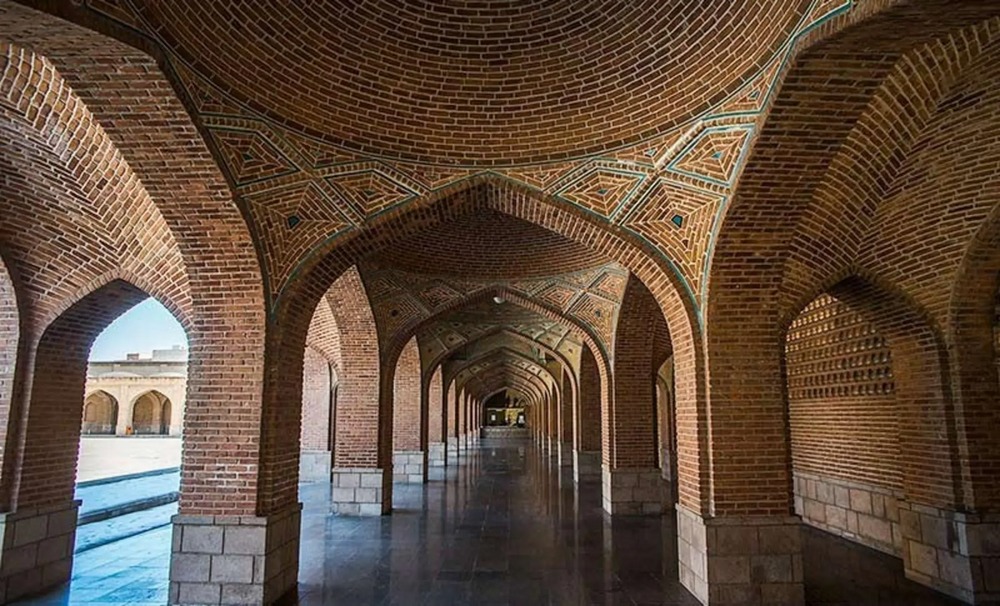
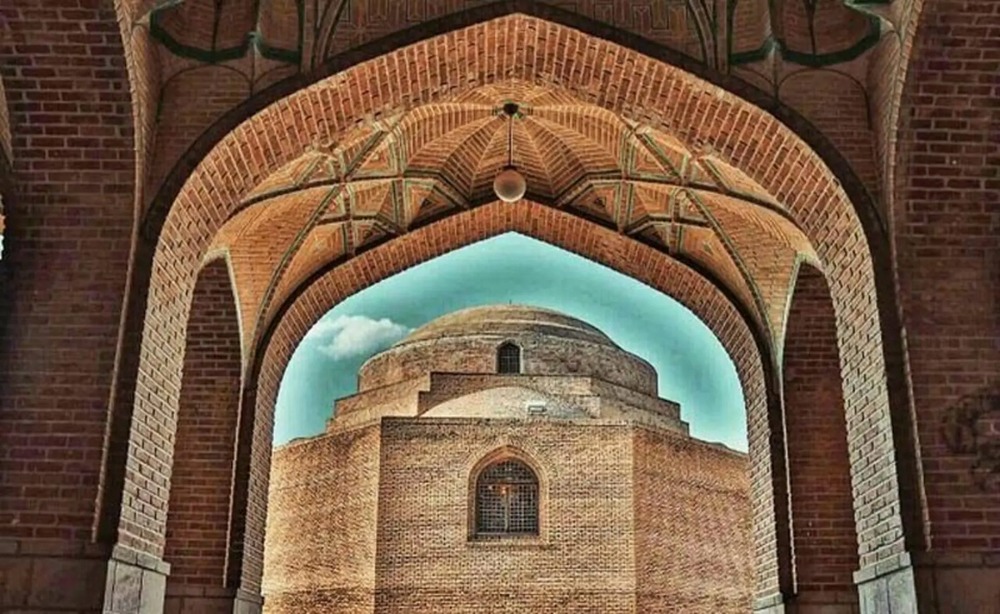
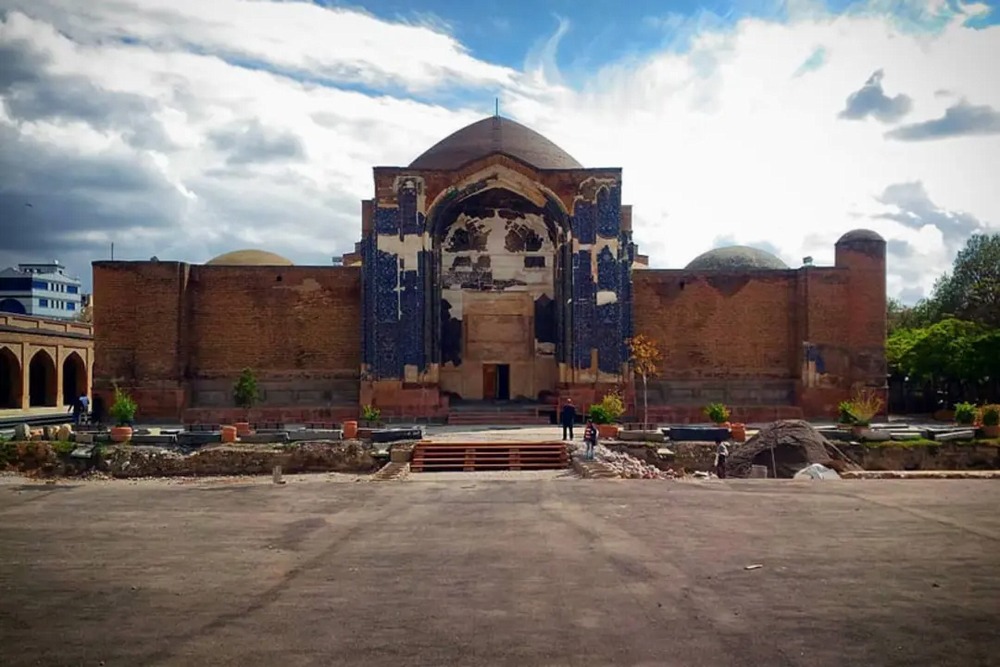
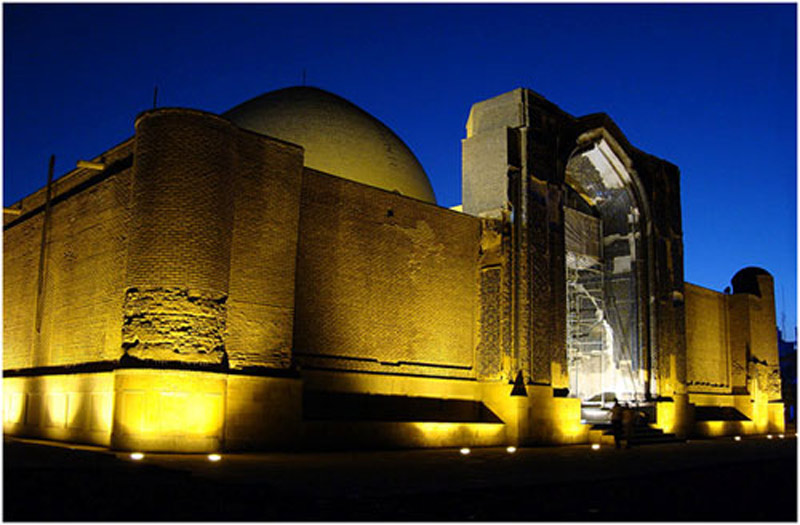
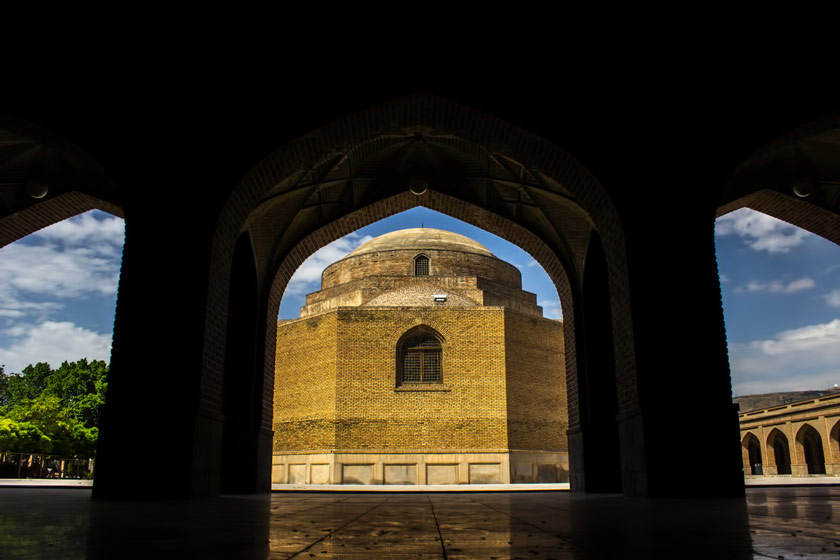
Unlike the traditional four-iwan mosque plan found in many parts of Iran, the Blue Mosque has a distinctive T-shaped plan. At its core is a large central domed chamber, surrounded by galleries and subsidiary spaces, with the mausoleum connected to the main prayer space on the southern side. The monumental entrance was located on the northern side, and the original building also had two minarets flanking the entrance. The great central dome rested on a sophisticated system of arches and supporting structures. Rather than describing the building simply as a “paired-domed-chamber plan,” it is more accurate to understand the Blue Mosque as an unusual combination of a central domed prayer hall, surrounding galleries, and an attached mausoleum. This spatial organization gives the monument much of its distinctive character.
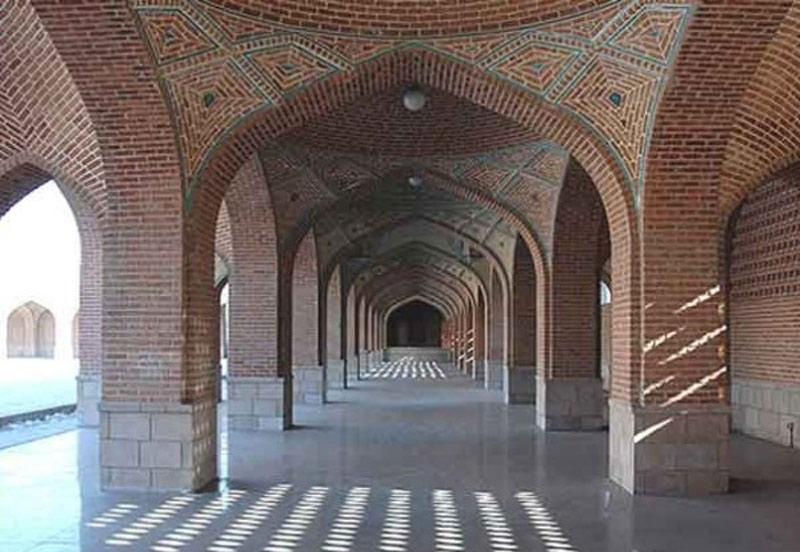
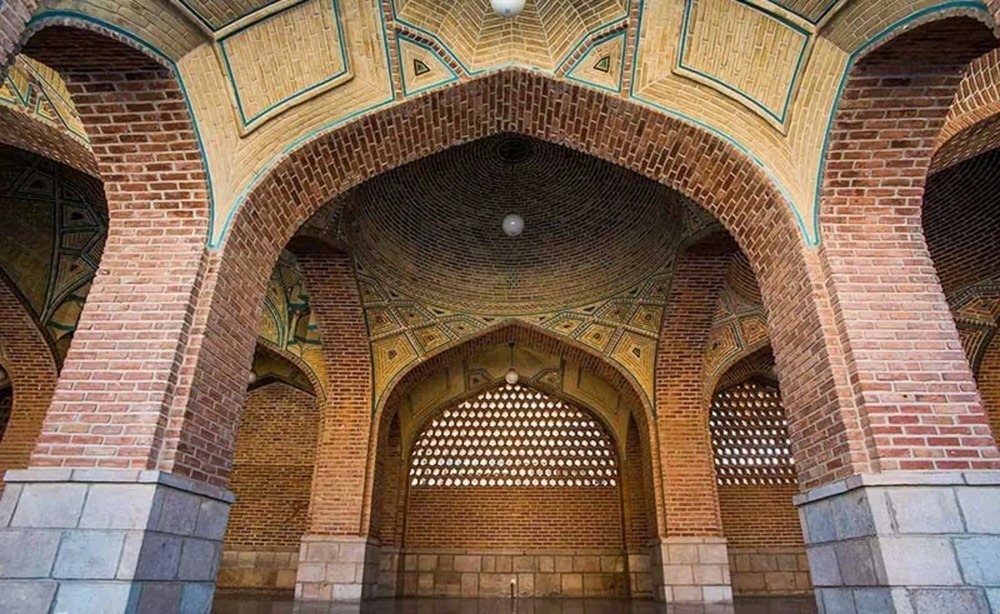
What remains of the structure reveals the remarkable skill of its architects and builders. Massive piers, thick walls, and large arches were designed to carry the considerable weight of the dome. In the central domed chamber, transitional elements and arches transformed the lower geometric structure into the base of the dome, while muqarnas and tilework were integrated into the architecture rather than treated as separate decoration. Behind the main prayer chamber stood the mausoleum, which had its own dome and a crypt beneath it. The crypt has traditionally been associated with the burial of Jahan Shah and members of his family, although the surviving evidence does not allow us to describe the present burial remains with complete certainty. The combination of mosque and mausoleum reflects a broader tradition in Iranian architecture in which religious monuments also served as lasting memorials to their patrons.
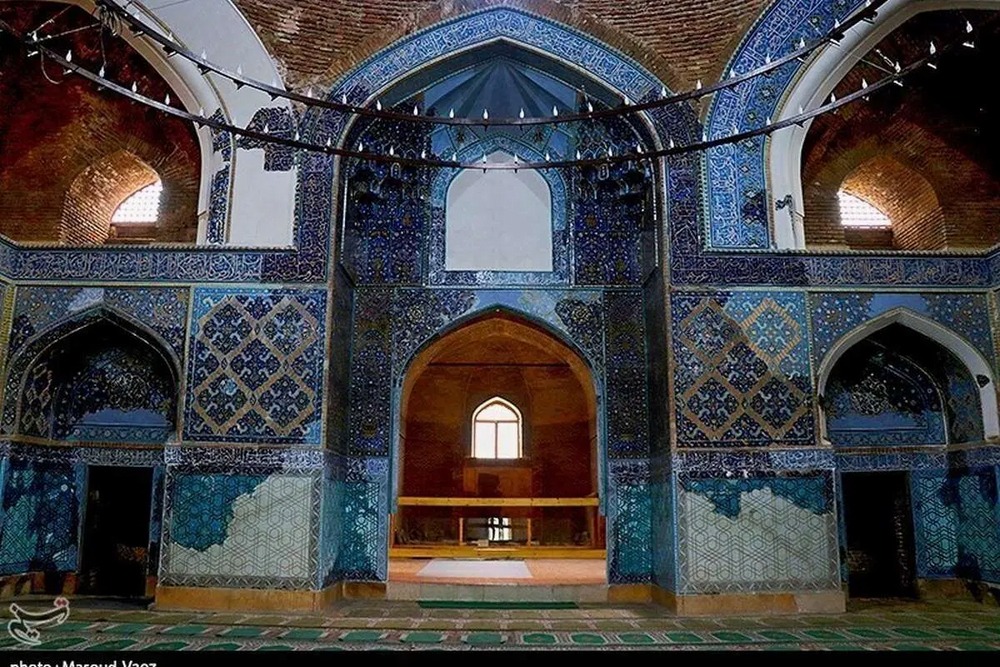
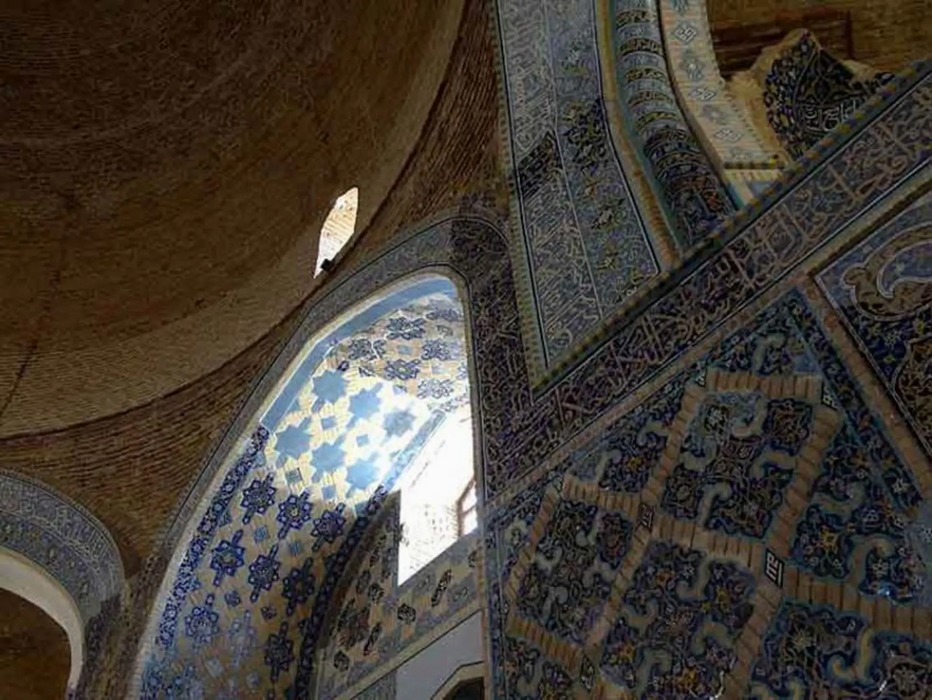
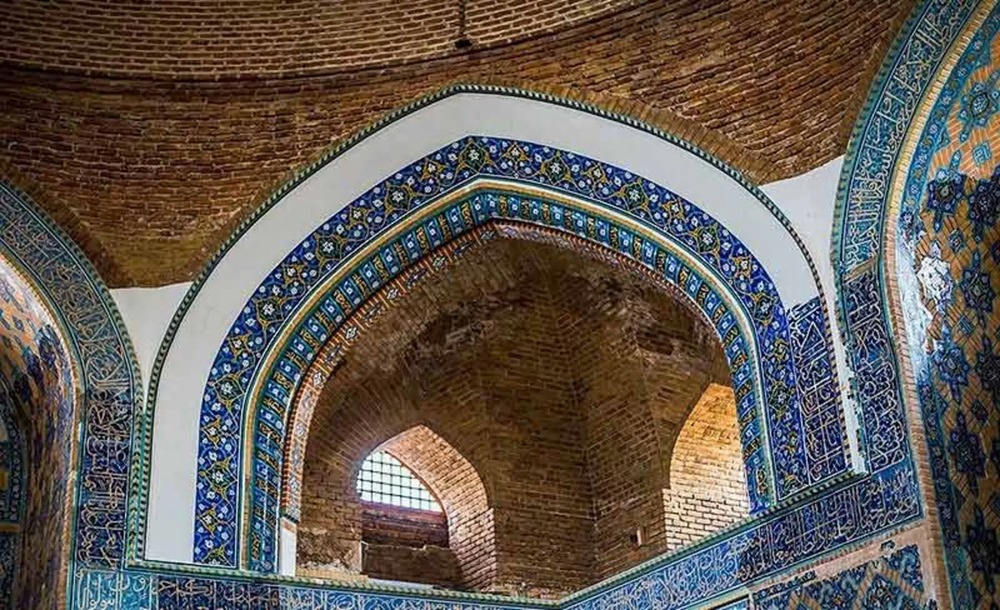
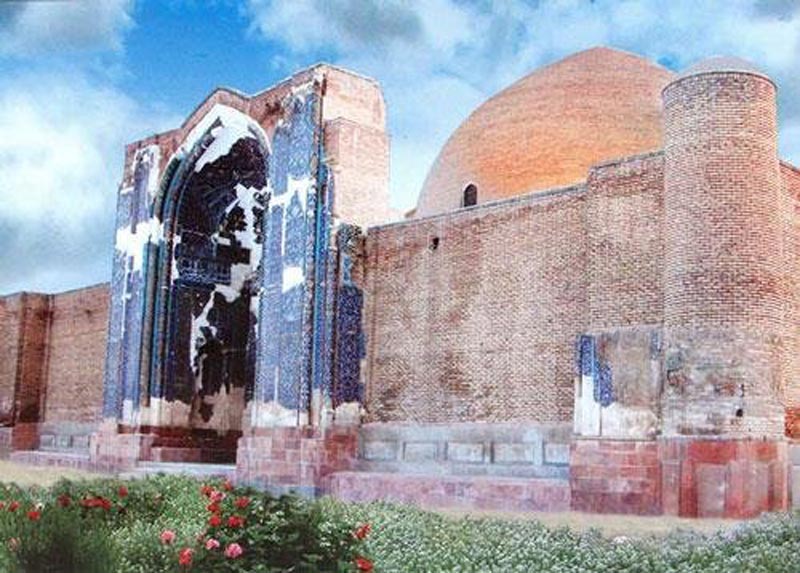
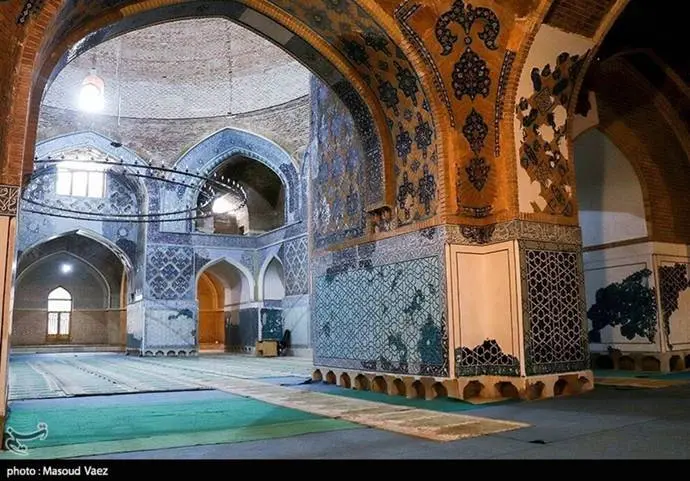
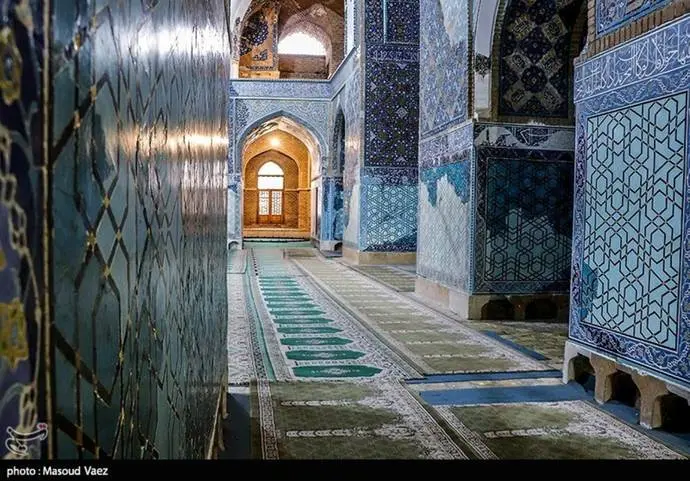
But what transforms the Blue Mosque from a magnificent building into an extraordinary artistic masterpiece is its intricate cut-tile mosaic work. The mosque is one of the most important surviving examples of pre-Safavid tilework in Iran and demonstrates that Tabriz had already achieved an extraordinarily sophisticated level of decorative craftsmanship in the fifteenth century. The visual identity of the building is closely connected to its name, Kabud, meaning blue or blue-green in Persian. Deep blue and turquoise tones once covered large portions of the interior and exterior, creating the chromatic identity that earned the monument its famous association with the “Turquoise of Islam.”
What remains of this tilework is still breathtaking. Intricate geometric patterns, arabesques, and floral designs interact across the architectural surfaces in a remarkably controlled composition. Deep blue, turquoise, white, and touches of gold combine to create an effect that can make the walls appear almost jewel-like. Particularly notable are the blue-and-gold hexagonal tiles associated with the mausoleum. Monumental inscriptions also played an important role in the visual character of the building. Although the calligraphy is one of the mosque’s most important artistic features, specific claims attributing particular inscriptions to the calligrapher Nematollah al-Bawwab should be treated with caution unless supported by firm documentary evidence.
One particularly interesting feature of the Blue Mosque is the diversity of its decorative vocabulary. Alongside geometric patterns and arabesques are varied botanical and floral motifs that demonstrate the monument’s connection to the broader artistic world of the fifteenth-century Persianate sphere. Its decorative language reflects artistic relationships with Timurid centers in Khorasan and, more broadly, with the interconnected artistic traditions of the region. Some similarities can also be observed with contemporary Ottoman architecture. Rather than presenting the Blue Mosque as a simple direct predecessor of Safavid architecture, it is more accurate to see it as an important link within the broader evolution of Iranian architecture and tilework between the Timurid, Turkmen, and Safavid periods.
The tragedy of the Blue Mosque lies partly in the devastating earthquakes that repeatedly struck Tabriz throughout its history. The great earthquake of 1780 CE, corresponding to 1193 AH, caused extensive destruction across the city and contributed to the continuing deterioration of the monument. Yet the mosque’s decline cannot be attributed to a single earthquake. It had already suffered repeated seismic damage between the sixteenth and eighteenth centuries, and parts of the complex had fallen into ruin and abandonment long before the modern period. Major restoration efforts began in the twentieth century and continued over subsequent decades. What we see today is therefore a combination of surviving original fabric and carefully restored or reconstructed elements. Paradoxically, this incomplete condition gives the monument a distinctive poetic and melancholic character.
The Blue Mosque reminds us that the history of Iranian architecture is not only a story of complete and perfectly preserved monuments. Sometimes a ruin can be just as eloquent as an intact building. The mosque tells the story of the ambition of a Turkmen ruler, the extraordinary skill of artists who transformed brick, tile, color, and calligraphy into architecture, and the history of a city repeatedly damaged by earthquakes yet repeatedly rebuilt. The Blue Mosque—the “Turquoise of Islam”—still preserves something of the grandeur of historic Tabriz more than five centuries after its completion. In its surviving blue tiles, monumental arches, damaged walls, and restored surfaces, the monument continues to whisper of a city whose artistic ambition once reached extraordinary heights.