

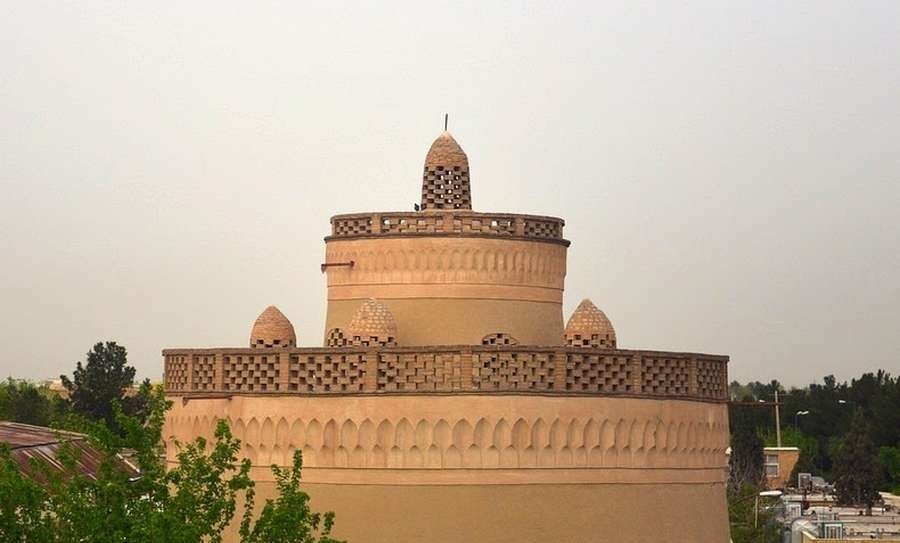
Across the central plains of Iran, among farmlands and sometimes beside quiet country roads, stand remarkable structures unlike anything else. Some are cylindrical, others square or polygonal, rising as high as fifteen meters. Their exterior walls are covered with thousands of small, carefully arranged openings. You won't find a human entrance at ground level—instead, the only doorway is near the top, just large enough for someone climbing a ladder.
At first glance, you might mistake them for fortresses, mausoleums, or watchtowers. But these extraordinary buildings were created for pigeons. They are known as Iran's Pigeon Towers. Their story is one of ingenious agriculture, natural fertilizer, and a centuries-old partnership between people and nature. Iran is a land of remarkable ecological diversity—from the Hyrcanian forests in the north to the palm groves of the south, from the rain-fed plains of the west to the semi-arid plateaus at its heart. Yet across much of this landscape, one essential resource has always been scarce: soil rich in organic matter for sustainable agriculture.
For centuries, Iranian farmers understood that without natural fertilizer, the land would eventually lose its strength and productivity. Livestock manure was available, but not always in sufficient quantities or with consistent quality. Pigeon manure, however, was different. Rich in nitrogen and phosphorus—the two essential nutrients for healthy plant growth—it became one of the most valuable natural fertilizers.
A single pigeon produces around five to six kilograms of manure each year. Imagine thousands of pigeons living together in one place: they could provide dozens of tons of high-quality fertilizer annually, without the need to feed or maintain them.
But pigeons cannot simply be captured and kept. They are wild birds, free to go wherever they choose. The only way to attract them is to build a home better than any they could find in nature—safe, cool during the scorching summer, warm through the cold winter, and protected from jackals, snakes, and birds of prey. The entrances had to be designed so that pigeons could fly in and out with ease, while their predators were kept out. Using only local materials and the wisdom passed down through generations—long before the age of modern engineering—Iranian builders perfected this remarkable design.
The construction of Iran's Pigeon Towers reached its peak during the Safavid and Qajar periods, although their origins go back much further. The greatest concentration of these remarkable structures can be found in Iran's central provinces, including Isfahan, Yazd, Markazi, and Qom. Some researchers estimate that the outskirts of Isfahan alone were once home to more than three thousand Pigeon Towers. Today, only a few hundred are believed to have survived—but even that is enough to reveal the extraordinary scale of this unique architectural tradition.
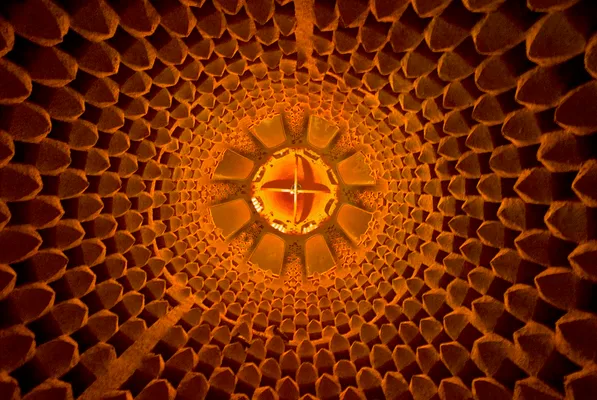
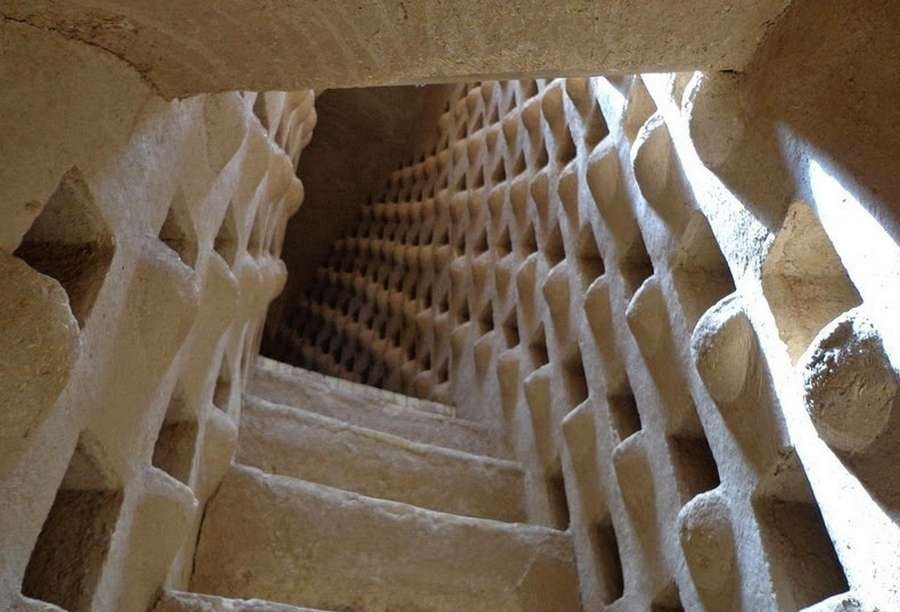
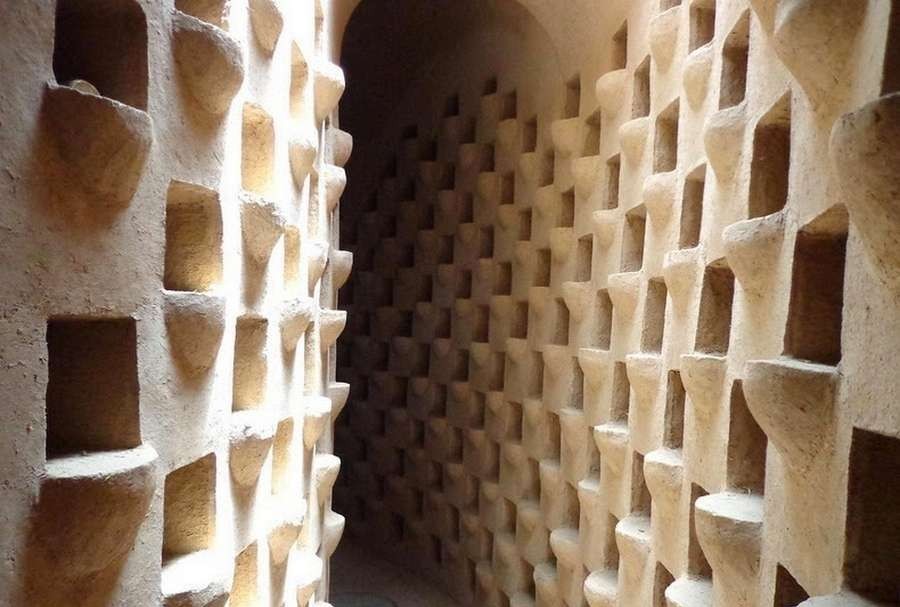
Now, imagine stepping inside one of these remarkable towers. The interior walls are lined with countless rows of mud-brick or plaster nesting niches, each carefully sized for a single pigeon, with a small ledge where it could perch comfortably. Some towers contained as many as 25,000 nests.
At first glance, the arrangement appears simple. In reality, it reflects a sophisticated understanding of geometry, natural light, and ventilation. Openings in the roof allowed sunlight and fresh air to circulate throughout the structure, while the floor was gently sloped so that the accumulated manure would naturally collect in a central area.
Once or twice a year, workers entered through the elevated doorway, gathered the fertilizer, hoisted it to the roof with ropes, and lowered it to the ground. Every detail of the process was designed to minimize disturbance to the pigeons, allowing them to return year after year.
Iran's Pigeon Towers were built in three principal architectural forms: cylindrical, rectangular, and polygonal. The cylindrical design was most common around Isfahan, likely because its curved structure offered greater resistance to lateral forces and was easier to construct using sun-dried mud bricks.
Rectangular towers were more typical in Yazd and other arid regions, where their thicker walls provided superior thermal insulation against the harsh desert climate. Polygonal towers were far less common and were generally reserved for the largest structures, maximizing interior surface area for nesting.
Some towers even combined these forms—for example, a square floor plan with rounded corners. This remarkable diversity reflects the ingenuity of Iran's traditional builders. Rather than following a single fixed blueprint, they carefully adapted each design to the local climate, available materials, and the specific needs of the site. There was no universal model; every Pigeon Tower was the product of local knowledge, practical experience, and thoughtful craftsmanship.
One of the most remarkable features of Iran's Pigeon Towers was their ingenious defense system against snakes. Drawn by eggs and young chicks, snakes would often attempt to climb the walls. To stop them, Iranian builders designed the roofline with sharp projecting cornices that prevented snakes from reaching the nesting chambers.
In some towers, the exterior was coated with an exceptionally smooth plaster finish, making it impossible for snakes to gain a grip. Others were built on raised platforms and surrounded by water, creating an additional natural barrier against predators. Simple yet highly effective, these solutions demonstrate how traditional Iranian architecture relied on observation, experience, and an intimate understanding of nature rather than costly technology.
The Pigeon Tower was far more than an agricultural structure. In rural Iran, owning one was a symbol of both prosperity and knowledge. Large villages and wealthy families often had their own towers. The number of towers in a region reflected the fertility of its farmland and the agricultural expertise of its people. Pigeon manure was so valuable that, in some areas, it was even used to settle debts and commercial transactions. It became known simply as “brown gold.”
Yet beyond their practical function, these towers reveal something deeper about the relationship between Iranians and nature. It was a relationship based not on exploitation, but on coexistence. Rather than capturing pigeons or forcing them into captivity, people built homes where the birds would choose to live. Instead of exhausting the land with artificial chemicals, they relied on nature's own cycle of renewal.
It was an unwritten partnership between humans and birds: “I provide you with shelter, and you enrich the land.” There was no force or confinement. If the pigeons found a better place, they were free to leave. But these towers were designed so thoughtfully that generation after generation, they chose to stay.
Even today, Pigeon Towers can still be found standing among the fields around Isfahan—in the Mahyar Plain, near Shahreza and Meymeh—as well as along the rural roads of Markazi and Yazd provinces. Some have been recognized as national heritage sites, and a few have been carefully restored and opened to visitors. Yet many still await proper research, conservation, and appreciation.
These remarkable structures tell a different story about Iranian architecture. They were not built for kings, grand mosques, or magnificent squares, but for farmers, fertile soil, and sustainable agriculture. Their legacy is often overlooked in history books, yet they may hold lessons more valuable than many of Iran's monumental landmarks.
Today, as the world confronts environmental degradation, water scarcity, soil erosion, and the urgent need for sustainable farming, Iran's Pigeon Towers remind us that some of the most innovative solutions are not always the newest. Sometimes, they are the wisdom our ancestors discovered centuries ago.