
The Iron Age Museum of Tabriz; A Journey through Human History
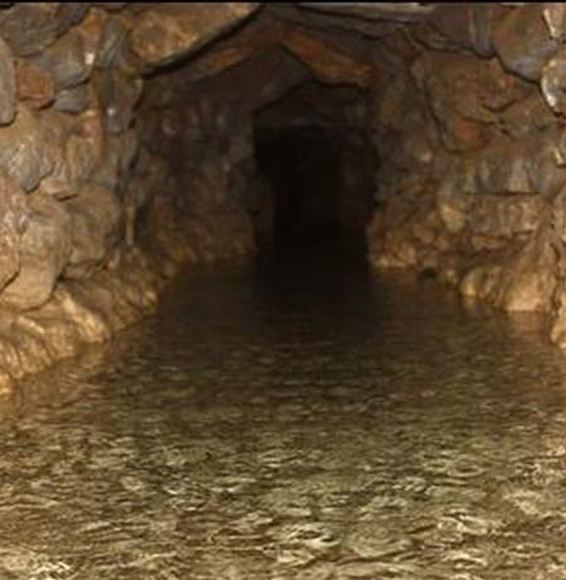
During an archeological excavation, 38 graves were found in Tabriz, which are now referred to as the “Iron Age Museum of Tabriz’.
Tilework, arabesque motifs, and turquoise domes: a tangible expression of Iranian beauty and wisdom.
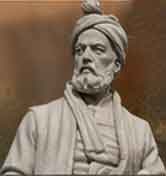
Creator of the Shahnameh and guardian of Persian language and identity.
View Special Programs_1_crop_1.png)
Related Content
Learn More About Iranian Art
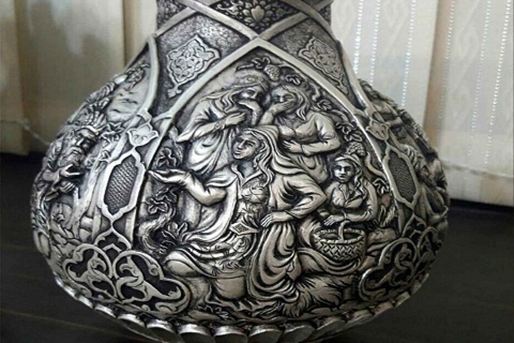
While Qalam-zani is well-known through the names of cities like Isfahan, Shiraz, and Tabriz, Tabas metalwork holds its own unique identity and exquisite finesse.

Pottery is the craft or art of making dishes from clay by hand or wheels and the dishes made in this way are called earthenware. The earthenware pots which are made from different raw materials, mainly reddish brown clays or a mixture of Pottery and different materials with a lighter color, have different colors and, depending on taste of the potter or the clients, sometimes are finally painted with glazes.
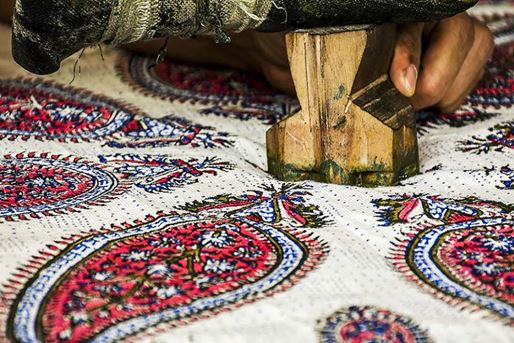
One of the old professions that is still prevalent in the East Azarbaijan Province of Iran is batik printing, (called Kalaqei in Iran): a craft that produces very beautiful products.

Qalamkari Painting is an ancient technique of painting on fabrics for producing exquisite pieces.

Once used as Hajj clothing, Ehrami weaving is now mainly used for making prayer rugs

The use of wool and cotton in weaving Gelij is the main cause of this fabric being very delicate and soft.
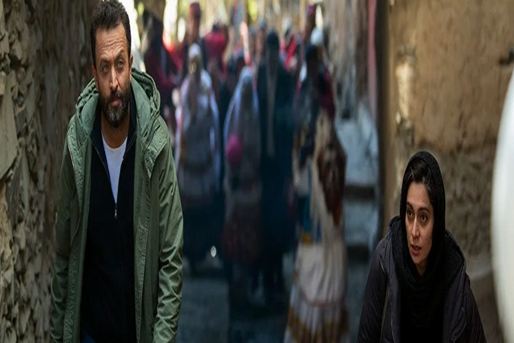
“No Prior Appointment’’ is the story of a lady by the name of Yasmin, who has, after the death of her father, returned to Iran from Germany after many years. Her son is autistic and this has made the trip difficult for her. Yasmin who does not know her father very well is surprised to find out about the hertigar he has left for her. Her acquaintance with other people on this trip, her short stay in her father’s hometown, and meeting with those who know him make Yasmin have a new understanding about being human and the concept of death.

During the course of the Islamic Revolution in 1979, a young girl named Mijan and her stepmother, living in a small village in the Gilan Province of Iran, decide to take in a politically active revolutionary who has been injured and hide him from security forces (SAVAK). The danger mounts when they find out that the SAVAK are desperately looking for the injured person and these two ladies are determined to keep him hidden.
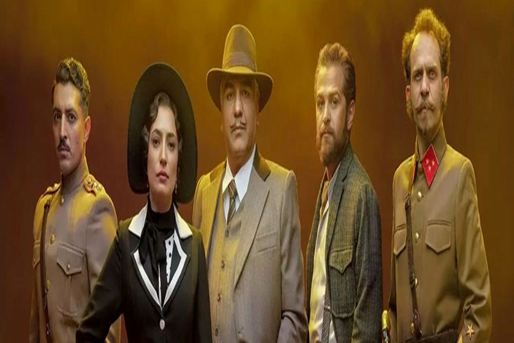
The story of a Bakhtiari woman living in the 1940s, whose life is affected by the Second World War, and in order to prevent the occupation and looting of her country, she fights against the army of the invading countries.
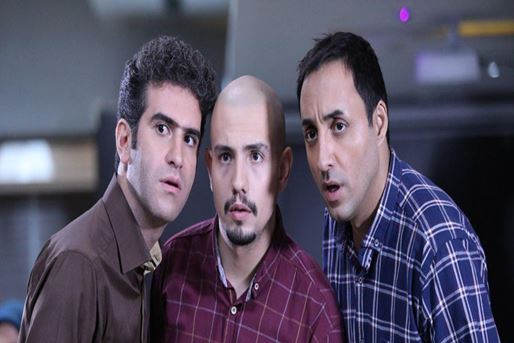
The story of three young men by the names of Habib, Maziar, and Masoud, who, in spite of having a bachelor’s degree, have not been able to find a suitable job or get married and, therefore, decide to continue their education and get a master’s degree. After achieving this goal, they still face problems. Habib falls in love again, but due to his weakness in establishing social relations, he cannot manage this issue. Maziar and Masoud, who still cannot meet their living expenses, regularly borrow money from their rich friend, Habib.

The story of a boy who has to take on a dangerous journey to save his mother’s life from Pharaoh’s soldiers and certain things happen during this trip, that change his views about society and his life.

A disabled boy is looking for the lost Queen of Ganora Planet with aliens to bring back the PEACE to the planet. But another group of aliens comes to Earth to prevent them.
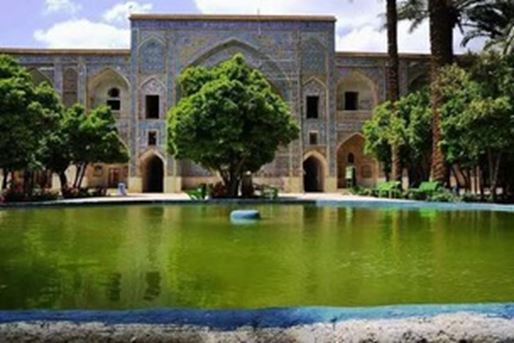
Iran s madrasas tell the story of knowledge, but not knowledge alone. They tell us how people learned, debated, lived together, and respected one another. The architecture of the madrasa was an architecture of community. A student might be alone in his chamber, but he could still hear the discussions of others. When he stepped into the courtyard, everyone could see him. There were no walls or curtains to separate people. Perhaps, in its simplicity, the madrasa was one of the finest forms of urban space in Iran: open yet protected, public yet private, orderly yet not so rigid that it left no room for spontaneity.
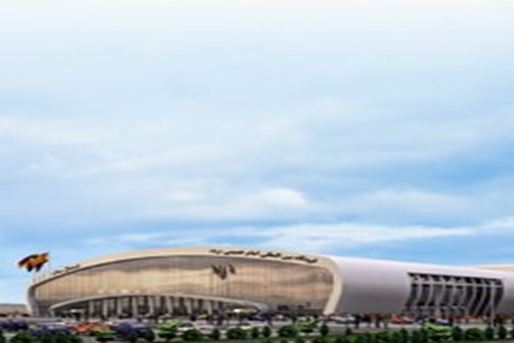
What distinguishes Salam Terminal from other airport terminals in Iran and the wider region is its creative interpretation of traditional Iranian architectural concepts through a modern, abstract, and striking design. The building’s overall form pays homage to two fundamental elements of Iranian architecture: the dome and the iwan.
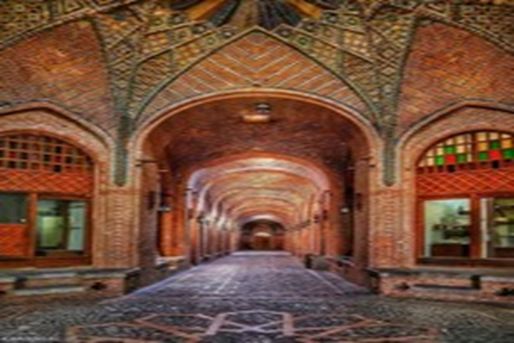
At the heart of Qazvin s historic urban fabric, once the first capital of the Safavid dynasty, stands a remarkable complex that rightfully bears the title of Iran s largest urban caravanserai. Built in the late Qajar period on the orders of Mohammad-Baqer Khan Sa’d al-Saltaneh, the governor of Qazvin at the time, Sa d al Saltaneh Caravanserai is a vast commercial and accommodation complex covering nearly 26,000 square meters. Far more than a caravanserai, it functioned as a complete commercial city, with covered bazaar passages, timchehs, courtyards, a bathhouse, a mosque, and magnificent chahar-suqs. Still vibrant and active today, the complex is a remarkable example of Qajar era commercial architecture and the thoughtful integration of multiple functions within a single architectural ensemble.

The name of Torbat-e-Jam has been derived from the name of the tomb of renowned Gnostic, Sheikh Ahmad Jam (441-536 AH/1049-1141 AD) who was also known as Sheikh-e-Jam or Pir-e-Jam. He lived in the Ma’dabad village of Khorasan and was buried in the same region after his demise. Later on, the village was named after him and came to be known as “Torbat-e Jam.
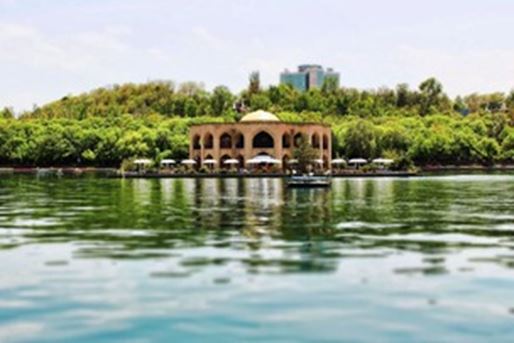
With its resilient, inward-looking architecture and its outward-looking spirit, Tabriz offers an invitation to discover another layer of Iran’s identity. It reminds us that the character of a nation is not forged in isolation, but strengthened through its encounters with the wider world—and through its ability to endure even the greatest upheavals. To walk through Tabriz is to follow the echoes of the Silk Road. Here, every brick seems to tell the story of a Venetian merchant, a Persian poet, and a world that, centuries ago, found its own path toward exchange, coexistence, and connection. That legacy still endures today, inviting us to reflect on what it truly means to build, to endure, and to remain connected across cultures and civilizations.
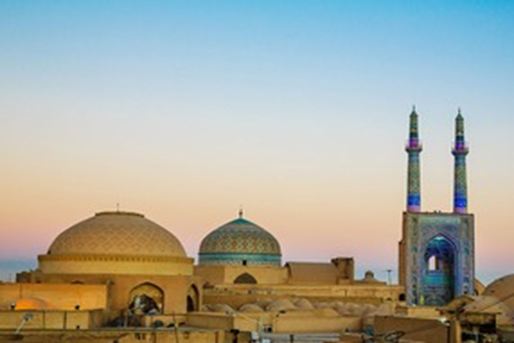
At the heart of Iran’s central desert, where the sky stretches endlessly and the earth offers architects an abundance of local and readily available building materials, a remarkable structure rises above the city, crowned by some of Iran’s tallest mosque minarets.
.jpg)
Prominent Persian poet from Iran, famous for his prose in Gulistan and verse in Bustan.

Endowment Deeds of Rab’-e Rashidi is a 700-year-old document (book) consisting of an extensive list of endowments and how the income from them was spent to support scientific activities.
Islam’s response to fundamental philosophical questions can provide a precise path to understanding its essence.
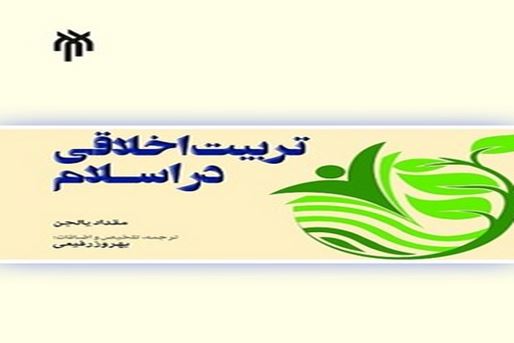
Divine religions establish principles for their followers, and Ethics in Islam seeks to explain Islamic moral principles for its own adherents.

Nahj al-Balagha stands as one of the greatest works in the Islamic world, and A Journey Through Nahj al-Balagha is intended as a concise guide to its vast landscape
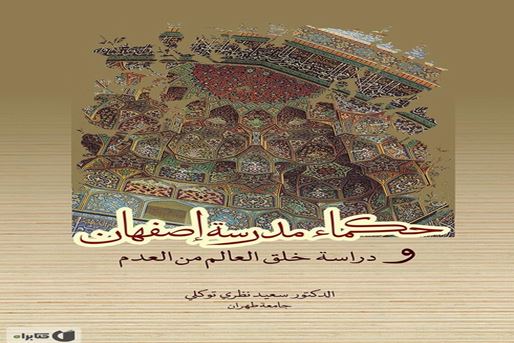
The book Sages of the Isfahan School and a Study of the Creation of the World ex Nihilo is one of Dr. Nazari Tavakkoli’s well known books.

The history of Daf goes back to ancient times when it was played in old Persia, different parts of Asia & North Africa

The scope of Lak music is quite unique and Sorna and Dohol are its main musical instruments.

Ney or Nay is a woodwind Persian musical instrument

The Bakhtiari community of Iran reflects the difficulties of nomadic life in their music.
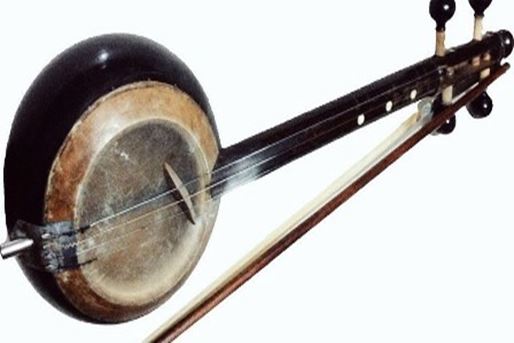
Kamanche is an Iranian instrument, similar to violin & bass

The “Ashiqi” or “Ashiki” music of Azarbaijan is one of the richest “maqami” styles of Iranian music, in which various narratives are expressed in the form of songs.

Persian calligraphy or Iranian calligraphy is one of the most revered arts of Iran, which has gradually evolved and many calligraphers have contributed to different genres of this art. Nastaliq is an outstanding genre of Persian calligraphy that has come to be known as the most beautiful human calligraphy.

Photography is one of the various branches of visual arts and is the art of creating lasting images through light or other forms of electromagnetic radiation on light-sensitive materials.

Caricature is another branch of the visual arts that involves the exaggeration, distortion, and amplification of human, animal, or object features while maintaining a visually recognizable likeness.

New art media are a relatively recent branch of the visual arts, emerging through the use of fresh language and innovative forms of expression.
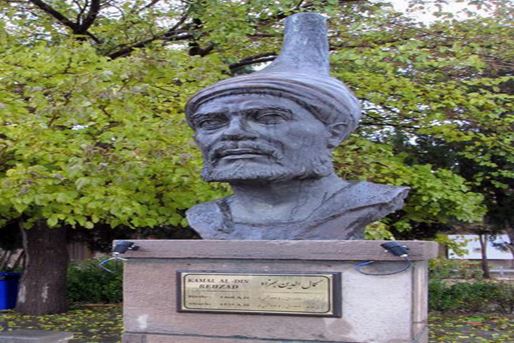
Kamal-ud-Din Behzad was a renowned and highly skilled Iranian painter who opened a new path in the realm of Persian miniature painting and left a profound and widespread influence on the work of later artists in Iran, India, Turkey, and Central Asia.
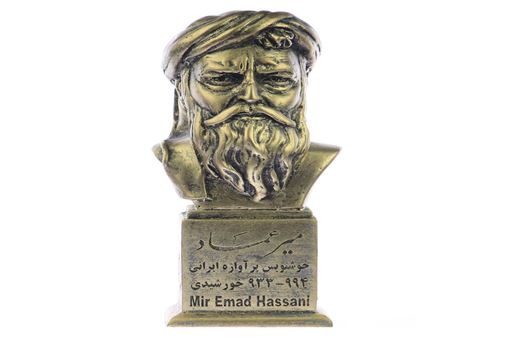
Mir Emad Hassani Seifi Qazvini was one of the most celebrated calligraphers in the history of Iranian art during the Safavid era, whose fame extended far beyond the borders of Iran. Through his exceptional mastery and artistic brilliance, he elevated the Nastaʿlīq script to such perfection that many scholars of Islamic calligraphy came to describe it as the bride of calligraphic scripts.
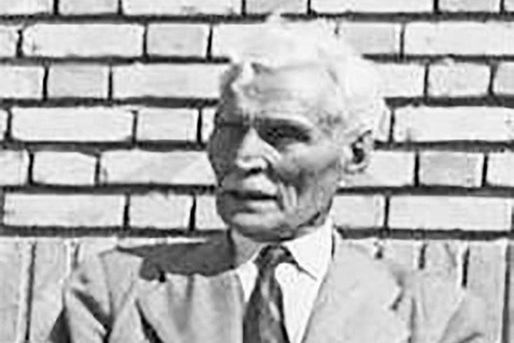
Jabbar Baghtcheban established the first Iranian kindergarten and school for deaf children in Iran.
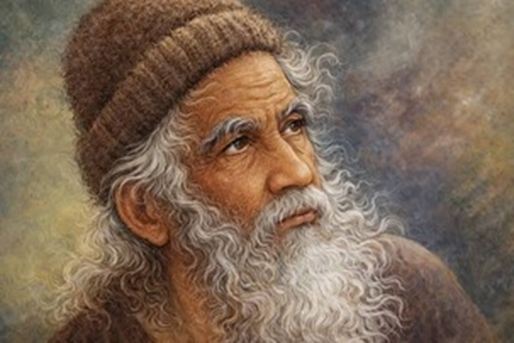
Baba Taher of Hamadani, popularly known as “Baba Taher Oryan” was the Iranian mystic, poet, and couplet composer of the 11th century CE.

Yazd laments are famous in Iran for their elegant lyrics and special style of performance: a style that Hossein Sa’adatmand played an important role in its development.

Agha Bozorg Tehrani’s “Shia Bibliographic Encyclopedia” duly responds to an author’s remarks about the role of Shia in the history of Islam.
Abu Ja’far Mohammad bin Mohammad bin Hasan Jahrudi Tusi, popularly known as Khawaja Nasir al-Din, was born in the Jahrud district of the Qom City on 18 February 1201 CE.
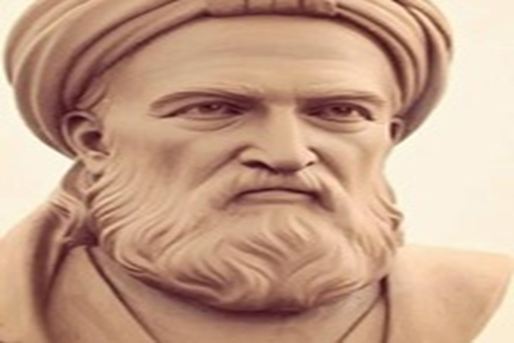
Abu Rayhan Mohammad bin Ahmad Biruni, popularly known as Al-Biruni is a renowned Iranian scholar, scientist, mathematician, astronomer, chronologist, anthropologist, Indologist, and natural scientist who was born on 5 September 973 CE in an area near Khwarazm and for this reason, he came to be known as Al-Biruni, meaning someone belonging to outside Khwarazm.
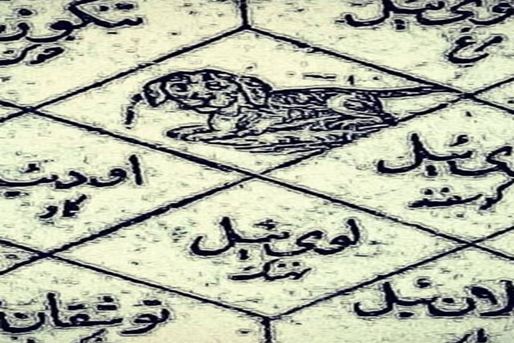
The local calendar of East Azerbaijan can be considered one of the manifestations of the oral culture of the people of this land, which has evolved over the years.

As a traditional custom the people of Iran plant grains of wheat and/or lentil in pots as a sign of divine blessing and abundance in the New Year (Nowruz), which turn into green sprouts and are placed on the Nowruz table.

The story of Asli and Karam is considered to be the greatest oral heritage of the Azarbaijani people, which is narrated by Ashiqs/Ashiks in gatherings and in the form of a folklore song.
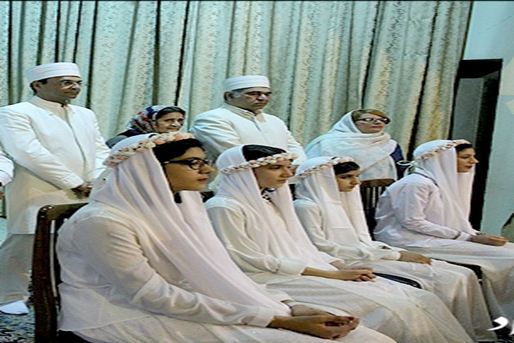
Zoroastrian men often wear white clothes, while the traditional garments of Zoroastrian women are quite colorful

Iranian coffeehouses came into existence in the 16th century and, throughout their centuries-long existence, have fostered traditions and arts.

Golabgiri is a traditional ceremony held annually in 14 provinces of Iran, mainly from early Ordibehesht to late Khordad
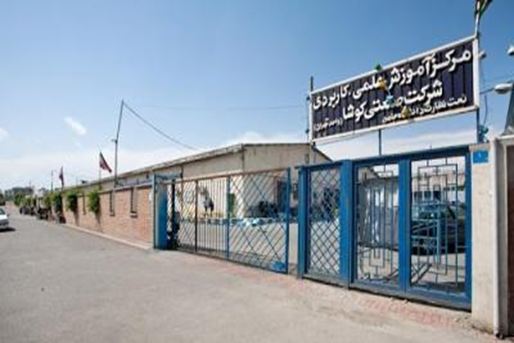
Kousha University of Applied Science and Technology: A higher education institution dedicated to enhancing students’ scientific and technical knowledge and equipping them with the skills needed to undertake practical and industrial projects.
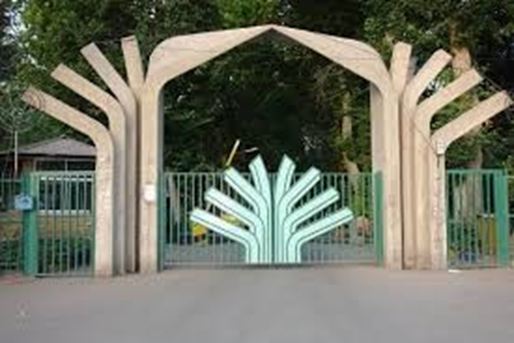
Karaj Sugar Applied Science and Technology Center: Bridging Skills-Based Education, Industry, and Entrepreneurship to Meet the Needs of the Country’s Industries
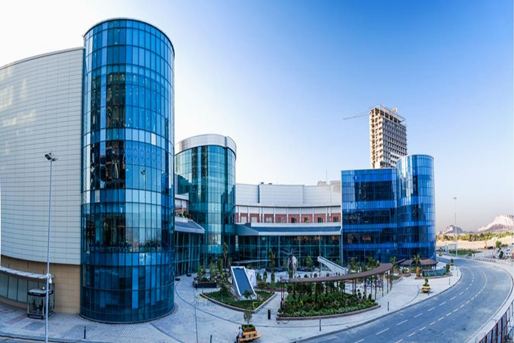
Isfahan City Center Comprehensive Center for Applied Science and Technology: A Modern Institution for Skills-Based Higher Education, Adopting a Practical Approach Aligned with Labor Market Standards.
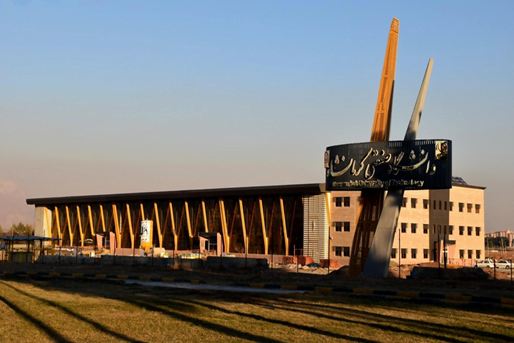
Kermanshah University of Technology aims to train specialized professionals, meet the needs of industries in Kermanshah Province and western Iran, and advance the development of modern technologies across various industries.
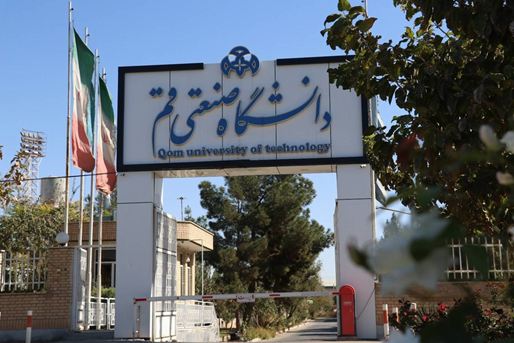
Qom University of Technology: A University Focused on Engineering and Technology Education, Fostering an Innovative Environment for Training Professional Engineers
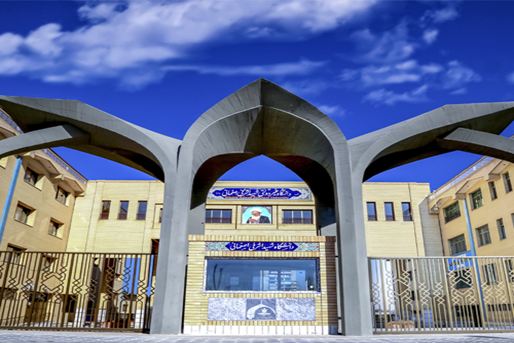
Shahid Ashrafi Esfahani Non-Profit University: Providing Quality Education, Advancing Academic and Research Activities, Enhancing Society’s Cultural Standards, and Educating Competent Graduates
Latest Events of Islamic culture & relations organization of Iran
Latest News Of Islamic Culture And Communication Organization
Bringing People and cultures Closer Together